Did you know that most rooster combs don’t need any special frost bite preventative’s during the Winter months?
Contrary to popular belief, most breeds are very well equipped to deal with the cold, however, good husbandry skills are what ensure very little frostbite irritation for your rooster and other large combed chickens. This blog post is about protecting your chickens’ comb, however, frostbite can be found on the feet, mainly on snowy days. This is a completely different subject.
There are a few things that you can do for your chickens this winter, especially your rooster, without having to apply anything to his comb, and without having to put a heat lamp in your coop (which I do not suggest), in order to keep combs and wattles healthy and happy.
Here are a few things you need to consider before the frigid winter months set it.
It All Starts in the Coop
Yep, you read that right. Preventing frostbite on combs all begins with good husbandry skills. Chickens are extremely warm animals due to their down feathering under the larger feathers that you see with the naked eye. They huddle together in their coop at night to generate their own warmth. If you go into the coop on even the coldest of evenings and stick you hand under a wing, your hand will instantly be warmed. However, their combs are extremely sensitive since the main portion of their body heat is from the breast to the tail. Frostbite can mainly occur when there is compromised ventilation and heat, which allows the chickens breath to create ice crystals and moisture around their heads.
This is where a deep litter method coop floor comes in handy, and one of many reasons that I do not endorse sand flooring in coops. Deep litter method is simply the method of not cleaning your coop out during the Winter months. However, you must tend to it often in order for it to be safe and effective.
Chicken mites are an awful thing for your chickens to get, and it’s another reason to keep your coop clean. You can learn how to treat chicken mites here.
.jpg) |
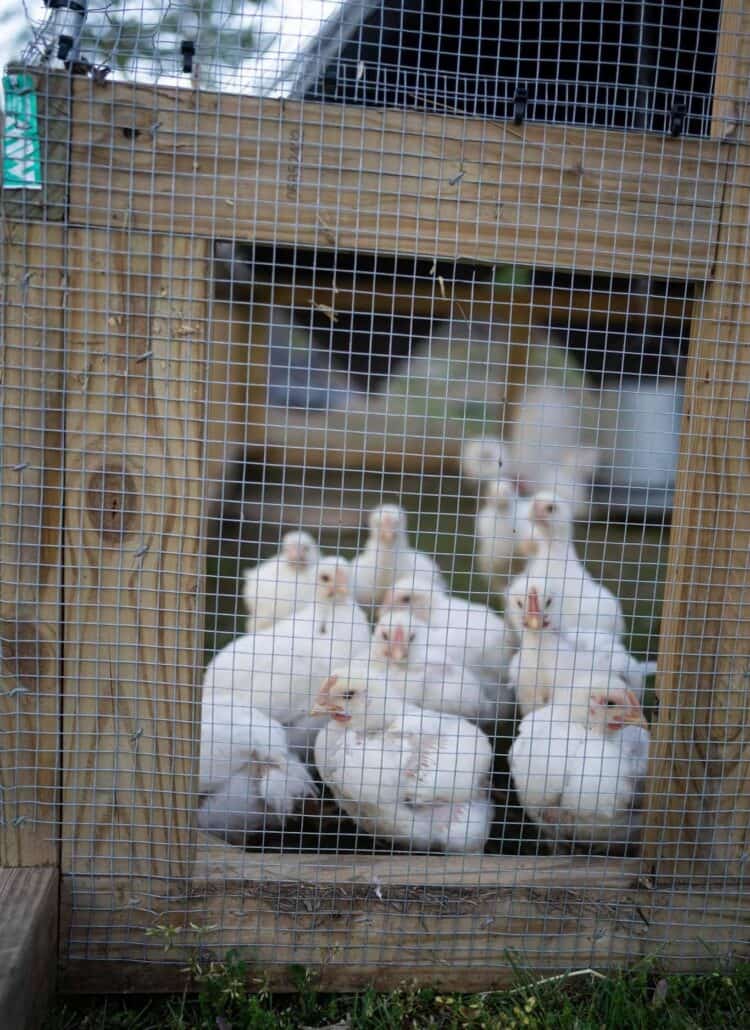
| Juvenile Barred Rocks pile into a nesting box to stay warm. How many can you count? |
First, I start by deep cleaning the coop one last time as the weather starts getting fairly cold (fall). I lay a final thick layer of straw down on the floor and in the nesting boxes. This works well if you have a dirt floor or a laminate/linoleum floor. We have linoleum over a plywood floor in our coop.
Next, I use a rake or shovel to stir the straw around each morning after the chickens have been let out. I add new straw to the floor as needed, on top of the straw that has already been in the coop. I also clean out the nesting boxes as needed and freshen with new straw (take the old straw out of the nesting boxes and add to the coop floor). You are basically layering the straw as the Winter progresses and moving it around daily. Your chickens will also aid in the stirring process as they move about in the coop during the day.
The decomposition of the straw and chicken feces generate a safe heat inside of the coop. During the winter time, the ammonia is not typically an issue, as the cold weather zaps it out of the atmosphere. However, you can prevent ammonia in the coop by sprinkling Sweet PDZ all over the hay every day or as needed. You can find this online (it is free shipping for Amazon Prime members) or at your local feed store and co-op. If deep litter method is managed properly, you will have zero smell and ammonia issues, and should not need to use Sweet PDZ at all.
You do not need to start your deep litter method in the Spring or Summer and then transport to your coop floor. Deep litter method starts in the coop and ends in the coop. You do not add food compost to your coop floor, however, you can sprinkle your chicken feed and food scraps onto the floor so that your chickens can turn the deep litter over for you. You can also add pine needles and leaves in with your straw on the floor. Other deep litter options are leaves, pine shavings, and yard material (grass clippings, etc). Whatever is most convenient and efficient for you. The key to safe deep litter method is to continuously add straw (or whatever material you are using) as it is needed, and to continuously stir your straw through out the winter, especially in the morning. Your deep litter flooring is a living being, with tons of awesome microbes and good bacteria breaking everything down. Take care of it!
Lastly, you’ll need to make sure the chickens have proper ventilation in their coops, however, it cannot be drafty. I cover up any windows with a tarp or clear plastic, so that sunlight can still come through during the day. Make sure that there is still some proper ventilation — be it ventilation holes in the sides of the coop near the roof, or ventilation holes above your nesting boxes. It vastly depends on the design of your coop. The biggest priority is making sure the air can circulate, but that it is not drafty inside.
Deep litter method combined with proper ventilation will generate quite a bit of heat for your chickens in the Wintertime, which very much helps prevent frostbitten combs and wattles.
Choose a Hardy Breed
As with gardening, you want to choose a “product” that is native or thrives well in your region. You can certainly manipulate things to help them thrive better, but ultimately, they must “belong” here. With that said, if you’re like me, you love all kinds of breeds that don’t belong in your zone. This means we must take extra responsibility, whether they are cold hardy or warm hardy, or if you’re lucky, both.
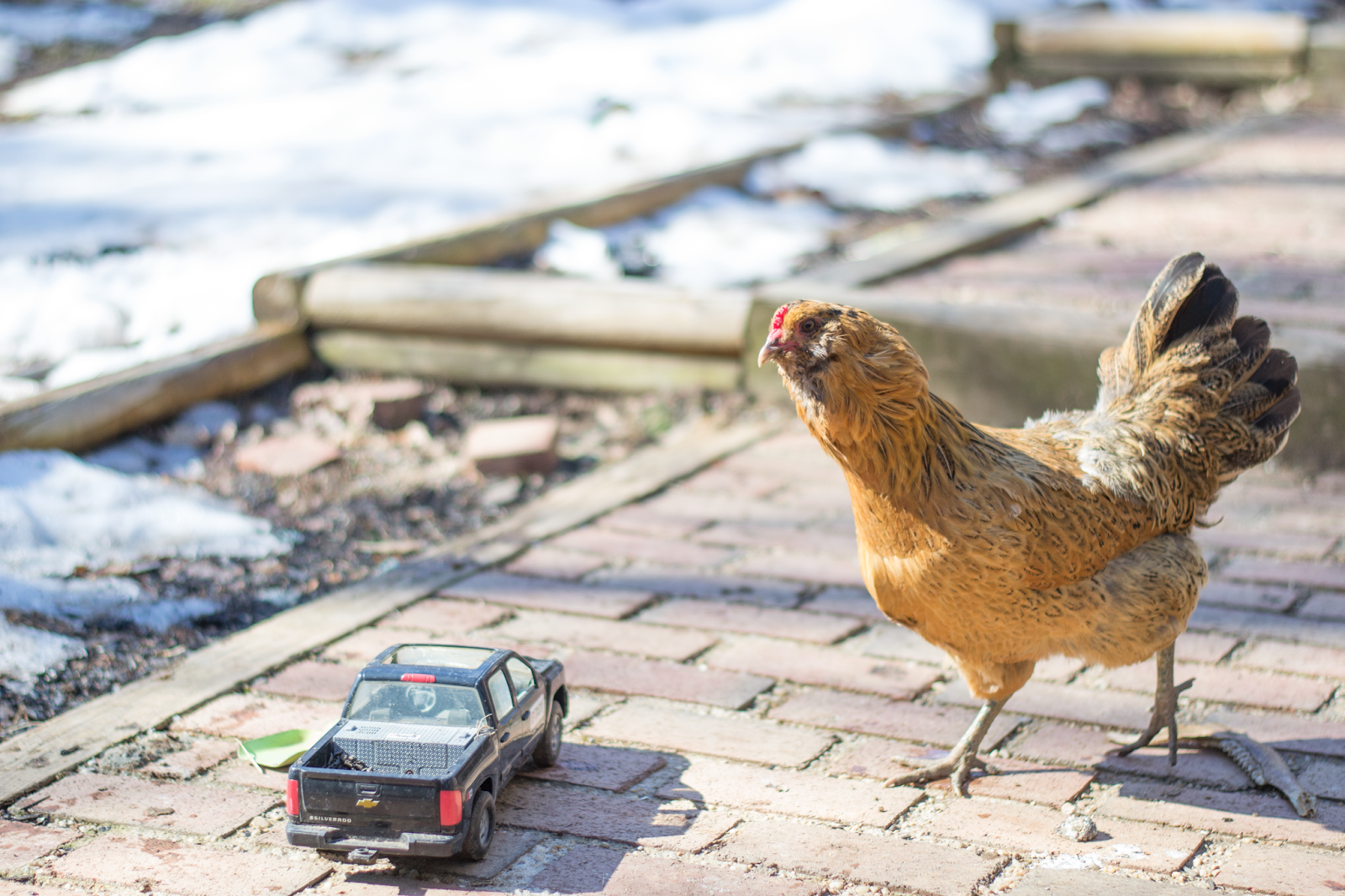 |
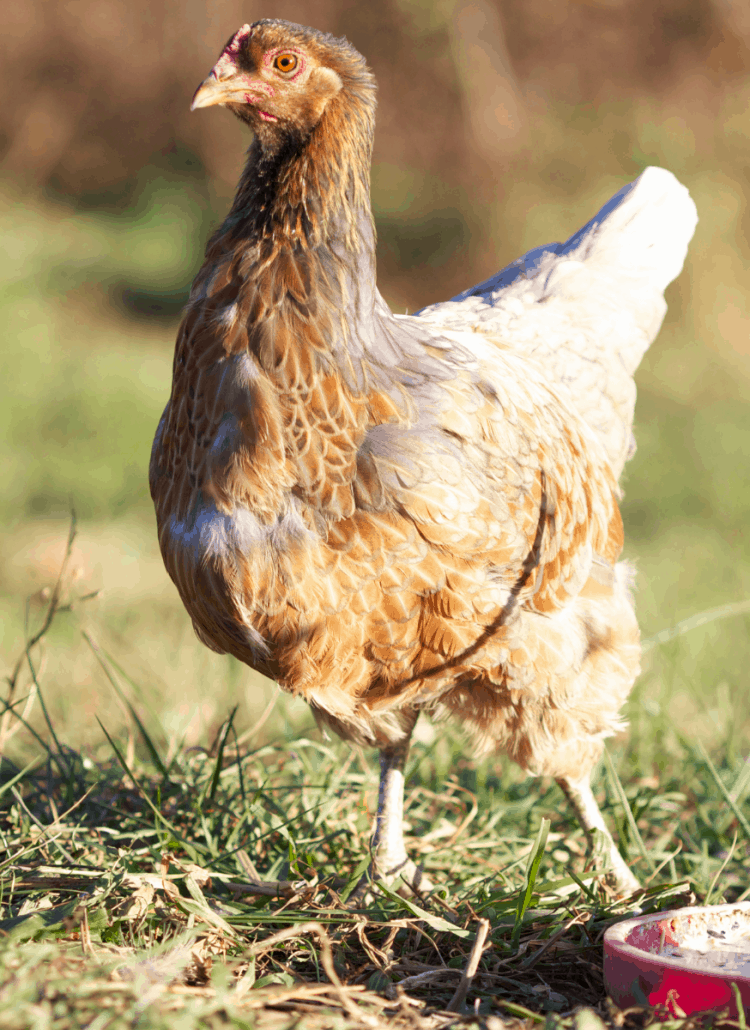
| small combed chicken breeds are perfect for extremely cold climates |
If you simply want homestead chickens and don’t plan on breeding them for a purpose, then choose a breed that does well in regards to your climate through out the entire year. If you live in extremely cold winters, try finding a breed with a smaller comb and wattles. For example, Andalusian chickens (large fowl) aren’t necessarily the best fit for those who live in temperatures that reach -30*F. With their big floppy combs, it is a recipe for disaster unless tended to very tediously. In fact, they are even considered in the “Mediterranean” class of birds.
In the same respect do not choose birds, such as the Hedemora, if you live in a climate that reaches 100+ degrees. While they are extremely cold hardy, you will cause yourself quite the electric bill to cool them in the Summertime.
I’m extremely excited about the Icelandic Chickens that we have added to our flock. They are incredibly tolerant of cold and hot climates. You can find out a little more about them on our homestead website.
I’m extremely excited about the Icelandic Chickens that we have added to our flock. They are incredibly tolerant of cold and hot climates. You can find out a little more about them on our homestead website.
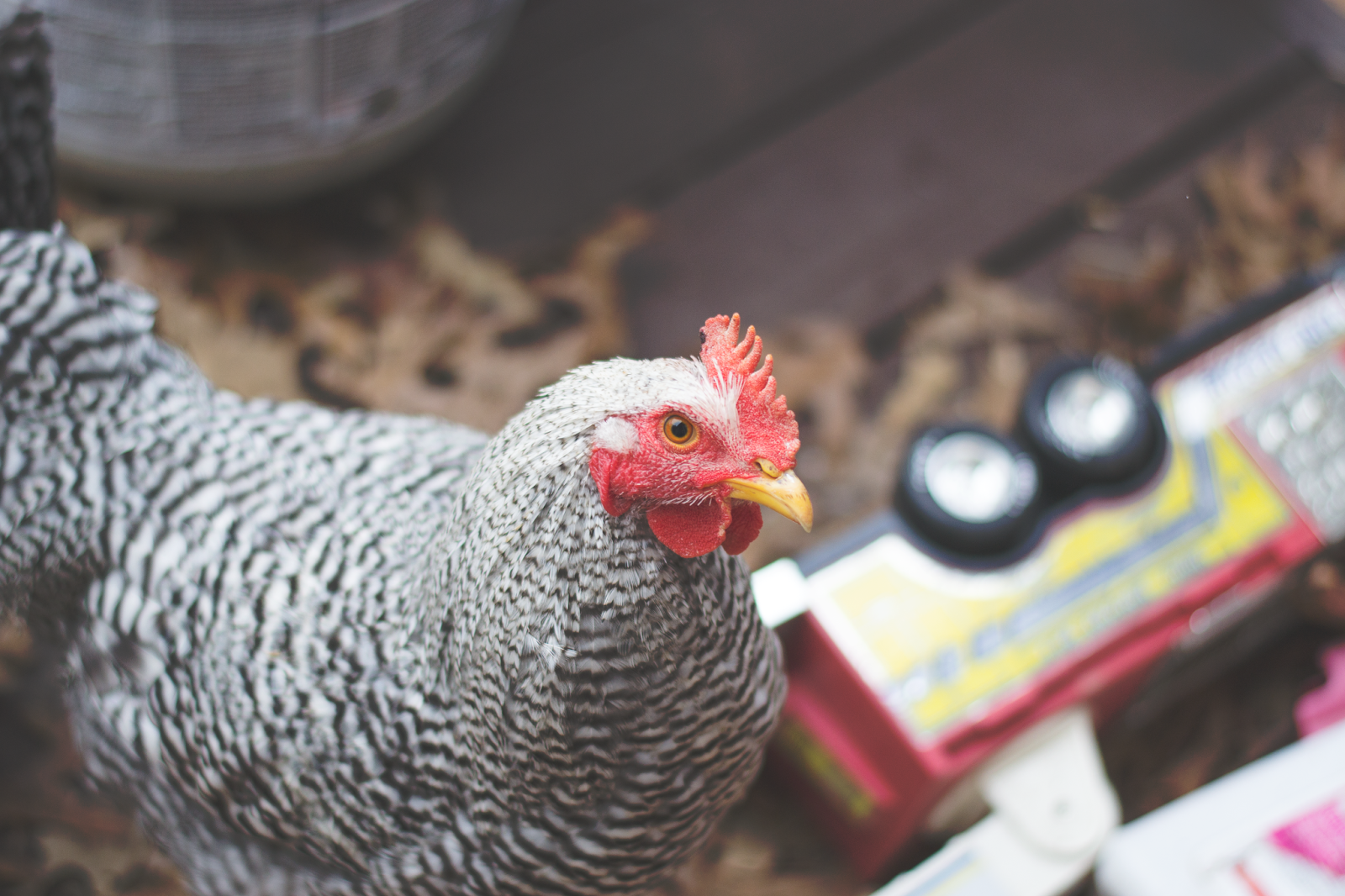 |
| small bit of frostbite (black) on young cockerels comb |
Let Nature Do Its Thing
It’s very hard for people to understand this, but chickens were created to be outdoor creatures. If you’ve followed all of the above steps, there should really be no concern with frostbite. Sure, you’ll see a little here and there, but nothing to be concerned about. In fact, you’re probably more concerned about it than your rooster is.
However, sometimes humans decide to go against all odds and make drastic decisions. This includes putting a heat lamp in their coop. I cannot tell you how to run your homestead, however, I can tell you that it is extremely dangerous to place a heat lamp of any kind inside of your chicken coop. If you wish to turn a light on for your chickens, find an old regular watt light bulb that puts off a little heat. It won’t heat your coop up, but it can knock of the chill a bit. With that said, make sure it is secured to the roof of your coop and surrounded by wire or an encasement of some type so that your chickens cannot fly into it and break it.
Chickens, especially roosters, are equipped to handle frostbite like champs. I have several friends who live in the -30*F locations, and never once have to treat chickens for frostbite. With that said, there can be extreme cases, but for the most part, a comb or wattle may get a bit of frostbite on it, and will simply heal over and flake off on its own. Under no circumstance should you pick at or peel off the affected area’s. Allow nature to do its own thing and heal itself.
If You’ve Done it all….
…and your rooster still gets some frostbite, don’t worry. There are plenty of all natural ways to heal your roosters comb if you are extremely concerned or it is a rare threatening case of frostbite .
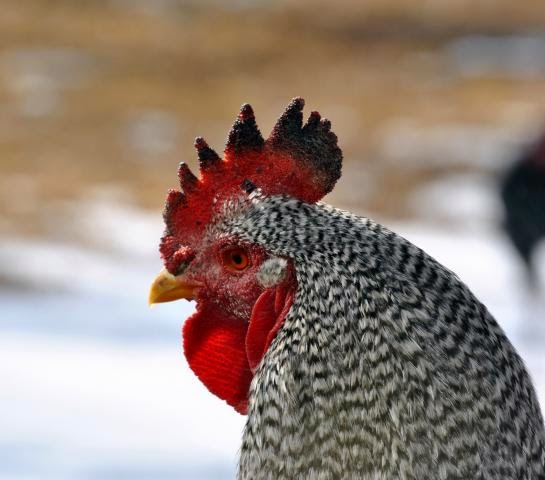 |
| Mild case of frostbite — the comb is not infected, so it is not severe. I would start treating in this case, however. |
One of my favorite ways to help my roosters and other large combed chickens through the frosty months is to apply Vaseline to their combs. You can also apply olive oil with oregano or tea tree essential oil mixed in if your frostbitten comb becomes infected or severe — an over the counter antibiotic ointment is also an alternative, but we prefer all natural methods. These two all natural methods are tried and true, and worked for us in Virginia during two weeks of extremely bitter cold days and nights (below zero temps and even worse wind chills). Vaseline and oil will not prevent frostbite, so I do not suggest using it unless treating frostbite.
I also swear by black salve or ointment. Whenever I have a comb or wattle injury, I instantly go to Christopher’s Black Ointment.
I also swear by black salve or ointment. Whenever I have a comb or wattle injury, I instantly go to Christopher’s Black Ointment.
If for some reason you have the ultimate extreme case where the chickens tissue becomes severely infected and becomes noticeably painful, you will need to separate the chicken from the rest of the group in an effort to prevent pecking and further tissue damage. In this situation, I would place the chicken in a small area with a regular watt bulb that puts off heat, however, do not put off too much heat, as your chicken will then get used to it and will be in shock when placed back into the coop with the rest of the flock. Many suggest cutting the highly infected areas off of the comb and wattles, I have never had to deal with that, and I don’t think you will either if your coop is properly built. I have many chicken friends who live in the coldest of area’s and have never had to deal with frostbite to these extremes, because they know how to take care of their chickens and their chicken housing.
These are several, very simple, ways to help prevent comb and wattle frostbite this winter. All natural methods work wonders, and frostbite isn’t really anything to freak out about. Most chickens will get specks of frostbite on their combs and wattles this winter. It is almost inevitable. However, it is not an issue that should be overly exaggerated in an attempt to sell chemical medications that chickens do not need, which I have seen too much of recently.
Please understand, as I stated before, that chickens are nature’s creatures, not ours. And they adapt very well, if taken care of properly, to climate changes. As always, make sure they constantly have plenty of water and food, and that their run is free from snow and ice during these winter months. It will help their winter time experience drastically over these frigidly cold days!
Want even more information about deep litter method flooring? I highly suggest reading Harvey Ussery’s deep litter method article, here. I have also linked to his book below — great read and I hope to have a review of it up soon!