• Home
  • Membership
  • Shop
  • Cart
  • Our Farm
  • Gut Health
  • Herbal Practice
  • Buy Trusted Supplements
  • Nav Social Icons

  • Skip to primary navigation
  • Skip to main content
  • Skip to primary sidebar
  • Skip to footer
  • Home
  • Blog
  • About Me
  • Our Farm
  • Gut Health
  • HH Membership
  • My Books
  • Youtube
  • Podcast
  • Homesteading
  • Chickens
  • Herbs
  • Family
  • Farmhouse
  • Homemaking
  • Recipes
  • Sourdough
  • Contact Me
  • Herbal Practice
  • Buy Trusted Supplements
  • Mobile Menu Widgets

    Search

    Connect

Amy K Fewell | Homesteading for the Kingdom

Amy K Fewell | Homesteading for the Kingdom

  • Start Here
    • About Me
    • My Books
    • Podcast
    • Youtube
    • Gut Health
  • Blog
    • herbs
    • Bees
    • chickens
    • rabbits
    • Farmhouse
    • gardening
    • devotional
    • homemaking
    • sourdough
    • recipes
  • Courses & Books
    • HH Membership
    • My Books
  • herbs
  • Podcast
  • Contact Me

What is True Self Sufficiency?

March 3, 2016 · In: homesteading, prepping


I’ve been on this “homesteading” journey for a few years now. I’m not nearly where I want to be, at all. You can read what my Ultimate Homestead Dream is in another blog post. Homesteading truly is a journey. You have to start somewhere. Some of us want to dive in head first all at once, but that’s just not possible for everyone, like us. I’d love to have it altogether, but the reality is that I don’t.
So for now, I’ll bloom where I’m planted, and make the best of what I do have to work with.
But the question begs to be asked…
What is True Self Sufficiency?
What does it look like?
What does it feel like?
It’s a question I ask myself, and a truth that I remind myself of often.
We are not completely self-sufficient yet, and we aren’t anywhere close to being completely self-sufficient yet. But it’s one of my goals. No, we aren’t going “off-grid”. No, we aren’t “preppers”, though I’ll touch on the different types of “preppers” there are, and your mind will be blown! And there’s nothing wrong with living off-grid or prepping.
So, what is true self sufficiency?
 
 
Feeding yourself completely off of your land and/or sourcing some food from a fellow farmer/homesteader
Believe it or not, even our grandparents didn’t always “grow it all” and “do it all”. Let’s get real for a second. Most of our previous generations depended on the homesteading community to survive. One family excelled in growing wheat while another excelled in vegetables. They traded off goods and services. It was true community. My generation either needs to understand that you’d literally have to work your fingers off in order to “do it all”, or you’ll have to outsource some of your food products. Does this mean from a grocery store? No, that’s not what I mean. True self-sufficiency isn’t relying on the grocery store for what you don’t grow. It’s relying on the community, farmer’s markets, other homesteaders and farmers, for what you can’t or don’t grow or make. Why is that true self sufficiency? Because you aren’t putting your money towards a commercialized business that spreads a thin layer of income over farmers across the world. You are literally pouring money back into your local economy, and essentially, right back into your own wallet.
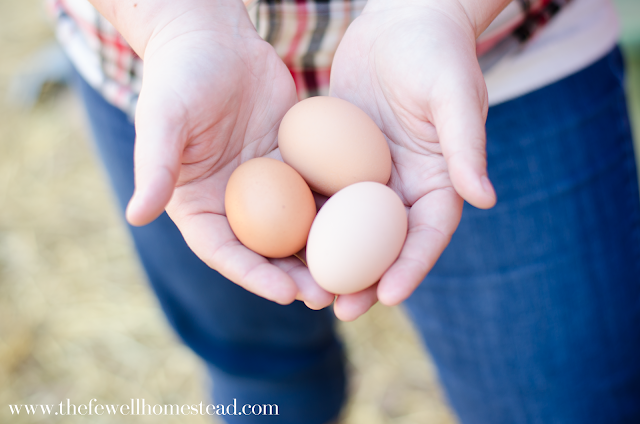
Breeding your animals for consumption or use, not continuously buying/renting them

For example, if you are breeding rabbits for meat, being truly self-sufficient means you aren’t going out and buying new rabbits for meat consumption. And besides, ew. I want to know where my meat comes from, not just buy it off craigslist.

It means you sit down, have a plan, get your rabbit herd together, and then start breeding your own meat. Sure, breeders die. But that doesn’t mean you have to go get a new one. This means you plan ahead and hold back certain babies from litters so that you can better your lineage and be sustainable. This can easily be done by starting with pedigreed rabbits that come from several different lineages. Knowing the animal and where it came from is half the battle.
The same goes for any animal that you are using for consumption, product, or work. Once you have established your herd or breed, the only time you should be adding new blood into the breeding system is to better your lineage and offspring. This doesn’t necessarily need to be done every single year. Studding out animals is a long time tradition, but it can get expensive. If you have a way to hold back animals, that’s the best self sufficiency option. However, finding another local homesteader who you can trade services with is a great option too.


Preserving your harvest
I like to call this the original “prepping”. It’s not what today’s modern society calls “prepping”. It truly is just preserving your harvest from that year. If that defines you as a “prepper”, then society is wrong. I’d like to be referred to as just a smart homesteader trying to live like the older generations.
One of your greatest steps into true self-sufficiency goes hand in hand with gardening or sourcing food from a fellow farmer. You’re going to need to preserve this food, because whether you like it or not, if you don’t have a working green house, you’re not going to be able to grow your food all year long.
This means you learn how to can vegetables, fruit, and meat. It means you learn how to cure meat and other goodies. You create a space for keeping your preserved items, and you utilize them all year long.
 
Herbal remedies and natural living
 
If you’re going to be self-sufficient, then you’re going to need to learn how to take care of yourself. They were healthier because they ate real food. Our ancestors were healthier than we are now, because they did live off of their land and treat themselves. They didn’t run off to find a doctor when they had a common cold. Now, granted, there were certainly deaths from illnesses, but most of them were from impoverished villages or from people already dealing with other ailments. Or simply because they didn’t take care of themselves to begin with.
This is one of the biggest journey’s that I am currently on. One of my main goals this year is to be so self-sufficient in herbal remedies and natural living, that I will, ideally, never have to take my family to the doctor. The reality is that when you live a healthy lifestyle to begin with, you should rarely get sick or have a serious ailment. However, this goes far beyond that. What if my child falls and needs stitches? Clearly, I’m going to rush him to the ER if it’s something serious. But if it’s a cut on his knee that just needs stitching…I can do that at home.
Learning herbal remedies is a necessity in true self-sufficiency. I might ruffle feathers here, but this means you cannot completely rely on essential oils. Sorry, you just can’t. While EOs are ancient remedies, have you learned how to make them yourself yet? Do you personally know anyone making them? I don’t, and I doubt most others do either. It is easier, and healthier for you, in true self-sufficiency to rely heavily on herbal remedies rather than EOs. It is easier to grow herbs and make tinctures than it is to rely on EOs. With that said, a healthy relationship through self-sufficiency with EOs would look something like this—a fellow homesteader makes homemade EOs, and you trade them in dried herbs or pay for their goods.

We have become much too reliant on EOs, and throw our money at large companies praising them for the “best EOs in the entire world”. But if you don’t know what else is out there, how can you make that assumption? If you, yourself, don’t even know how an EO is made, you cannot falsely claim these statements.

Working and living without debt

This is a big one for a lot of people. Becoming self-sufficient should mean you don’t have to rely on bank loans and debt to live your life. Therefore, you work towards paying off all debt. Being truly self-sufficient means you have zero debt, or at least in a perfect world. However, most of us have mortgages to pay. With that said, people are doing it. People are building their own homes over a year or two time period, just so they don’t have a “mortgage” to pay every month. I don’t think we will ever be there. Our goal is to purchase a larger piece of land, and my husband will build our home, but I think we will always have that mortgage debt for at least a few years.

The other side of this is learning how to work. There are a lot of people who will still continue the daily grind of an office job, etc. Yes, that’s an honest living. But will you have time for that once you are truly self-sufficient?  This is where your working skills comes into play. Having a skill that you can offer to others is essential. Can you build things? Can you help others in some way? Or maybe you’ve become so self sufficient that you can buy, sell, and trade straight from your homestead?

Either way, work and living without debt is a major part of being truly self-sufficient.

Off-Grid vs. Modern Homesteading

Do you have to live off-grid to be completely self sufficient? That’s a good question. And honestly, out of this entire blog, I’m not quite sure how to answer that. I would like to think that you can have a modern homestead and still be completely self-sufficient, but that’s just not true. Again, completely self-sufficient is the key word here.

You are still dependent upon an electric company to give you electricity. You are still paying that bill every month. Original “off-griders” don’t have cell phones, don’t have electric, they don’t depend on anyone other than themselves for those things. But we don’t live in the renaissance here, people. We live in a modernized society, where sometimes, it’s better to have a cell phone than not.

So, do you have to live off grid to be completely self-sufficient? I’d say yes.

Do you have to live off grid to be completely self-sufficient in today’s modernized society? Absolutely not.

Going off-grid is a great option, but I don’t foresee it as an option for us. Unfortunately, we are just too modernized. I do have a job that requires me to have wi-fi, for the moment. We do have lives that require us to have cell phones. And honestly, we enjoy our electricity. And I don’t foresee us having the money to pay for solar panels anytime soon.
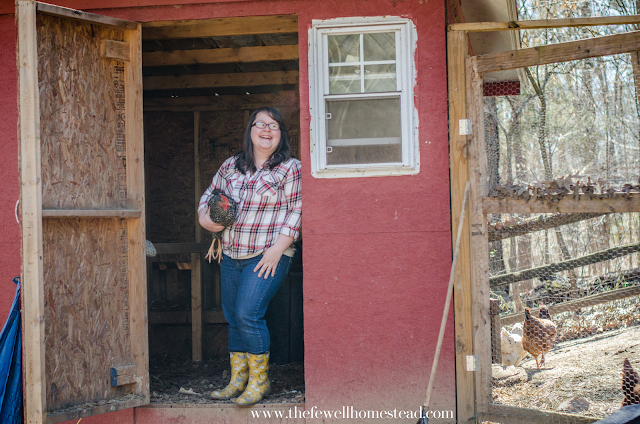
I’m not going to lie, I don’t foresee us ever being completely self-sufficient, but I see us getting almost there, or in today’s modernized definition of it, in the near future (once we have more space).

This is something I think about often, and something I’m asked often. And I hope that it helps someone out there, somehow!

We have to remember that, while we’re trying to get back to our roots, our roots have grown a lot in the past century. We are not the same world we were then, and therefore, homesteading and true self-sufficiency can look a lot different now than it did back then.

Ultimately, you have to decide what’s right for your own life and family. And true self-sufficiency might look a lot different to you than to others. But, by definition standards, this is what it would mean.

 

By: Amy K. Fewell · In: homesteading, prepping · Tagged: homesteading, how to be self sufficient, self sufficiency

you’ll also love

The Two-Breed System for Year-Round Meat Chicken Breeding
Homesteading: Building a Parallel System of Kingdom Economy
In Praise of the Simple Onion
Next Post >

10 Years Ago | When I Said I Do…

Primary Sidebar

meet amy

meet amy
hello!

I'm Amy. I love organic food but I love cookies too I love Jesus and His grace. I believe broken people make the biggest impact in the world when they share their stories. I believe in stories, and I'm sharing mine.

Read More

Connect

Search

Ads & Sponsors

200x400

Advertise

Follow Along

@amy.fewell

The healer’s kitchen is very simple. We know that The healer’s kitchen is very simple. We know that Jesus is the ultimate healer, and yet we know that these simple herbs and remedies that sit on our shelves and counters also make us capable of healing through Yahweh’s creation. It’s a beautiful symbiotic relationship. 

We are not new age or “witchy”. In fact, with every herb we harvest and remedy we hand out, we thank God for how He created us. And we know that all we are really doing is helping Him bring His creation back into homeostasis. I always chuckle when I see people praise “natural” doctors that rarely recommend anything natural. But then look at you weird when you are literally using nature.

The healer is different. The one who partners with “the Restorer of all things”—Yahweh. We look at the environment around us. We look at the food we eat. We evaluate the water we drink, air we breathe, people we fellowship with, and emotional stresses. Because we know that stress plays a major role on health and disease in the body. 

Years ago, a friend of mine said “well you and I understand, because we are community healers.” And it hit me. I like that word. I like what it conveys. We are healers of the land, soil, family unit, culture, food system—all while being directed by the Holy Spirit, Jesus, THE Healer. 

And it is beautiful. And it is humbling. It is to be revered.

The other night during fellowship, we were processing the potential spiritual gift of healing being present in one of our group members, and someone said “He chose you to be a healer”. In HIM. Another example, but in the spiritual way through equipping and edifying.

Uniquely, when you’re busy healing your life, you come to a point where you don’t need many remedies or protocols on hand for yourself anymore. But recently a friend came over and asked if I had something that she needed immediately, and I didn’t. And I thought to myself “it shouldn’t be this way, I must get back to the way it was, ready to help heal at anytime.” 

So this week I’ve been taking time to do exactly that. Because God has called me—you and I, even—to a unique space and calling. Physically, spiritually, and agricultu
Early this morning I had a dream. In the dream the Early this morning I had a dream. In the dream there were various people, but the significant part of it was me holding my baby on my hip while praying for other people. It seemed chaotic and yet not. 

But as I began to look around in the dream, I kept hearing (while simultaneously saying) “it is compassion that makes the difference.” 

This morning I started reading the book of Mark. And in the very first chapter I read exactly this—Jesus was moved to such compassion for people. It wasn’t a task. It wasn’t a check list. It wasn’t a method. It wasn’t a doctrine or theology assignment. It was compassion and authority and His power. 

That’s it. 

My prayer today, and everyday, is this—Lord, give me compassion for Your people, the body of Christ, and sinners. Give me compassion beyond comprehension, that can only come from You. And the discernment of hearts, so I know when to move on.
This one is for the leaders in marketplace and min This one is for the leaders in marketplace and ministry…

Something I wish someone had told me earlier in leadership—

You can love people deeply and still not be available to everyone constantly. Those two things are not in conflict. Learning the difference might be the thing that saves your ministry, your business, and your sanity all at once.

The further you go in leadership, the more people will want from you. And because you genuinely care, you will feel the pull to say yes. Every time. To everyone. They are good things, but they aren’t always your assignment.

And it will slowly hollow you out if you don’t realize this. 

There is a version of being helpful that is actually a form of neglecting your own assignment. When you are so deep in everyone else’s lane that your own lane goes untended—that is not generosity. That is a boundary problem dressed up as a virtue.

You need leadership friends. But a leadership friendship is not a leadership merger. You can sharpen each other without steering each other. You cannot want it more than they want it. You cannot build it for them. If you try, you will burn out doing someone else’s work while your own sits waiting.

And there are people who will—consciously or not—try to make you their permanent wing man. Until the line between your assignment and theirs disappears. You are allowed to put that down.

Protecting your time is not selfishness. It is stewardship.

Not everyone who wants your time deserves your time. And not everyone who needs a leader needs you to be theirs.

Protect the assignment. Guard the gate. Lead well from your own house first.

Overflow from your cup into your home. Create circles just like Jesus did—the Father, the three, the 12, the rest. 🤍
There are days when I don’t feel like any of it is There are days when I don’t feel like any of it is working. Days when the animals get out and the kitchen is a wreck and a child is crying and an email goes unanswered and dinner is burned and I sit down at the end of it all and think—what am I even doing? Is any of this adding up to anything?

I see you, girl. We are wives who are also visionaries. Mothers who are also builders. Homemakers who are also entrepreneurs. We hold the baby on the hip, the business in the mind, the home in the hands, the marriage in the heart. And we do it mostly without enough sleep.

But the enemy knows that if he can get you to quit, he wins on every front at once.

So he whispers that you’re failing as a mother because you’re building something. That you’re neglecting your business because you’re tending your home. That you’re too much and not enough, simultaneously, always. He is strategic and he is a liar, and I need you to hear that today with everything in you.

Proverbs 31 was a portrait of a woman who kept going. She rose while it was still dark. She worked with willing hands. She considered a field and bought it. She opened her arms to the poor and her mouth with wisdom. But she was not perfect, she was faithful. And she knew when to rest.

That is your inheritance. That is your calling. 

God did not give you a vision for your home, your family, and your work so that you would abandon it the moment it got heavy. He gave it to you because He knew you could carry it—not in your own strength, but in His. The weight you feel right now is not a sign that you’re failing. It is a sign that you are doing something that matters.

Don’t you dare quit.

Not on your marriage when it gets hard. Not on your children when you feel invisible. Not on your home when it feels like chaos instead of sanctuary. Not on the business and mission God put in your bones. 

Every faithful, unglamorous, unremarkable day you show up is a seed going into the ground. And seeds that go into the ground do not stay there forever.

Your harvest is coming.

Keep your hands to the plow, friend. Heaven is watching, and it is not unimpressed.
If you have a sourdough starter sitting on your co If you have a sourdough starter sitting on your counter, chances are you also have one thing piling up faster than you'd like—sourdough discard.

For many homesteaders, throwing discard away feels wasteful. After all, we work hard to cultivate our starters and steward what we have. That's exactly why this Easy Sourdough Pizza Crust Recipe has become a staple in our kitchen.

And here's the best part—it doesn't require an all-day fermentation process.

This homemade sourdough pizza crust comes together quickly, uses simple pantry ingredients, and transforms ordinary pizza night into something that tastes like it came from a wood-fired bakery.

The crust is crispy on the outside, soft and chewy on the inside, and carries that subtle sourdough flavor that makes every bite better than store-bought dough. Whether you're feeding a large family, hosting friends, or simply looking for another practical way to use your sourdough starter, this recipe delivers every single time.

One of the things I love most about homestead cooking is learning how to stretch ingredients further. Sourdough isn't just for bread. It's for pancakes, biscuits, crackers, pizza crust, and countless other recipes that help reduce waste while creating nourishing food from scratch.

In a world that constantly pushes convenience, there's something deeply satisfying about gathering around a homemade meal made with ingredients you've cared for yourself. Pizza night becomes more than dinner—it becomes a tradition.

If you've been searching for:
✔️ An easy sourdough pizza crust recipe
✔️ A practical sourdough discard recipe
✔️ Homemade pizza dough without commercial yeast
✔️ Simple homestead recipes for busy families
✔️ Ways to use extra sourdough starter

Then you'll want to save this recipe for later.

Trust me—once you make pizza this way, it's hard to go back.

🍕 Comment PIZZA and I'll send the recipe directly to your inbox!

Have you ever made pizza crust with sourdough starter? Tell me your favorite toppings below!

Footer

Learn More

Chickens
Homemaking
Herbs
Recipes
Devotionals

Info

About
Contact
Privacy Policy
Shop

stay in the know

Copyright © 2026 · Theme by 17th Avenue