Most homesteaders hit the same wall: you nail meat chicken production and meat chicken breeding in spring, then watch your summer or winter batches struggle. The single-breed broiler chicken approach works until the weather turns. Your fast-growing Cornish Cross broilers thrives in cool months but collapses in July heat due to health issues. Your hardy dual-purpose breeds and heritage birds handle winter like champions but take forever to reach processing weight when you need meat fast. You’re left with seasonal gaps, wasted feed, and a freezer that runs empty at the worst possible time.
The solution is not finding one perfect breed. It’s running two complementary breeds in free-range systems that cover each other’s weaknesses across all four seasons. This system keeps meat coming in consistently while reducing mortality, cutting feed waste, and matching each breed to the climate where it performs best. You’ll utilize high growth rate Cornish Cross broilers as well as heritage breed chicken breeds and dual-purpose breeds, from day-old chicks to butcher.
This is for those who want to grow smaller batches of birds at one time for family consumption to avoid the grocery store. The homemaker that wants flavorful meat and food security. The homestead and farm market producer could use this system as well for food security reasons. We’ve had years when our hybrid birds were junk and had wished we had heritage chicken breeds we could easily sell. This system works for both sets of homesteaders.
KEY TAKEAWAYS
- Single-breed meat chicken systems create seasonal production gaps because fast-growing Cornish Cross broilers collapse in summer heat while heritage breeds take 14 to 20 weeks to reach processing weight.
- The two-breed rotation system pairs fast-growing hybrids for cool-weather months with heat-tolerant slower-growing breeds for summer, eliminating mortality spikes and maintaining consistent meat production year-round.
- Cornish Cross broilers reach processing weight in 8 to 10 weeks during spring and fall but experience 15% to 30% mortality rates in temperatures above 90 degrees.
- Overlapping batch scheduling with processing every 8 to 12 weeks prevents freezer shortages and spreads workload across the year rather than concentrating processing into single overwhelming events.
- The dual-breed approach provides supply chain insurance against genetic failures or disease outbreaks by maintaining two separate breeding populations with different vulnerabilities.
Why Single-Breed Systems Create Seasonal Gaps
You cannot ask one breed to dominate every condition. Cornish Cross birds grow at incredible speed and hit processing weight in 8 weeks, but they are biological disasters in temperatures above 90 degrees, even in free-range systems. They often have health issues, too. Their oversized breast meat and rapid metabolism make them vulnerable to heat stroke, leg issues, and sudden death when summer hits. You may lose 15% to 30% of a summer batch if you push these birds through the hottest months.
Heritage chicken breeds and slower-growing breeds handle heat beautifully and forage like professionals, but they demand 14 to 20 weeks to reach market weight. That extended timeline means more feed cost per pound of meat, and it creates a bottleneck when you are trying to fill a freezer before winter or process multiple batches in a single season.
The two-breed system uses fast-growing meat hybrids in cool months and heat-tolerant slower birds in summer, so you always have a breed working in its optimal window. This is not about doubling your workload. It is about seasonal rotation that eliminates waste and keeps your production steady without fighting biology.
The Two Breeds That Form the Core System (Cornish Cross broilers and dual-purpose breeds)
This system runs on strategic pairing, not random selection. You need one breed optimized for speed and one built for durability.
Breed 1: Fast-Growing Meat Hybrid
Cornish Cross or Freedom Ranger style birds give you rapid turnaround in spring and fall when temperatures stay between 50 and 75 degrees. These birds hit processing weight in 8 to 10 weeks and produce large, meaty carcasses with excellent feed conversion. Run these batches from March through May and again from September through November in most climates.
Breed 2: Heat-Tolerant Slower Grower Heritage Breed
Varieties like Red Rangers, Black Australorps, Delawares, or Buckeyes handle summer heat and cold winters without the mortality spikes you see in hybrids. They take 14 to 18 weeks to finish, but they forage aggressively, require less climate control, and give you steady production during months when hybrids would collapse. Run these birds from June through August or September, and use them as a backup batch in winter if needed.
The beauty of this pairing is that you are not asking either breed to perform outside its strength zone. You match the bird to the season, and both thrive.
How to Structure Your Year-Round Free-Range System Rotation
Planning the calendar correctly is what separates this system from chaos. You need overlapping batches so one group is always approaching processing weight while another is just starting.
- March: Start your first fast-growing batch. Order 25 to 50 Cornish Cross or Freedom Ranger chicks. Brood them for 3 weeks, then move to pasture or a secure grow-out pen. Process at 8 to 10 weeks, which lands you in late May.
- June: Launch your heat-tolerant batch. Start 25 to 50 Red Rangers or another slower breed as temperatures climb. These birds will finish in September or October after 14 to 18 weeks.
- September: Start your second fast-growing batch. Another round of hybrids takes advantage of cooling fall temperatures. Process in November before winter hits hard.
- Optional December/January batch: In milder climates, you can run another slow-grower batch through winter. In harsh climates, skip this window and rely on your frozen inventory.
- January Heritage birds: To have heritage or slow growers in May or June, you’ll need to start your heritage birds in January. (more on that system below)
This rotation ensures you are processing birds every 8 to 12 weeks, which keeps your freezer stocked and prevents the feast-or-famine cycle that kills most small-scale meat operations. You also spread out the workload, so you are not trying to process 100 birds in a single weekend.
Breed-Specific Management Tips That Prevent Losses
Each breed has failure points you need to design around. Fast growers and slow growers do not share the same vulnerabilities.
For Fast-Growing Hybrids:
- Limit feed access after week 4. Free-feeding Cornish Cross after they hit rapid growth can lead to leg problems and heart failure. Switch to 12 hours on, 12 hours off feeding schedules.
- Provide shade and airflow in any temperature above 75 degrees. These birds overheat fast. Fans, misters, and shaded areas are non-negotiable if you push into late spring.
- Process on time. Holding these birds past 10 weeks increases mortality and tanks feed efficiency. Hit your processing date.
For Heat-Tolerant Dual-Purpose Breeds:
- Maximize forage access. These birds offset feed costs by eating grass, bugs, and kitchen scraps. Movable pens or rotational pasture systems work beautifully.
- Do not rush them. Trying to push these breeds to finish faster with high-protein feed just increases cost without improving carcass size. Let them take their time.
- Use them as dual-purpose insurance. If a hen from this batch is not quite ready to process, she can transition into your egg-laying flock. You cannot do that with a Cornish Cross.
These management differences are why the two-breed system works. You are not forcing one set of rules on birds with completely different biology.
Common Mistakes That Sabotage the System
Even with the right breeds, poor execution kills results. These are the errors that create the problems you are trying to avoid.
Starting too many birds at once. New operators order 100 chicks and then panic when processing day arrives. Start small with 25 to 50 bird batches until you dial in your systems. You can always scale up.
Skipping the fall hybrid batch. Many homesteaders run a spring batch and a summer slow-grower batch, then stop. The fall hybrid batch is the one that fills your freezer heading into winter. Do not skip it.
Using the wrong breed for summer. Cornish Cross in July is a death sentence in hot climates. Do not convince yourself you can manage it with fans and shade. Use a heat-tolerant breed instead.
Failing to plan processing dates in advance. Processing is the bottleneck. If you do not have a date locked in and equipment ready, birds sit too long, eat more feed, and cost you money. Schedule processing before you even order chicks.
The two-breed system only works if you actually execute the seasonal rotation and manage each breed according to its needs. Cutting corners reintroduces the same problems you are trying to solve.
The two-breed rotation is not complicated, but it does require planning and discipline. You are trading the simplicity of ordering one breed all year for the security of never running out of meat and never losing batches to bad weather.
If you want a freezer that stays full and a system that works in every season, this is the method that delivers it.
The Staggered Start Method: How to Process Birds Every 6 Weeks Without Burnout
The standard approach starts 50 birds, raises them together, and processes them all in one brutal weekend. This creates three months of no processing followed by 16 hours of slaughter chaos. The staggered start method spreads both the work and the meat supply. If you want to only raise broilers in small batches, here’s a great system.
How Staggered Starts Work:
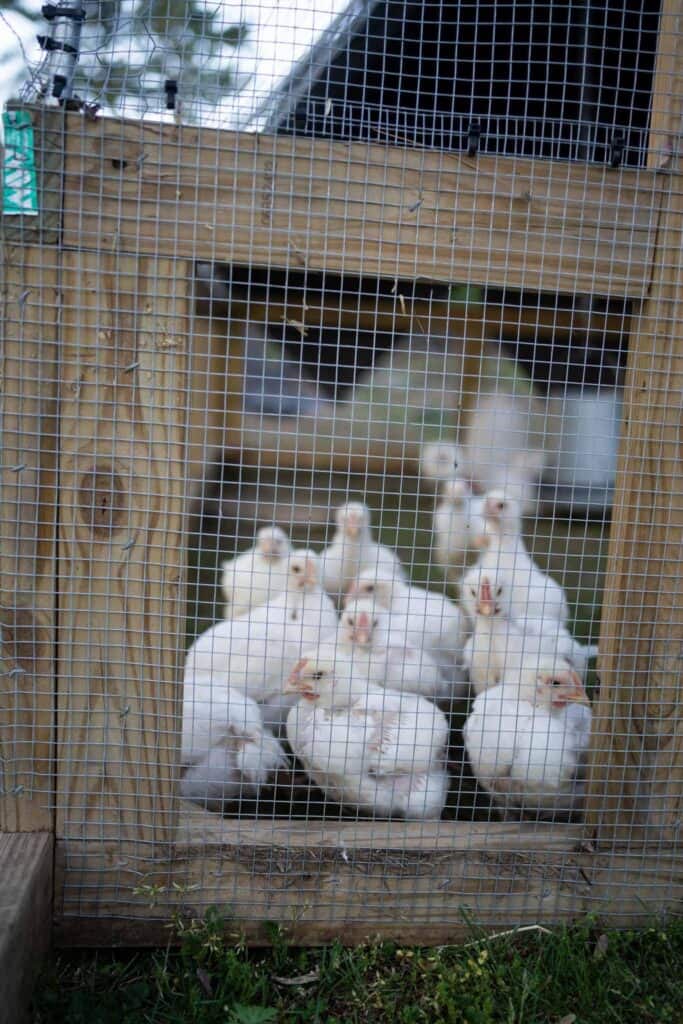
Week 0: Start 15 Cornish Cross chicks
Week 3: Start 15 more Cornish Cross chicks (first batch moves to pasture)
Week 6: Start 15 more Cornish Cross chicks (second batch moves to pasture)
Week 8: Process first batch of 15 birds
Week 11: Process second batch of 15 birds
Week 14: Process third batch of 15 birds
Instead of processing 45 birds in one day, you process 15 birds every three weeks. Each session takes 2-5 hours (depending on your skill and help) instead of a full exhausting day. Your freezer fills gradually instead of all at once, which means you eat fresher meat throughout the season and you have more space as you work through your birds.
The Processing Sweet Spot:
15-20 birds is the maximum most homesteaders can process in a half-day without quality decline or physical breakdown. Anything beyond that and you start rushing, making mistakes, and hating the work. That is, unless you have a lot of help.
Critical Rule:
You must process on schedule. The moment you let one batch slide because “they could use another week,” your entire stagger collapses and you end up with 45 birds ready at once anyway. Mark processing dates on your calendar before you order chicks and treat them as non-negotiable.
This method transforms meat chicken production from a dreaded twice-yearly event into a manageable routine that fits into normal weekend schedules.
The Genetic Failure Backup Protocol: Why Smart Homesteaders Run Parallel Timelines and Dual-Breeds
The 2022-2023 Cornish Cross genetic failures taught thousands of homesteaders a brutal lesson: when your primary production breed fails, you have zero backup and empty freezers for six months. The two-breed system prevents this, but only if you structure the timeline correctly.
The Insurance Timeline Strategy:
January 1: Start heritage breed batch (your insurance policy)
March 15: Start Cornish Cross batch (your primary production)
May 15: Process Cornish Cross at 8 weeks
May/June: Process heritage breed batch
If the Cornish Cross batch fails (genetic issues, disease outbreak, hatchery problem), your January heritage batch is already at 20 weeks and ready to process. You have meat. If the Cornish Cross succeeds, you process them in May and the heritage batch becomes your summer/fall supply or transitions to laying flock.
What This Prevents:
• Discovering a failed batch at week 6 with no alternatives
• Panic-ordering replacement chicks that arrive too late
• Running out of meat for 4-6 months while waiting for a new batch
• Dependency on a single hatchery or breeding line
The Dual-Source Rule:
Order your fast-growing birds from one hatchery and your heritage birds from a completely different source (or hatch your own). If one hatchery has disease issues, genetic problems, or supply chain failures, your second source remains unaffected.
Cost of Insurance:
Running the heritage backup batch costs $80-120 in feed for 25 chicks. If you never need them as backup, they become your summer meat anyway. Or better yet, egg layers. If you do need them because your primary batch fails, they save you from grocery store dependency and potential meat shortages during the 5-6 month wait for a replacement batch.
This is not paranoia. This is the same redundancy principle that makes smart homesteaders keep backup seeds, multiple water sources, and spare equipment. Your meat supply deserves the same protection.
Homesteaders across the world need to consider this as we move further and further into a fragile food system each year. Your goal should not just be “who can produce the most”. It should be “who can produce the most sustainably“.
As you begin to create your free-range system using this two-breed system for year round meat chicken supply, you’ll easily be able to tailor it to your own needs through experience gained.
Most Important Insights to Remember
#1 The two-breed system eliminates seasonal gaps by matching fast-growing Cornish Cross to cool spring and fall months while deploying heat-tolerant heritage breeds during summer when hybrids experience catastrophic mortality rates.
#2 Processing every 8-12 weeks through staggered batch starts prevents freezer shortages and transforms meat production from twice-yearly overwhelming events into manageable routine sessions that fit normal weekend schedules.
#3 Heritage backup batches started in January provide insurance against genetic failures by reaching processing weight exactly when spring Cornish Cross batches would typically finish, eliminating 4-6 month meat gaps when primary breeds fail.
#4 Summer heritage breeds cost less per processed bird than summer Cornish Cross when mortality and heat-related feed waste are included in calculations, making the “slower” breed the economically superior choice during hot months.
#5 Fast-growing hybrids require feed restriction after week four and strict temperature management while heritage breeds thrive on extended foraging access and flexible processing windows, requiring completely different management protocols that single-breed systems cannot accommodate.