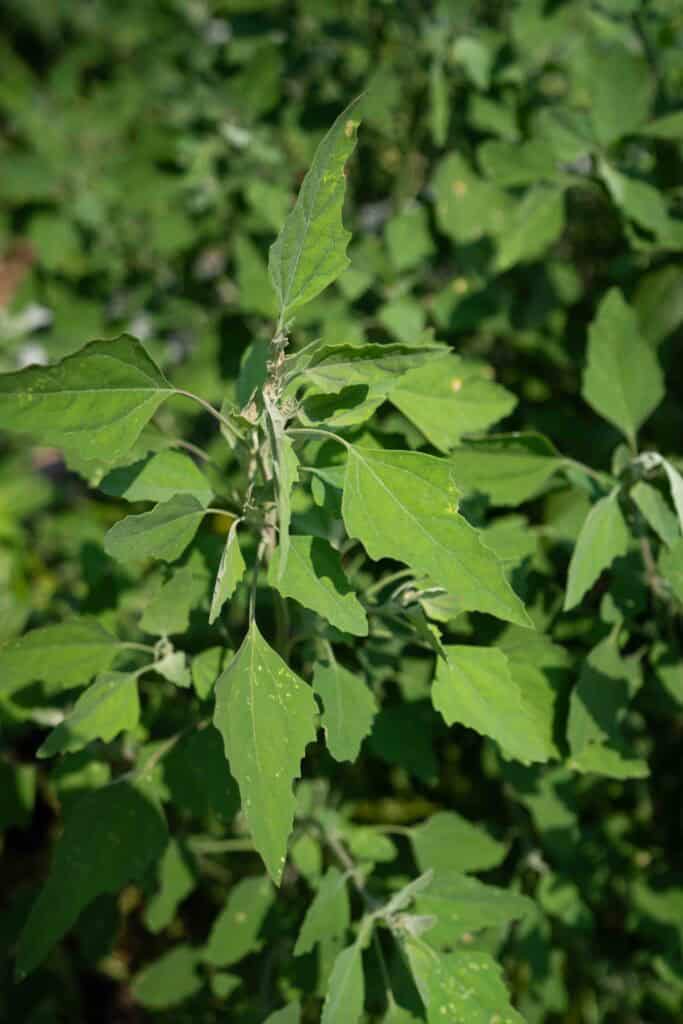
The medicinal benefits of lambs quarters (Chenopodium album) are vast in the world of wild edibles. And so are the nutritional benefits of lambs quarters. If you’ve ever walked through your garden and spotted a tall green plant covered in a dusty white coating under its leaves, you’ve probably encountered lambs quarters. Many gardeners pull it up without a second thought. Others wage an annual battle against it, determined to eradicate it from their vegetable beds.
But what if one of the most nutritious plants on your homestead is the very plant you’re trying to remove?
Known by many names—including lambsquarter, lambs quarters, wild spinach, goosefoot, and bathua—this common wild edible has nourished people for centuries. Long before modern grocery stores and supplements, cultures around the world harvested lambsquarter as both a food and a medicine.
Today, scientific research is beginning to confirm what traditional herbalists, foragers, and ancient medical systems have known all along: lambs quarters is a nutritional powerhouse with remarkable medicinal potential.
I recently encountered this beautiful little wild herb when I became frustrated with how quickly it popped up in my garden just as soon as I had weeded. I have personally been on a journey to healing my liver and kidneys, so much to my surprise, when I sat down and researched this darling little plant, I found it is traditionally used for the liver and kidneys. Well played, Jesus.
Let’s learn more about it.
KEY TAKEAWAYS
- Lambs quarters contains higher concentrations of certain minerals than many cultivated vegetables, including calcium, iron, magnesium, and potassium, along with vitamin C levels that rival or exceed common garden greens.
- The plant demonstrates hepatoprotective properties in research studies, with compounds that protect liver cells from damage and support healthy detoxification pathways.
- Lambs quarters belongs to the same botanical family as quinoa and spinach and provides notable protein content along with omega-3 fatty acids, making it exceptionally nutrient-dense among wild edible plants.
- Traditional medicine systems have used Chenopodium album as an anti-parasitic remedy due to the presence of ascaridole, a compound with documented anti-parasitic activity.
- The presence of lambs quarters in garden soil can indicate highly fertile, mineral-rich earth, as the plant cannot accumulate such dense nutrition unless the soil itself is abundant in minerals and nutrients.
What Is Lamb’s Quarters?
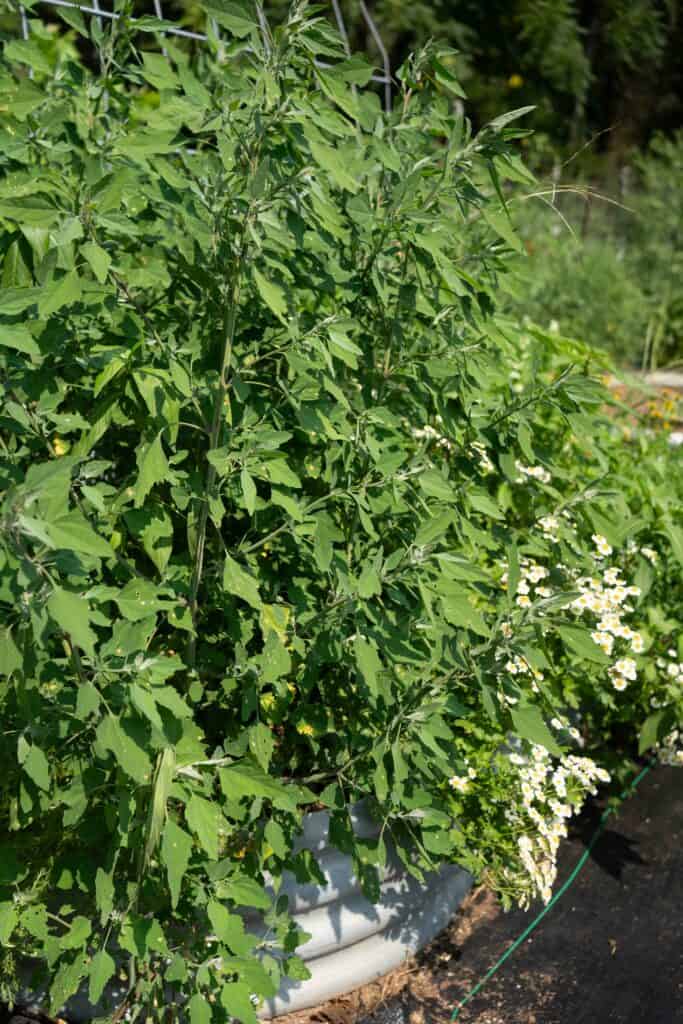
Lambs quarters (Chenopodium album) is an annual broadleaf plant found throughout North America, Europe, Asia, and many other regions of the world. It belongs to the same plant family as quinoa, spinach, and beets.
The young leaves can be eaten fresh or cooked, while the seeds can be harvested and used similarly to quinoa. The plant thrives in disturbed soils, gardens, fence lines, compost piles, and cultivated fields. However, it also can be an indicator that your soil is very fertile and full of life. It cannot be so full of minerals and nutrients unless the soil is full of these things!
For many homesteaders, it appears without invitation. Yet despite its reputation as a weed, lambs quarters may be one of the most nutrient-dense wild foods available.
Lambs quarters (Chenopodium album)
Family name: Amaranthaceae
Common name: lambs quarters, Lambsquarters, Goosefoot, White Goosefoot, Fat Hen, Bathua, Wild Spinach, Pigweed (regional), Melde (regional)
Parts used: young leaves (fresh or cooked), mature leaves, tender stems and shoots, seeds (cooked or ground into flour), whole aerial parts in some traditional herbal preparations
Actions: Nutritive (nutrient-dense tonic), Antioxidant, Anti-inflammatory, Demulcent (mildly soothing to tissues), Mild laxative and digestive support, Hepatoprotective (supports liver health in experimental studies), Antimicrobial (demonstrated in laboratory studies), Anthelmintic (traditional use against intestinal parasites), Hypoglycemic potential (may support healthy blood sugar regulation in preliminary research), Mineralizing and blood-nourishing, Mild diuretic (traditional use)
Nutritional Benefits of Lambsquarters
Research has shown that lambsquarter contains impressive levels of vitamins, particularly vitamin A precursors (carotenoids), vitamin C, riboflavin (vitamins B2), and other B vitamins.
Vitamin A supports vision, immune function, reproductive health, and healthy skin. Vitamin C plays a vital role in collagen production, immune health, wound healing, and antioxidant protection. Some studies have found vitamin C concentrations that rival or exceed many cultivated vegetables.
One of lambsquarter’s most impressive qualities is its mineral density. It contains calcium, iron, magnesium, potassium, phosphorus, zinc, copper, and manganese. These minerals contribute to bone health, blood production, muscle function, nervous system regulation, hormonal balance, and cardiovascular health.
For homesteaders seeking nutrient-dense foods from their own land, lambsquarter offers an abundance of minerals in a plant that often grows freely.
Unlike most garden greens, Lambsquarters contains a notable amount of protein. Historically, it was used as a famine food because it provided valuable nutrition when other food sources were scarce. The leaves contain meaningful levels of amino acids while also supplying vitamins, minerals, and antioxidants.
Fiber is essential for digestive health, blood sugar regulation, and maintaining a healthy gut microbiome. Lambsquarter contains significant amounts of dietary fiber that may help promote regular bowel movements, improve satiety, support healthy digestion, and feed beneficial gut bacteria.
I always recommend that my clients eat at least a 1/2 of fiber at every meal so that it helps the body digest and detox.
Researchers have also identified omega-3 fatty acids within lambsquarter leaves. These healthy fats are associated with reduced inflammation, heart health, brain function, and cellular health.
This makes Lambsquarters even more impressive as a wild food source.
The Forgotten Famine Food Strategy: Why Lambsquarters Outperforms Modern Survival Crops
Survival gardening guides typically recommend storing heirloom seeds for beans, corn, and squash, but historical records reveal that lambsquarters sustained populations through catastrophic food shortages more reliably than these traditional crops.
Why Lambsquarters Succeeds Where Other Crops Fail:
Self-Sowing Resilience
A single lambsquarters plant produces 10,000-75,000 seeds that remain viable in soil for decades. Unlike saved seed that requires careful storage, lambsquarters creates its own perpetual seed bank in your soil, germinating when conditions are favorable.
Nutrient Density Per Calorie of Effort
While cultivated greens require soil preparation, planting, fertilizing, and pest management, lambsquarters delivers superior nutrition with zero input. The protein content alone makes it more valuable than most leafy vegetables during food scarcity.
Multi-Season Harvest Window
Lambsquarters germinates throughout the growing season, providing continuous harvest opportunities from early spring through fall. In contrast, most crops offer a single harvest window—miss it, and you’ve lost that food source for the year.
Dual-Purpose Nutrition
The leaves provide fresh greens while seeds can be harvested, dried, and stored as a grain substitute—giving you both immediate nutrition and storable calories from the same plant.
Modern Application:
Rather than eradicating lambsquarters from your homestead, designate a “wild food zone” where it can self-perpetuate. This creates a zero-maintenance emergency food system that requires no seeds, no planting, and no care—yet remains ready to provide abundant nutrition if your main crops fail or food systems are disrupted.
Medicinal Benefits of Lambsquarter
While lambsquarter has long been valued as a food, traditional herbal systems have also used it medicinally for centuries. Modern research is beginning to investigate many of these traditional uses.
Lambsquarter contains a wide range of antioxidant compounds, including:
- Flavonoids
- Phenolic compounds
- Carotenoids
- Betalains
Antioxidants help neutralize free radicals and reduce oxidative stress within the body.
Oxidative stress has been linked to premature aging, chronic, inflammation, cardiovascular disease, neurodegenerative disorders.
The antioxidant content of Lambsquarters may contribute to its reputation as a restorative and protective food.
Traditional medicine systems have used lambsquarter to support inflammatory conditions for generations.
Research has demonstrated anti-inflammatory properties that may help explain its historical use for joint discomfort, general inflammation, tissue irritation, and recovery after illness.
One of the most interesting findings from both scientific and traditional literature is lambsquarter’s effect on liver health. Ayurvedic medicine has long considered what they call “bathua” a liver-supportive food.
Research suggests that compounds within the plant may:
- Protect liver cells from damage
- Support healthy detoxification pathways
- Reduce oxidative stress within liver tissue
- Encourage normal liver function
Because the liver serves as one of the body’s primary detoxification organs, supporting liver health can positively impact overall wellness.
In traditional medicine, lambsquarter was commonly used to support digestion.
It has historically been used for constipation, poor digestion, bloating, and general digestive weakness. The combination of fiber, minerals, and plant compounds may contribute to improved digestive function and nutrient absorption.
Emerging research suggests lambsquarter may help support healthy blood sugar metabolism. Animal studies have demonstrated potential effects on glucose regulation, insulin sensitivity, and metabolic health. While additional human research is needed, these findings are promising.
Traditional Medicinal Uses Across Cultures
| Culture/Region | Traditional Use | Preparation Method |
| Ayurvedic (India) | Liver detoxification and digestive tonic | Fresh leaves cooked with spices |
| Native American | Intestinal parasite treatment | Seed decoction or fresh leaf poultice |
| European Folk Medicine | Constipation and blood building | Fresh or cooked greens, seed porridge |
| Traditional Chinese Medicine | Skin conditions and inflammation | External poultice and internal consumption |
| Middle Eastern | Anemia and weakness recovery | Daily consumption of fresh leaves |
Traditional Anti-Parasitic Uses
Perhaps one of the oldest medicinal uses of Chenopodium species is their use against intestinal parasites. Historically, preparations from the plant were used as part of traditional deworming protocols. The compound ascaridole, found in Chenopodium species, has been associated with anti-parasitic activity and has a long history of traditional use. This would be great to use for intentional and digestive parasites.
One of the things we must get back to in holistic living is eat naturally anti-parasitic foods. Because we rarely eat wild foods anymore, most people’s bodies are ridden with parasites!
The Parasite-Purge Protocol Your Ancestors Knew: Seasonal Lambsquarters Consumption for Gut Health
Before pharmaceutical dewormers, cultures worldwide practiced seasonal consumption patterns of specific wild plants to maintain gut health and manage intestinal parasites. Lambsquarters played a central role in these traditional protocols—a practice with surprising relevance for modern homesteaders.
The Traditional Timing Pattern:
Spring Emergence Consumption (April-May)
Fresh young lambsquarters shoots were consumed daily during early spring. This timing coincided with parasite life cycles, as many intestinal parasites become more active as temperatures warm. The ascaridole content in fresh plant material provided natural anti-parasitic compounds precisely when they were most needed.
Heavy Harvest Period (June-July)
Mid-summer represented peak consumption, with lambsquarters incorporated into multiple meals daily. Historical records indicate this wasn’t just about food availability—it was intentional therapeutic use during the season when parasite transmission from soil, water, and livestock was highest.
Seed Harvest Phase (August-September)
Late-season protocols shifted to consuming lambsquarters seeds, which could be dried and stored for winter use when fresh anti-parasitic plants were unavailable.
Simple Integration Strategy:
• Consume fresh lambsquarters leaves 3-4 times weekly during growing season
• Prioritize spring and early summer consumption when parasite activity peaks
• Harvest and dry seeds for occasional winter use in baked goods or porridge
• Combine with other traditional anti-parasitic foods (raw garlic, pumpkin seeds, fermented foods)
This approach doesn’t replace veterinary or medical care when needed, but it restores the protective dietary patterns that helped our ancestors maintain gut health while living close to the land—the same lifestyle many homesteaders have returned to.
Blood-Building and Antimicrobial Properties
Traditional practitioners often regarded lambsquarter as a blood-building food. Its combination of iron, vitamin c, chlorophyll-rich leaves, and race minerals made it valuable for supporting individuals recovering from weakness, nutrient depletion, and mild anemia.
Laboratory studies have shown activity against certain bacteria and fungi. While more research is needed, these findings may help explain why traditional systems used lambsquarter for various infections and skin conditions.
How to Eat Lamb’s quarters
Young leaves are the most commonly harvested portion of the plant.
Use them:
- Raw in salads
- Sautéed like spinach
- Added to soups
- Mixed into casseroles
- Added to egg dishes
- Blended into smoothies
The seeds can also be harvested and cooked similarly to quinoa. Many people find the flavor milder than spinach and easier to incorporate into everyday meals.
Lambsquarters vs. Cultivated Greens: Nutritional Comparison Per 100g Raw
| Nutrient | Lambsquarters | Spinach | Kale |
| Calcium | 309 mg | 99 mg | 135 mg |
| Iron | 4.2 mg | 2.7 mg | 1.5 mg |
| Vitamin A | 11,600 IU | 9,377 IU | 9,990 IU |
| Protein | 4.2 g | 2.9 g | 4.3 g |
| Vitamin C | 80 mg | 28 mg | 120 mg |
Precautions
Like many leafy greens, lambsquarter contains oxalates. Individuals with a history of kidney stones or kidney disease should consult a healthcare professional before consuming large amounts. However, small amounts are normally fine. And the large amounts are extremely large amounts.
The plant can also accumulate nitrates when grown in heavily fertilized soils. Harvesting from clean, uncontaminated locations is always recommended.
As with any wild edible, proper identification is essential before consumption.
Frequently Asked Questions
Can I eat lambsquarters raw or does it need to be cooked?
Young, tender lambsquarters leaves can be eaten raw in salads or smoothies and offer a mild flavor similar to spinach. Cooking does reduce oxalate content and makes larger quantities easier to digest, so if you’re consuming lambsquarters regularly or in significant amounts, light cooking is recommended. Mature leaves are best when cooked, as they can be tougher and have a stronger mineral taste.
How do I know if the lambsquarters growing in my yard is safe to harvest and eat?
Ensure the area hasn’t been treated with herbicides, pesticides, or other chemicals for at least several years. Avoid harvesting near roads, driveways, or areas where pets are treated with flea and tick chemicals. If your yard is organic and you haven’t applied synthetic fertilizers or sprays, the lambsquarters growing there should be safe after proper washing.
What’s the best way to harvest lambsquarters so the plant keeps producing?
Harvest the top 4-6 inches of growth, including young leaves and tender stem tips, which encourages the plant to branch out and produce more edible growth. Cut rather than pull the entire plant, and leave some plants to mature and drop seeds if you want lambsquarters to return next season. Regular harvesting actually promotes bushier, more productive plants.
Can I dry or freeze lambsquarters to preserve it for winter use?
Yes, lambsquarters preserves well using several methods. Blanch leaves briefly in boiling water, then freeze in portions for later use in cooked dishes. Leaves can also be dehydrated at low temperatures and crumbled into soups or rehydrated. The seeds can be harvested in late summer, dried thoroughly, and stored in airtight containers for use as a grain substitute throughout winter.
Are there any plants that look similar to lambsquarters that I should avoid confusing it with?
Lambsquarters has distinctive characteristics that aid identification: diamond-shaped leaves with a mealy white coating on the undersides, especially on young growth, and a branching growth habit with reddish streaks on stems. Some Amaranth species look similar but are also edible. The main concern is avoiding plants treated with chemicals rather than toxic look-alikes, as lambsquarters has fairly distinctive features once you learn to recognize the white, powdery coating and leaf shape.
MOST IMPORTANT INSIGHTS TO REMEMBER
#1 Lambsquarters growing prolifically in your garden indicates mineral-rich, fertile soil because the plant cannot accumulate exceptional levels of calcium, iron, and other nutrients unless the soil itself contains abundant available minerals that the plant accesses and concentrates in its leaves.
#2 The plant provides hepatoprotective benefits that support liver detoxification pathways as demonstrated in research studies showing compounds in lambsquarters protect liver cells from oxidative damage and promote healthy liver function—validating centuries of traditional use.
#3 Lambsquarters contains anti-parasitic compounds, particularly ascaridole which traditional cultures utilized through seasonal consumption patterns timed to coincide with parasite life cycles, offering a protective dietary strategy for homesteaders working closely with soil and livestock.
#4 The nutritional density of lambsquarters exceeds many cultivated greens with calcium levels more than three times higher than spinach, superior iron content, notable protein levels, and omega-3 fatty acids—all in a plant that requires zero cultivation effort.
#5 Harvesting lambsquarters as a regular food source creates a self-perpetuating emergency food system because a single plant produces thousands of seeds that remain viable in soil for decades, germinating throughout the growing season without any planting, maintenance, or care required from the homesteader.
Final Thoughts
Lambsquarter is a remarkable reminder that some of the most valuable plants are often overlooked. What many people view as a nuisance weed may actually be one of the most nutrient-dense foods growing on their property.
Rich in vitamins, minerals, fiber, antioxidants, and medicinal compounds, lambsquarter has nourished generations of people around the world. Modern research continues to validate many of its traditional uses, particularly its roles in digestive health, liver support, antioxidant protection, and overall nutrition.
The next time you see lambsquarter growing in your garden, consider harvesting it instead of pulling it! You may be looking at one of the most beneficial wild foods on your homestead.
Sources
Kuldeep Dhiman et al. “Chenopodium album Linn: Review of Nutritive Value and Biological Properties.” Journal of Food Science and Technology, 2015.
Ask Ayurveda. “Chenopodium album (Bathua).” Ayurvedic Materia Medica and Traditional Uses.
Bhargava A, Shukla S, Ohri D. Nutritional composition and nutritive value of Chenopodium species.
USDA Plants Database: Chenopodium album.
Various ethnobotanical and nutritional studies referenced within the Journal of Food Science and Technology review articles.
Traditional methods of herbology that I have learned over the years.