• Home
  • Membership
  • Shop
  • Cart
  • Our Farm
  • Gut Health
  • Herbal Practice
  • Buy Trusted Supplements
  • Nav Social Icons

  • Skip to primary navigation
  • Skip to main content
  • Skip to primary sidebar
  • Skip to footer
  • Home
  • Blog
  • About Me
  • Our Farm
  • Gut Health
  • HH Membership
  • My Books
  • Youtube
  • Podcast
  • Homesteading
  • Chickens
  • Herbs
  • Family
  • Farmhouse
  • Homemaking
  • Recipes
  • Sourdough
  • Contact Me
  • Herbal Practice
  • Buy Trusted Supplements
  • Mobile Menu Widgets

    Search

    Connect

Amy K Fewell | Homesteading for the Kingdom

Amy K Fewell | Homesteading for the Kingdom

  • Start Here
    • About Me
    • My Books
    • Podcast
    • Youtube
    • Gut Health
  • Blog
    • herbs
    • Bees
    • chickens
    • rabbits
    • Farmhouse
    • gardening
    • devotional
    • homemaking
    • sourdough
    • recipes
  • Courses & Books
    • HH Membership
    • My Books
  • herbs
  • Podcast
  • Contact Me

Quail on our Homestead | Not a complete fail, or success

May 9, 2016 · In: homesteading, quail

My sister keeps reminding me that I haven’t really said much about our quail since we’ve added them to the homestead. And if we’re being honest, it’s because I still haven’t made up my mind about them.

Everything on this homestead, in my opinion, should be a sufficient source of something or another. And ultimately, I have to take time to outweigh pros and cons of animals and situations on our homestead. I am not going to post a post or make a video telling you all of these amazing things about something unless I have experienced it first hand myself. I’ll tell you what others have said, but not my opinion or that it is “truth” until I’ve actually experienced it myself.

For example, every post I read online said quail start laying eggs around 6 weeks. Mine didn’t start until week 15 because apparently they weren’t getting enough light. However, my chickens have been laying since February with absolutely no supplemental lighting.
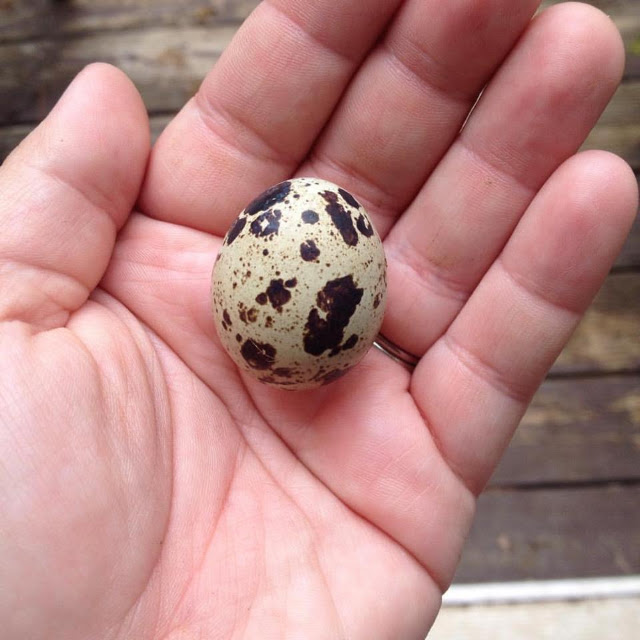
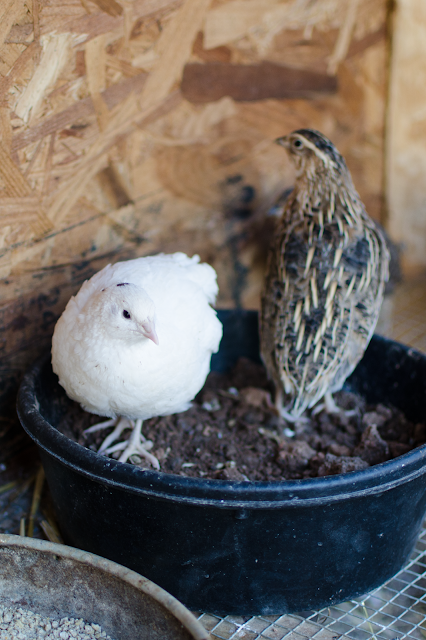
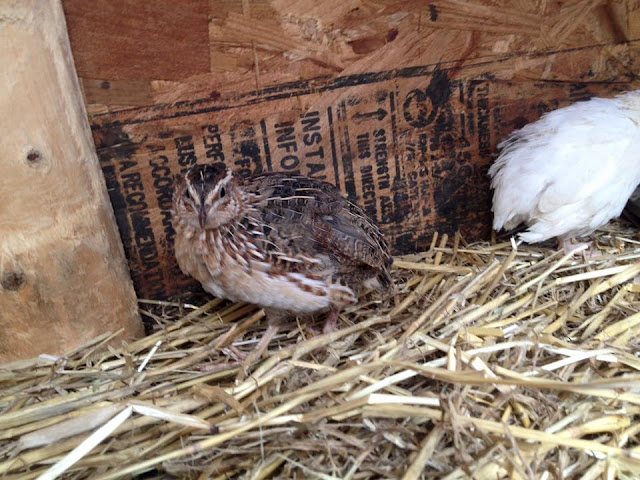
Oh…and the Japanese quail STILL haven’t laid eggs yet. Only the A&M.
So, let me tell you about the first few months of our quail adventure, and the conclusion that I’ve come to about Coturnix quail.
When we first bought our quail, it was extremely inexpensive. We bought them when they were around 5-6 weeks old, and they were $5 each. Not bad for a tiny little bird friend. We were originally supposed to have 6-7, but we only received 5. No biggie at all. We received a pair of Japanese Coturnix, and a trio of A & M Coturnix.
The Japanese are slightly smaller than the A&M, and we have discovered, in our personal opinion, that the Japanese are much more wild and flighty than the A&M. The A&M quail come running to us and interact with us, the Japanese act like we’re going to kill them (and I just might) every time we walk by the pen. Literally, like little ninja birds ready at any moment. With that said, that’s not a deal breaker for me, because I use them as a resource, not as a pet.
The A&M quail were created by Texas A&M college to be an all white meat bird, which really intrigued me in the beginning. If I were to choose between the two, I’d definitely pick the A&M as my keeper.
Quail are similar to chickens, in that they like to forage, take dust baths, lay eggs in the same place, and pick at each other. Therefore, since they are in large hutches on our homestead, we give them a dust bathing area in the hutch, a large pan for their feed so that they can still scratch, and they tend to lay their eggs in their dust bathing area or their feed area rather than on the wire.
The hutches have proven to be the best housing for them here. It allows the droppings to drop right onto the ground rather than in their habitat. This makes my life a lot easier. I am still considering making a small run for the A&M quail that we are keeping. But I still want to wait a little longer.
Which brings me to my next point.
I’m not sure quail will be one of our homestead successes, because, if we’re being honest, I feel like they are slightly useless.
Stay with me here, because they aren’t completely useless, but let me explain what I mean.
The Pros
Quail are extremely easy to take care of, and fairly inexpensive. It costs about 75 cents to $1 to raise one bird from hatch to 6 weeks of age. They don’t eat much, at all. And when given the proper housing, they require little clean up.
Quail are quick to mature, processing age is 5-6 weeks (or up to 8 weeks), and they can begin laying the same time as well.
Quail are a wild source of meat and eggs. The eggs are rich in vitamins and good things that chicken eggs don’t have. Quail eggs have been known to cure diseases, asthma, and heal the body. The meat is an incredibly easy source of protein, and they are very easy to process, taking up little time or room.
Quail don’t require a lot of room, and are therefore perfect for a smaller homestead. We house ours in large rabbit hutches. They spend most of their time laying around, quite honestly.
Quail are adorable for their entire lives. Period. I could squeeze them to pieces.
The Cons
While quail are easy to tend to and fairly inexpensive, you’re evening out to about the same with chickens. Why and how? Because chickens are 4 times the size of quail, and it takes at least 3 quail eggs to equal one chicken egg. It also takes 2-3 quail to equal a chicken (or rabbit) size portion of meat for one meal (not an entire chicken or rabbit, just a portion size).
Quail are only efficient layers for their first year. In fact, their life span is only 3 years. Not their laying span…their entire life span. Which means, unlike chickens who can lay for up to 5 years, you’ll be renewing your quail flock every year and a half or so.
Quail need at least 14 hours of light to lay. So if you aren’t planning on giving them supplemental lighting through out the entire year, you might as well forget about it now. My quail didn’t start laying until 15 weeks of age because we got them in early Spring. Had I of known they were extremely temperamental to lighting, I would have supplemented light. But when my chickens have been laying steadily since February without supplemental light (which is against the norm for most), I assumed my quail would follow suite. I was wrong….and so were the blogs I read online (in my particular case).
Quail aren’t always as quiet as you would think. Now, this isn’t a bad thing for me. In fact, I absolutely love listening to the males make their call. However, if you’re in a suburban or urban area that doesn’t allow livestock or roosters, you might want to reconsider or at least hear quail before buying. My male only hollers when alerting to danger, but he is loud.
Quail aren’t bred with the instinct to be broody or self-sufficient. That was a bummer for me, because I was hoping that since they were made out to be so “wild” online, that they would at least come with the instinct to be mothers. That doesn’t mean you won’t have some that go broody. We have had our fair share of hatchery chickens go broody. But it’s just something that coturnix quail aren’t bred with anymore. Stick with chickens and broody breed ducks if you are looking for self sufficiency.
Quail can fly high, and therefore, are not good free range birds. They’ll be dead within the week if you allow them to range. If not dead, they’ll be gone either way. They have no respect for your property lines. They need a hutch or run area with a top or bird netting so that they don’t get out.
Quail feces is extremely high in ammonia. In other words, it stinks like no body’s business. And they poop a lot. Not a bad thing if you are using a hutch style set up with wire bottom. It allows the feces to fall to the ground. However, it’s something you should be aware of either way.
A&M Quail (left), Japanese Quail (right)
What I Have Decided
Taking all of this, and more, into account—I have decided to temporarily (and possibly indefinitely) keep the A&M Coturnix quail. Though, I’m not sure. I’d like to give it a few more months before making my final decision. I’ll either sell or process the Japanese quail. The Japanese quail are just way too flighty for me. I can’t even interact with them without them trying to kill themselves, and they still haven’t laid a single egg for me. We are already almost to week 20, and all they are doing is eating feeding and freaking out. I believe they are stressed out here for whatever reason, and it could be because we’ve had a predator lurking around for a few weeks.
The A&M quail have slightly earned their keep, but I’m still not convinced. As I’ve stated so many times before, we don’t need a meat source physically on our homestead. Because we are avid hunters and know how to work the land, we don’t need fields full of cattle or chickens or meat animals. We know how to take care of ourselves a different way. Which is why I am still hesitant to take on a project that really isn’t required of us to take on.
I’ll update through out the journey. It has been an interesting journey—this quail adventure—and one that I am happy I get to share with all of you. There are ALWAYS two sides to every story, and I have always promised to be truthful and honest and raw in everything we do and try to do here. I hope this post can be helpful to someone.
Let me reiterate, quail haven’t been a complete and total failure for us, but honestly, they haven’t been a success either. That’s just what’s working and not working FOR US. Other homesteads are different, I am sure. This is why I always stress that you try something yourself before making a final opinion about it, and especially before telling others that it’s the best thing since sliced bread.
Happy Homesteading!

By: Amy K. Fewell · In: homesteading, quail · Tagged: fail, quail, raising quail, success

you’ll also love

Wintertime Hatching
{Product Review} Brinsea Ecoglow 50
Small Livestock Predators: To kill, or not to kill?

Reader Interactions

Comments

  1. Dianne Moffitt says

    April 11, 2018 at 2:47 am

    Very interesting read Amy I will be looking for more information so will be back.
    Thanks Dianne

  2. Tawnya says

    March 26, 2019 at 3:58 pm

    Thank-you for sharing! I had thought about keeping them indoors however have changed my mind and decided to find a place in the barn for them based on your information about the smell.

  3. Songe says

    June 11, 2020 at 6:34 am

    It’s so nice to see an honest review for a change! This has been really helpful, thank you.

Next Post >

What I’ve Learned From Marrying Young

Primary Sidebar

meet amy

meet amy
hello!

I'm Amy. I love organic food but I love cookies too. I love Jesus and His grace. I believe broken people make the biggest impact in the world when Jesus makes them whole, and when they share their stories. I believe in stories, and I'm sharing mine.

Read More

Connect

Search

Ads & Sponsors

200x400

Advertise

Follow Along

@amy.fewell

This… This…
Day 485 of healing my body after baby number 4. It Day 485 of healing my body after baby number 4. It’s a journey, especially running on 3-4 hours of sleep every night with only a partially weaned baby. But, nevertheless, it is. Thankfully I can support my body through it, and you can too! 

This nourishing herbal infusion brings together herbs that support the body through stress, hormonal changes, inflammation, and digestive discomfort.

I add ½ to 1 tablespoon of each dried herb to my infusion teapot, pour hot water over the herbs, cover, and allow them to steep before straining. You can drink 2-3 cups per day. This little tea pot makes about 3 normal sized coffee cupfuls of tea.

• Rose supports the nervous system, uplifts the mood, and gently nourishes the heart and reproductive tissues during hormonal transitions.

• Stinging nettle provides nutrient-rich support with iron, calcium, magnesium, and other trace minerals important to the endocrine system.

• Lemon balm calms stress-related tension while supporting healthy digestion, mood, sleep, and thyroid function.

• Peach leaf is traditionally used as a cooling, moistening herb for heat, irritation, nausea, and nervous tension that may accompany hormonal changes.

• Turmeric supports a healthy inflammatory response, liver function, digestion, and the body’s metabolism and elimination of hormones.

• Peppermint cools excess heat and supports digestion, liver function, mental clarity, and relief from occasional nausea or headaches.

This is a beautiful example of how herbs can nourish multiple systems at once—the nervous, digestive, endocrine, and reproductive systems—while also supporting the body’s foundational nutritional needs.
In a world that is increasingly fake, uniqueness a In a world that is increasingly fake, uniqueness and the ability to be known by something deeply personal, such as your name, is important. This seal says “House of Fewell”. Because as we move into the times ahead, you’ll be known in your community by which “house” you’re from (I’ll write about this more soon). Not just your family name, but the house of Yahweh. 

So, I thought I’d start a new family tradition. Bring back the signet and wax seals.
Two people can both tell you they have “poor circu Two people can both tell you they have “poor circulation” and need completely different herbal approaches.

One may be pale, chilly, sluggish, have cold hands and feet, prefer warm food, and feel considerably better when the weather warms.

Another may flush easily, run hot, dislike summer heat, become restless when overheated, and notice inflammatory complaints worsening with warmth.

The complaint may be the same, but the pattern is not.

In traditional Western herbalism, Heat/Excitation represents excessive activity. We may observe warmth, redness, flushing, irritation, restlessness, a more active pulse, and blood tending toward the surface.

The herbal direction may include cooling, calming, relaxing, or moderating herbs such as yarrow, rose, lemon balm, hibiscus, hawthorn, and elderflower.

Cold/Depression represents insufficient activity. We may see pallor, cold hands and feet, sluggish peripheral circulation, low energy, slower digestion, worsening with cold, and improvement with warmth or movement.

Here we may consider warming and stimulating herbs such as ginger, cayenne, rosemary, cinnamon, angelica, and historically sassafras.

But this is where herbalism requires more than matching symptoms to herbs.

Cold hands do not automatically mean Cold/Depression. Tension and constriction can also restrict blood flow to the extremities. Likewise, heat can exist alongside stagnation.

One symptom does not make a tissue state.

Instead of asking:
“What herb improves circulation?”

Ask:
"What is the blood actually doing—and why?"

Is the person hot or cold? Tense or relaxed? Stagnant or moving freely? Dry or damp? Depleted or robust?

Once we understand the direction of the pattern, we can begin choosing herbs much more intelligently.

Part Two of my "State of the Blood" series is now available inside the Homestead Herbalist membership.

🌿 Comment LESSON and I'll send it to your inbox!
Reach out! 🇺🇸 👩🏻‍🌾 Reach out! 🇺🇸 👩🏻‍🌾

Footer

Learn More

Chickens
Homemaking
Herbs
Recipes
Devotionals

Info

About
Contact
Privacy Policy
Shop

stay in the know

Copyright © 2026 · Theme by 17th Avenue