• Home
  • Membership
  • Shop
  • Cart
  • Our Farm
  • Gut Health
  • Herbal Practice
  • Buy Trusted Supplements
  • Nav Social Icons

  • Skip to primary navigation
  • Skip to main content
  • Skip to primary sidebar
  • Skip to footer
  • Home
  • Blog
  • About Me
  • Our Farm
  • Gut Health
  • HH Membership
  • My Books
  • Youtube
  • Podcast
  • Homesteading
  • Chickens
  • Herbs
  • Family
  • Farmhouse
  • Homemaking
  • Recipes
  • Sourdough
  • Contact Me
  • Herbal Practice
  • Buy Trusted Supplements
  • Mobile Menu Widgets

    Search

    Connect

Amy K Fewell | Homesteading for the Kingdom

Amy K Fewell | Homesteading for the Kingdom

  • Start Here
    • About Me
    • My Books
    • Podcast
    • Youtube
    • Gut Health
  • Blog
    • herbs
    • Bees
    • chickens
    • rabbits
    • Farmhouse
    • gardening
    • devotional
    • homemaking
    • sourdough
    • recipes
  • Courses & Books
    • HH Membership
    • My Books
  • herbs
  • Podcast
  • Contact Me

Inexpensive Photography Backdrops & Tips for Homestead Bloggers

December 15, 2016 · In: Farmhouse, homesteading, Simple Living

Over ten years ago, I began my blogging journey. In the beginning, it was just words. I allowed words to flow out of me and used stock photos if I needed them. Sometimes, I didn’t even use photos. The people who read blogs back then were people who simply enjoyed reading—with or without photos. They were people who enjoyed connecting with pleasant words and stories, like on the pages of a novel. But fast forwarding to today, now days, you have to be a photographer in order to have a successful blog—or at least take exceptionally good cell phone photos.

Seeing as I’m a professional photographer, this isn’t an issue for me. Though sometimes, it can be frustrating to have to break out the “real” camera. Even so, I still need inexpensive ways to make my photos look great.

As a homesteader, we try to be self-sufficient and recycle whatever we can. The same goes for our blogs and photos. No one wants to see a photo of your freshly made perfect pie on a dark dirty oven top caked in flour remnants and last nights dinner. I mean, I do, because that’s real life, but if you want to get any actual “hits” on the post, you better clean up and tighten up that lighting! As a homesteader, who the heck has time to do that? You just want to throw down a backdrop over top of it all or in front of a window, and let the world think your house is in order when it’s really dirty as all get out.

Yep, you know it. I said it. Amen.
As a photographer and homesteader, I’ve found some pretty cost effective and beautiful backdrops to use over the past few years, and I decided I’d share some of them with you!

Use What You Have

One of your greatest assets is that you’re a homesteader. This means you have all kinds of junk laying around. You probably have some old barn wood pieces, some clean flour cloth dish towels, or maybe some antique wooden crates.
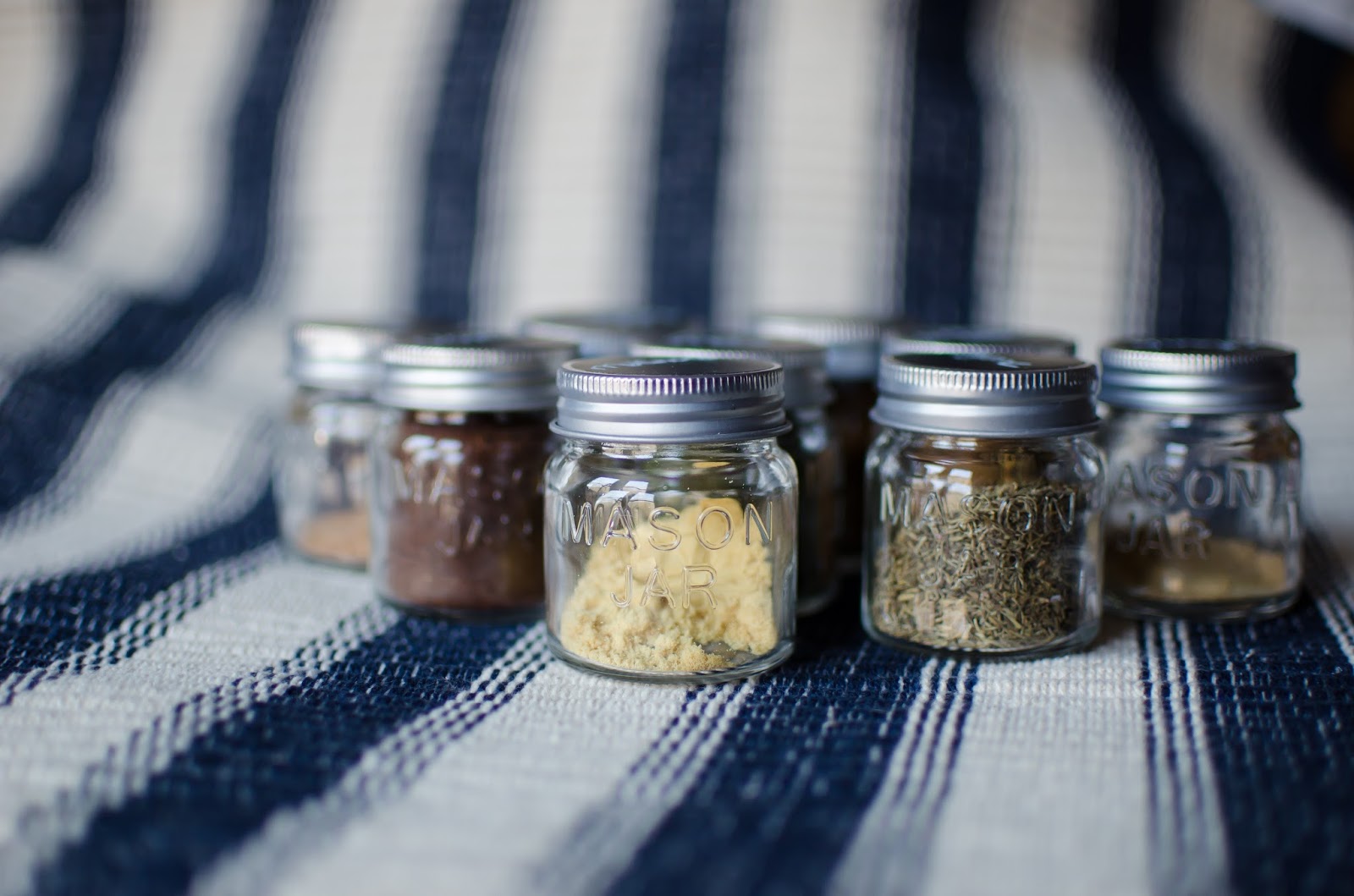
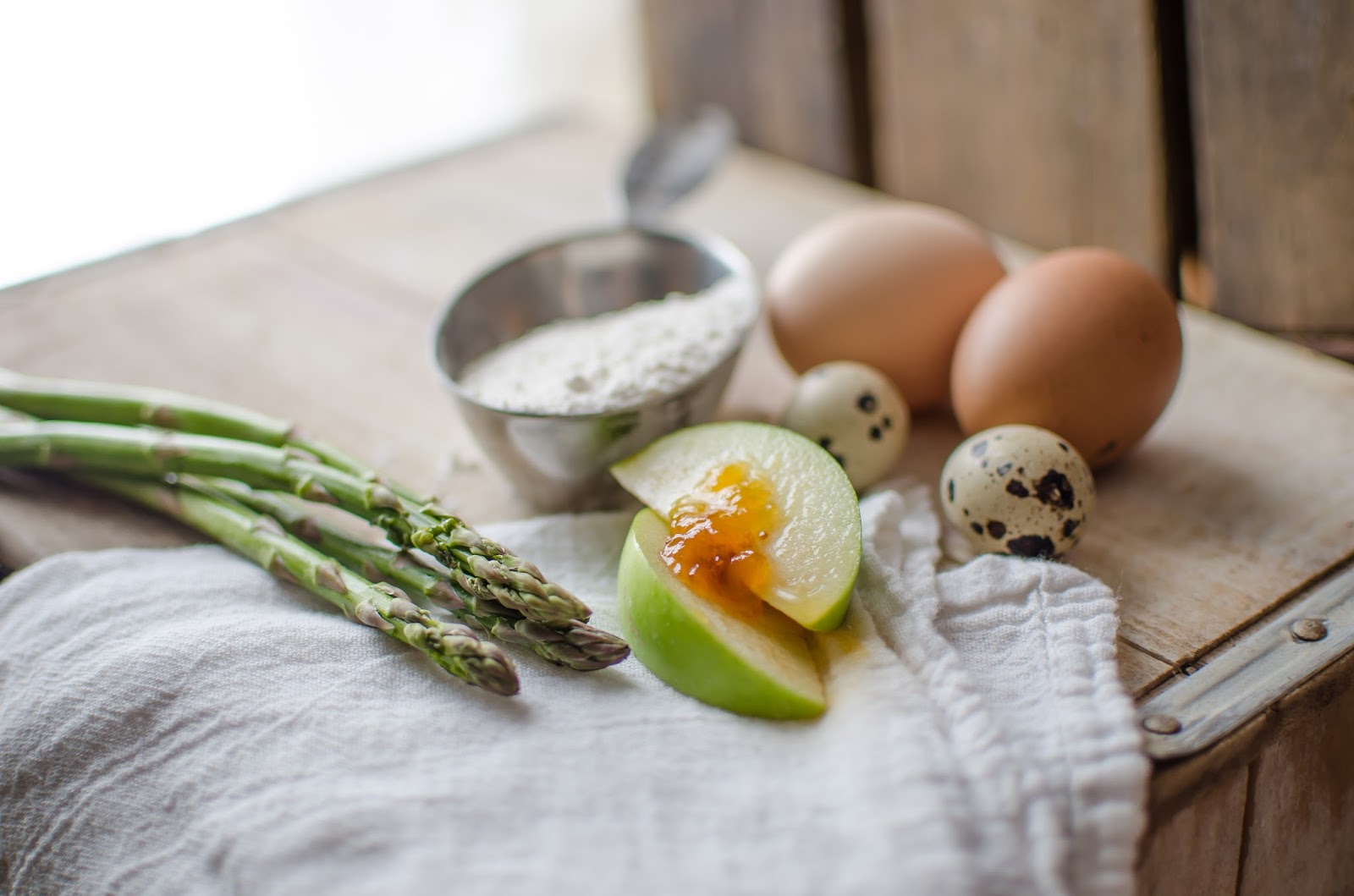
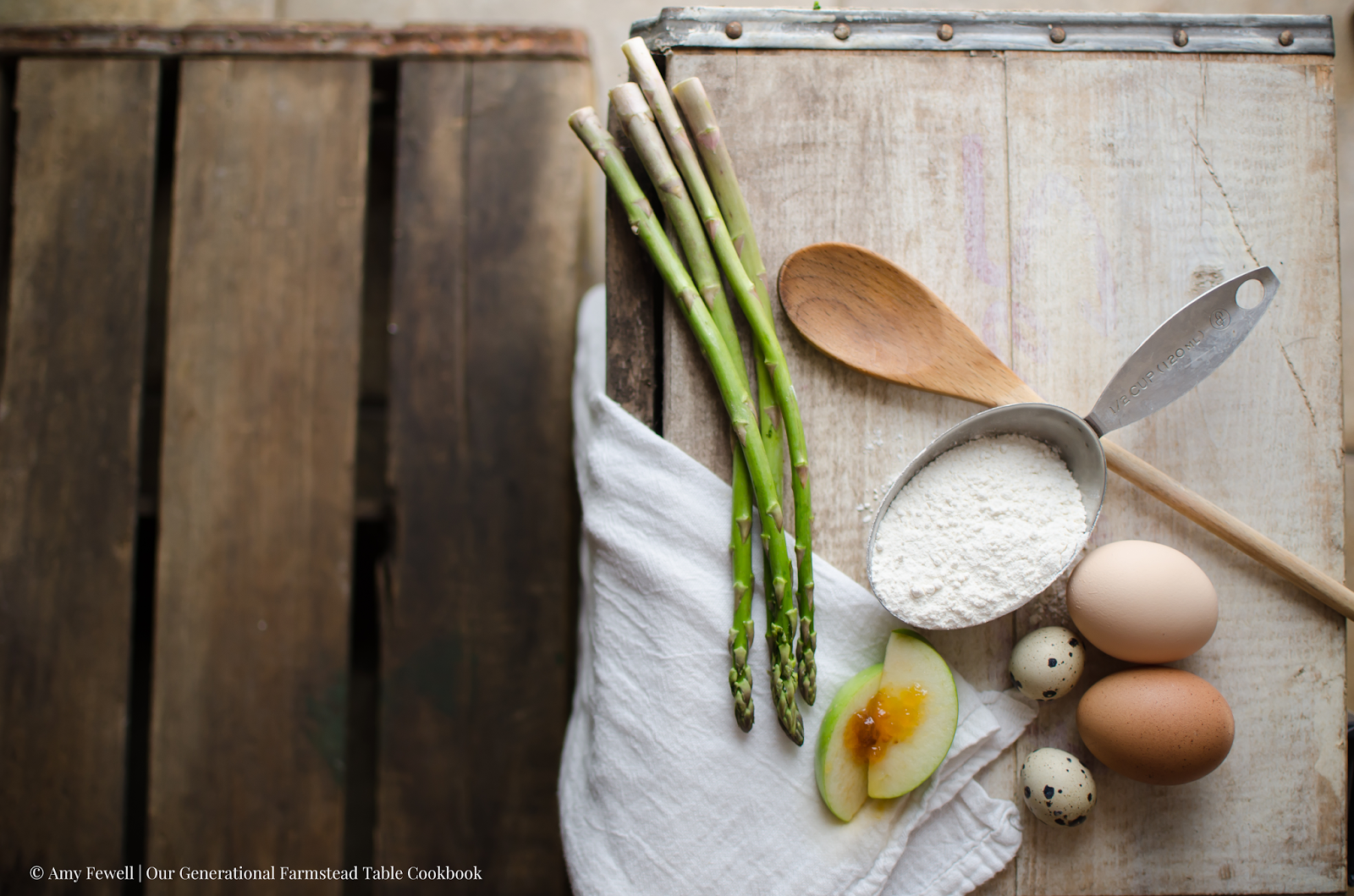
That’s what I used in the two photos above. Just two old wooden crates, side by side, in the first photos. The first (main) photo will actually be the photo wrap for my upcoming cookbook. In the second photo, I used two different crates, and stacked one behind the other. You can find these super cool brew or kombucha bottles here.
Here are some of the things that I typically have laying around that I use the most.
  • wooden crates
  • barn wood or wood remnants
  • Flour Sack Dish Towels
  • Vintage Dish Towels
  • antique plates (ex: blue willow)
  • my tile floor in my kitchen
  • old baking sheet
  • your own wood flooring in your home
  • my deck and/or stairs (wood)
You can spice things up by adding herbs, branches, leaves, berries, and more—scattered about.

Purchasing Inexpensive Backdrops

If what you have laying around doesn’t work for you, then you can purchase inexpensive, and multi-use, backdrops from your local hardware or specialty store. One of my favorite things to use, as seen above, are scatter rugs. You can purchase different types and colors of scatter rugs very inexpensively at your local big chain hardware store such as Lowe’s or Home Depot. I purchased the above rug for less than $6 on sale. So, I bought two! They are thick and durable, and easy to clean.
Another option, along the same lines as the scatter rug, are table runners. Table runners are a dime a dozen during the holidays. You can get some pretty exceptional runners on clearance after Thanksgiving and Christmas. Actually, I bought the table runner in the photo above out of the $1 bin at Target this year. It allows you to add dimension, be it on a wooden kitchen table, or on a different kind of backdrop.
Here are some item’s I’ve purchased inexpensively to use as backdrops.
  • Burlap (from your local craft store or online)
  • Cheese cloth
  • Scatter Rugs
  • Slate pieces
  • Bricks

Lighting, Editing, and Camera Equipment

While backdrops are inexpensive and fabulous, they won’t make a bit of difference if you don’t have some knowledge of lighting. And if you’re looking for a true pro look, you may even need to invest in some camera equipment. If you already have a DSLR camera (or are thinking about investing in one), this section is for you.
When taking a photo, I always use natural light. I have never had to use artificial lighting in any of my photos. Ever. Not once.
I accomplish this by taking all of my photos next to a large window where lots of light comes through. If the light is too much, you can drape a white sheet over it, as I did in this photo above. This creates an illuminating effect, and produces beautiful shadows. There is a common misconception that your product or subject in the photo has to be fully illuminated, and that’s just not true. The best photos have depth, and shadows are necessary. In the photo above, the window is off to the side, which creates shadows for the eggs and other food. Drawing your focus in on the center of the photo.
You can also note the depth of field is very shallow. For people who aren’t photographers — “that blurry stuff there in the background.” Most people want to learn how to create a depth of field, meaning having the focus on one thing, while all other things begin to blur out. This is naturally created through the camera lens. You can manually create it while editing, but the effect is not the same, as it creates no depth, just focus.
Your next important step is editing. Many people enjoy editing through free photo editing apps and programs. But if you’re serious about your photos, I highly suggest investing into Photoshop Elements. It is not nearly as expensive as other photoshop programs, and it is a one time fee. You can even find an older version—I use version 10 often, simply because I’ve never upgraded.
I would also encourage you to shoot in RAW with your DSLR instead of jpg if you plan to edit your photos. It allows you to easily manipulate the lighting and doesn’t compress the photo as bad as a jpg. And I would also encourage you to learn out to shoot in manual mode, allowing you to focus where you want to focus, and more.
Here are some equipment recommendations.
  • Photoshop Elements editing software
  • 35 mm lens (I use Nikon. The beauty is in the lens, not the camera body)
  • Nikon Camera — I use a D7000, but I started out with a D3100
  • Tripod
  • Camera Cards
Ultimately, making sure that your lighting is correct, and that your backdrop is pretty or interesting—creating depth with layers—are the two key components you need to a beautiful homestead blog photo. If you can nail those, you’re on a pretty good path to becoming a little more involved in your photo taking skills for your blog!
Enjoy the little things, and remember every now and then to show the real mess in the midst of the pretty. Because, while beautiful photos get lots of traffic on websites, being raw and real every now and then gets even more.

By: Amy K. Fewell · In: Farmhouse, homesteading, Simple Living · Tagged: bloggers, farmhouse, homesteading, photography backdrops

you’ll also love

The Two-Breed System for Year-Round Meat Chicken Breeding
Homesteading: Building a Parallel System of Kingdom Economy
Home Remedies with Onion: Medicinal for Cough and More

Reader Interactions

Comments

  1. Kristi @HomesteadWishing says

    April 16, 2018 at 2:20 am

    It took me a few years to learn about these little tricks! I think one of my favorite is to use pretty dish towels or flour sacks. I did find some amazing thin pieces of wood slates (for $18 bucks) at Home Depot. I bought one and polyurethaned it, and now it’s the perfect backdrop for my photos! Hoping to do something to the backside to make it a dual sided.

    Thanks for the tips!

    • amyfewell says

      April 18, 2018 at 7:06 pm

      I love it!

Next Post >

The Task of Raising Warrior Sons

Primary Sidebar

meet amy

meet amy
hello!

I'm Amy. I love organic food but I love cookies too I love Jesus and His grace. I believe broken people make the biggest impact in the world when they share their stories. I believe in stories, and I'm sharing mine.

Read More

Connect

Search

Ads & Sponsors

200x400

Advertise

Follow Along

@amy.fewell

Most of America sees the onion as nothing more tha Most of America sees the onion as nothing more than a flavor enhancer for a weeknight dinner. But the mighty onion is so much more than that.

Throughout history, Allium cepa has been used medicinally. European herbalists recognized its antiseptic and diuretic properties long ago. In Germany, it's even been approved for limited treatment of arterial hardening. And historically, onion was cooked in milk and eaten to clear congestion in the lungs.

So why does this humble kitchen staple work so well? It comes down to sulphur. The onion breaks down the mucus membranes in your body—you already know this, because it's exactly why you cry when you cut one. That same sulphur is what makes onion so fabulous for coughs, colds, and congestion, and it gently breaks through barriers in the body—thinning lung mucus, reaching ear infections, and drawing infection out of boils and cysts.

A few of the ways we use it around our home:

🧅 Cough syrup — Thinly slice a raw onion into a jar, cover with raw honey, and let it sit. After 3 hours you'll see a thin syrup forming, but wait the full 24 hours for the most potency. Strain, refrigerate, and it keeps practically indefinitely.

🧅 Onion on the feet — For nighttime coughs, place raw onion slices on the soles with a cloth, cover with a sock, and leave overnight. The sulphur absorbs through the skin and works while you sleep.

🧅 Earaches — Warm an onion, wrap it in a thin cloth, and rest it against the ear. Gentler than oils in the canal, especially for little ones.

🧅 Boils & cysts — A warm onion wrapped over the area overnight helps draw the infection to a head so it can drain.

🧅 Sore throat — Wrapping raw onion slices against the throat for a few hours (overnight is best) has helped many people.

The next time you're staring at that onion thinking it's only good for seasoning, remember—you've got a master medicinal plant sitting right in your kitchen. One that's been used for centuries. One you can grow right in your own garden bed.

Full breakdown—including the hour-by-hour extraction timeline—is on the blog. 

Comment ONION and I’ll send it straight to your DMs
Turn the tv off. Put the phone down (seriously, no Turn the tv off.
Put the phone down (seriously, not figuratively).

Stop filtering everything through what you know and have experienced. Start filtering things through the realization that you actually don’t know everything. You can learn something new. Maybe that thing that makes you uncomfortable is really just stretching you. Maybe that conversation that made you mad really just exposed a part of you. Maybe the inconvenient interruption just shows you a place where you need to be refined.

There are few daily things in life that need your attention. 
Jesus.
Your spouse.
Your children.
Your home.
Your immediate circle of relationships. 
Your work.

In that order.

Not your desires. Not your reels. Not your video games. Not your “me time”. Don’t get me wrong, those things can be included. But they aren’t the main thing.

If you can sit down and spend an hour scrolling through reels or talking to your friend, but you can’t sit down for an hour straight and talk to your kids without feeling inconvenienced—that’s a problem. 

If you can accomplish 15 hours of work in a day but you ignore your spouse because you’re tired and just want to veg out—that’s a problem. 

If you can do “all the things” but don’t make time for Jesus, even if your kids are a distraction—there’s a problem. 

It’s ok to say “I’m tired and need help,” or “I can’t do this the same way anymore.” It’s ok to admit mistakes and change methods. It’s ok to be tired while admitting you love to work. It’s ok to step back from relationships that drain you. It’s ok to take a break when you need to. It’s ok to set boundaries.

But it’s not ok to stay there. 

It’s not ok to quit.

Faithfulness and steadfastness is the key. 
Rest is the key. 
Avoidance and feeding your flesh is not. 

That’s a hard pill to swallow—for ALL of us. 

May we evaluate our lives always. May we show ourselves, and others, grace as we grow together.
Do you know what the body of Christ widely forgets Do you know what the body of Christ widely forgets in their denominations, “7 mountains” of culture, and talks about “taking territory”? The farmer and the land. 

More than half of the Bible talks about being a steward. It talks about taking land and possessing territory (physically and spiritually, they are not disconnected). It talks about food and provision. We turned the verse that says a man should provide for his family into a talk about tithing and having a corporate job. But that’s not at all what scripture meant. It meant provision—food, wellness, housing, and yes, an income to help provide. Food and land touch ALL spheres of culture. And it has been defiled. It’s time for it to be redeemed. 

In the charismatic cultural talk, we talk about multiple spheres of culture….except agriculture and land possession. Wouldn’t you think that would be one of the biggest spheres of culture? But just as the world has forgotten the farmer and what man was created to do—so has much of the church. 

Psalms says the earth belongs to the Lord.
Genesis says man should subdue the earth. 
The entire Old Testament is about taking territory of the land (God gives it). 
Jesus uses parable after parable rooted in farming and agriculture. Why? Because they were always an agrarian culture rooted in Yahweh and His provision and commands. 

If My people who are called by My name humble themselves and turn from their evil ways—I will heal their LAND. 

The EARTH waits for what? The sons and daughters of God to rise up! “For the creation was subjected to frustration, not by its own choice, but by the will of the one who subjected it, in hope that the creation itself will be liberated from its bondage to decay and brought into the freedom and glory of the children of God.” You can find that in Romans 8. 

The kingdom of God has never just been about spiritual things. It has never just been about spiritual gifts and church services. It has always, always, been about the earth, the stewards God created, and the authority we have in Jesus to subdue and expand. The earth WILL YIELD to us. 

You want to change the culture? Make it agrarian again. Then watch and s
@highlowfarm sent us some of their incredible home @highlowfarm sent us some of their incredible homestead products, and I had to take advantage of this delicious maple cream they sent! It screamed “ice coffee”, to me. 

The amount of time and work that goes into anything “maple” always astounds me.

There are so many farms and homesteads that are taking a heavy hit from the lack of production and drought this year. Consider supporting them even before conference! But be sure to check them out at the @homesteadersofamerica event too. 

Check the stories the rest of this week for some of the other goodies they sent! And go to their page @highlowfarm to grab some of their products!
What if your batch of broilers dies? What if you c What if your batch of broilers dies? What if you can’t order chicks through the mail? Or what if you just need a better option to grow meat throughout the year?

Cornish Cross and other fast-growing hybrids can be incredibly efficient when they are raised during the right window. They grow quickly, fill the freezer, and allow a family to produce a large amount of meat in a relatively short time.

But that does not mean they are the right bird for the hottest part of summer.

Heritage and slower-growing birds require more patience, but many of them are better equipped to forage, tolerate changing weather, and move through the hotter months without the same level of management required by a heavy meat hybrid.

The answer is not necessarily choosing one breed over the other.
The answer may be using both, in an efficient system.

Raise the fast-growing birds during the cooler spring and fall months. Raise the slower, more durable birds during summer to help ensure you always have meat in the freezer even if the broilers fail. Stagger your batches so that you are not processing every chicken on the homestead during one exhausting weekend.

This is the difference between buying chickens and building a meat-production system.

One is an annual project.
The other is part of a resilient household food plan.

I laid out the complete two-breed system, including seasonal timelines, breed options, staggered batches, processing schedules, and a backup strategy, in my newest article.

🐓Comment SYSTEM and I’ll send the article directly to your inbox!

Save this post as you begin planning next year’s meat birds.

Footer

Learn More

Chickens
Homemaking
Herbs
Recipes
Devotionals

Info

About
Contact
Privacy Policy
Shop

stay in the know

Copyright © 2026 · Theme by 17th Avenue