• Home
  • Membership
  • Shop
  • Cart
  • Our Farm
  • Gut Health
  • Herbal Practice
  • Buy Trusted Supplements
  • Nav Social Icons

  • Skip to primary navigation
  • Skip to main content
  • Skip to primary sidebar
  • Skip to footer
  • Home
  • Blog
  • About Me
  • Our Farm
  • Gut Health
  • HH Membership
  • My Books
  • Youtube
  • Podcast
  • Homesteading
  • Chickens
  • Herbs
  • Family
  • Farmhouse
  • Homemaking
  • Recipes
  • Sourdough
  • Contact Me
  • Herbal Practice
  • Buy Trusted Supplements
  • Mobile Menu Widgets

    Search

    Connect

Amy K Fewell | Homesteading for the Kingdom

Amy K Fewell | Homesteading for the Kingdom

  • Start Here
    • About Me
    • My Books
    • Podcast
    • Youtube
    • Gut Health
  • Blog
    • herbs
    • Bees
    • chickens
    • rabbits
    • Farmhouse
    • gardening
    • devotional
    • homemaking
    • sourdough
    • recipes
  • Courses & Books
    • HH Membership
    • My Books
  • herbs
  • Podcast
  • Contact Me

How to Make Venison Scaloppine

April 22, 2018 · In: Book Review, Featured, recipes, venison

W

Harvesting your homestead bounty is one of the greatest accomplishments you’ll ever achieve (especially if it involved harvesting meat, like venison). I can remember the first garden I planted—it was a disaster. Not only that, but I had the worst time trying to find a cookbook specifically tailored towards the homestead harvest and garden. It didn’t matter anyway, I was a horrible gardener. But the really hard part was finding a cookbook for our venison bounty. Wild game is never easy to cook when you first start down that journey, and I was determined to master venison.

It helps, however, to have mentors and experts sharing their knowledge and expertise with us. We find these people by reading books and watching videos. Most of them are humble, generous, and kind in nature. And Stacy Lyn Harris is one of my favorite of them all.
I  can remember the first time I talked to Stacy on the phone. Her heavy southern accent was enough to capture any heart, and her down to earth attitude and outlook on life was encouraging. Since then, each time I connect and talk to her, I find a new thing to love about her. She’s someone I could talk to for hours about womanhood and motherhood, and she totally “gets it”. So when she published her harvest cookbook, Stacy Lyn’s Harvest Cookbook: The New Recipes and Tips for Sustainable Living, I knew I had to have it on my bookshelf. Not just because she’s a beautiful person inside and out, but because I know she gets this entire homesteading lifestyle, and the beauty that surrounds it.

Through vibrant photos, personal stories, and tips, I can hear that beautiful southern draw come through every page of this book. I was first sucked in by the photography and personal stories, but when the recipes came, my goodness, what a beautiful life we really do share.
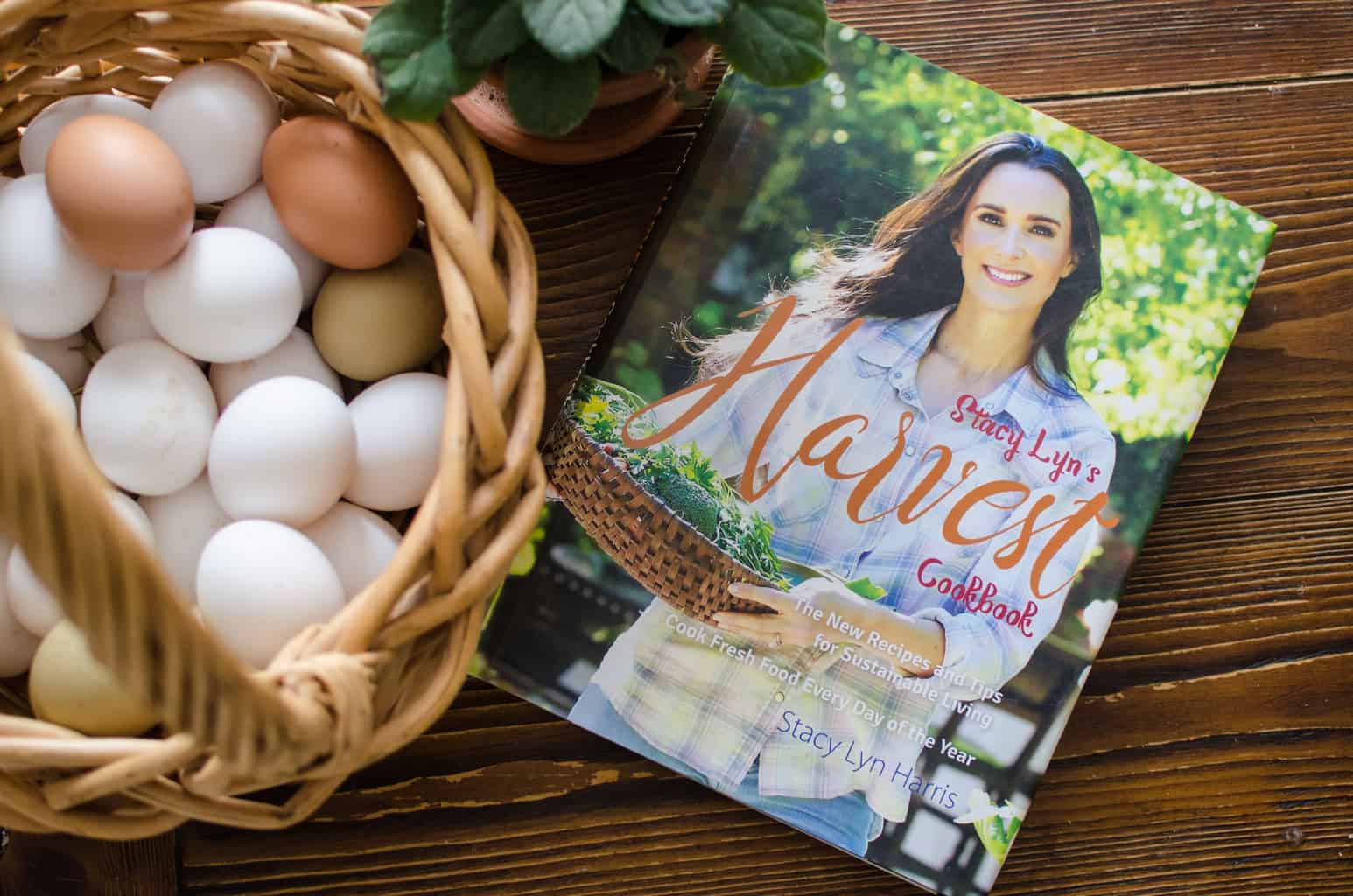
This book takes you from garden to field, from woods to creek—Stacy has covered it all. Begin with the basic gardening harvests, how to preserve them, and how to use them. From recipes like common fried green tomatoes, to more unique recipes like strawberry clafouti. Then move on to herbs, more fruits, tree nuts, poultry and eggs, beef, fish, wild game, and more! Every single homesteader that cooks their harvest needs this book on their bookshelf. It has been one of my favorites for quite some time.
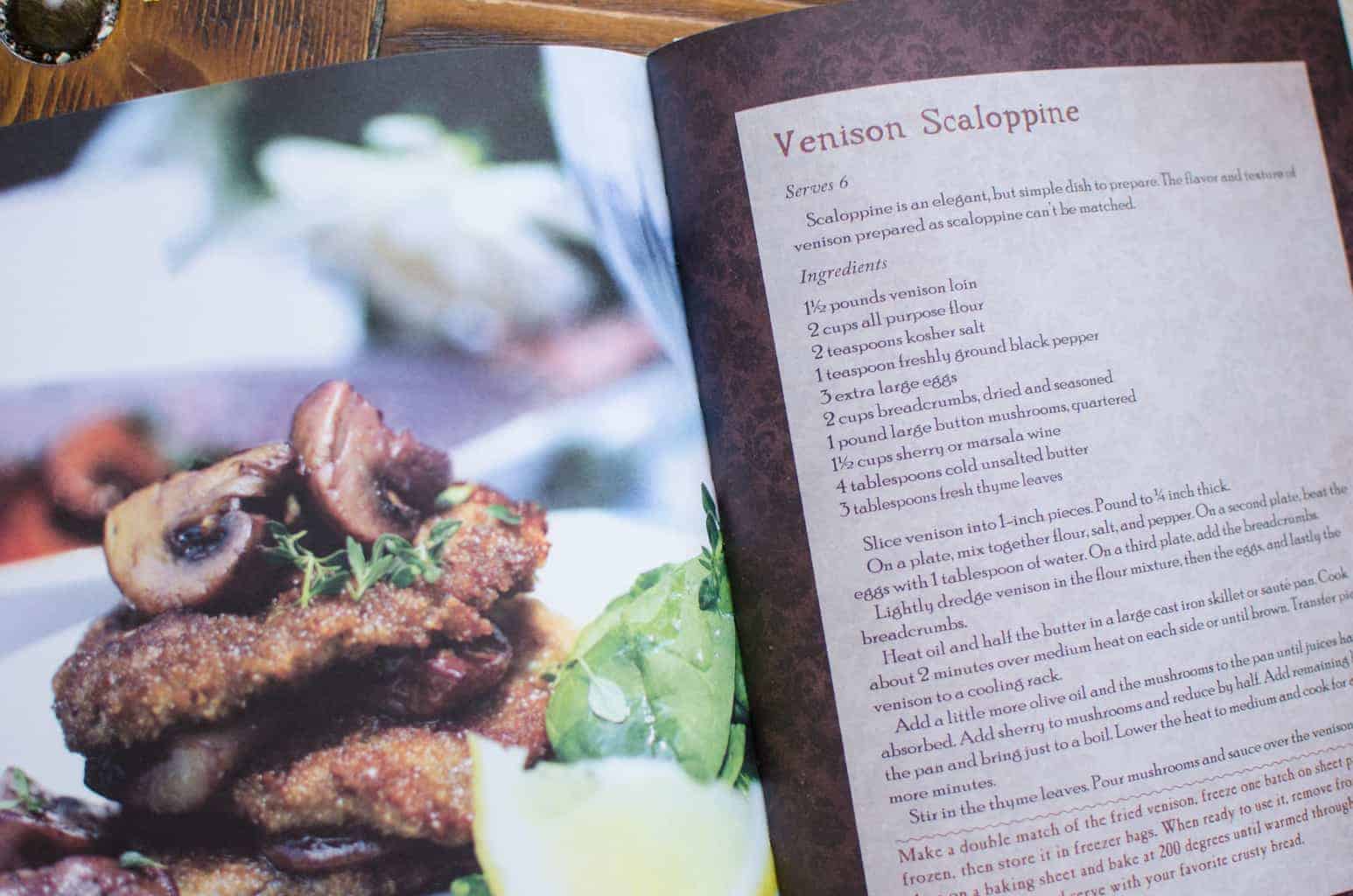
I am constantly trying to find new recipes for venison. Since venison is the main meat source on our homestead, after awhile, you can get tired of the same old recipe. This book help me combat that issue and broadened my horizons in new and amazing ways when it came to wild game. Not only that, I had some incredible side dishes and desserts to go along with it! But more than that, hunting for you own meat source is an incredible experience as a family.

I find that preparing for and hunting wild game has contributed to the closeness of our family. . . Each person contributes to the family’s sustenance whether it is to gather or hunt, or whether itis to prepare and cook the venison. It is all an adventure for every age whether male, female, old, or young.

There are no phones, gadgets, or distractions; just you, the kids, and the great outdoors. After the meal is prepared, the stories come to life of the hunt, and all the preparation and hard work together is rewarded with a delicious, succulent meal. — Stacy Lyn Harris, Stacy Lyn’s Harvest Cookbook

Here is this easy and delicious recipe from Stacy’s book!

Venison Scaloppine

Serves 6

1.5 lbs venison loin
2 cups all purpose flour
2 tsp kosher salt
1 tsp freshly ground black pepper
3 extra large eggs
2 cups breadcrumbs, dried and seasoned
1 lb large button mushrooms, quartered
1.5 cups sherry or marsala wine
4 tbsp cold unsalted butter
3 tbsp fresh thyme leaves

  1. Slice venison into 1-inch pieces. Pound to 1/4 inch thick.
  2. On a plate, mix together flour, salt, and pepper. Beat the eggs with 1 tbsp of water on a second separate plate. On a third plate, add the breadcrumbs.
  3. Lightly dredge venison in the flour mixture, the the eggs, and lastly the breadcrumbs.
  4. Heat oil and half the butter in a large cast iron skillet or saute pan. Cook venison about 2 minutes over medium heat on each side until brown. Transfer pieces of venison to a cooling rack.
  5. If necessary, add a little more olive oil and the mushrooms to the pan until juices have been absorbed. Add sherry to mushrooms and reduce by half. Add remaining butter to the pan and bring just to a boil. Lower the heat to medium and cook for about 5 more minutes.
  6. Stir in the thyme leaves. Pour mushrooms and sauce over the venison and serve.
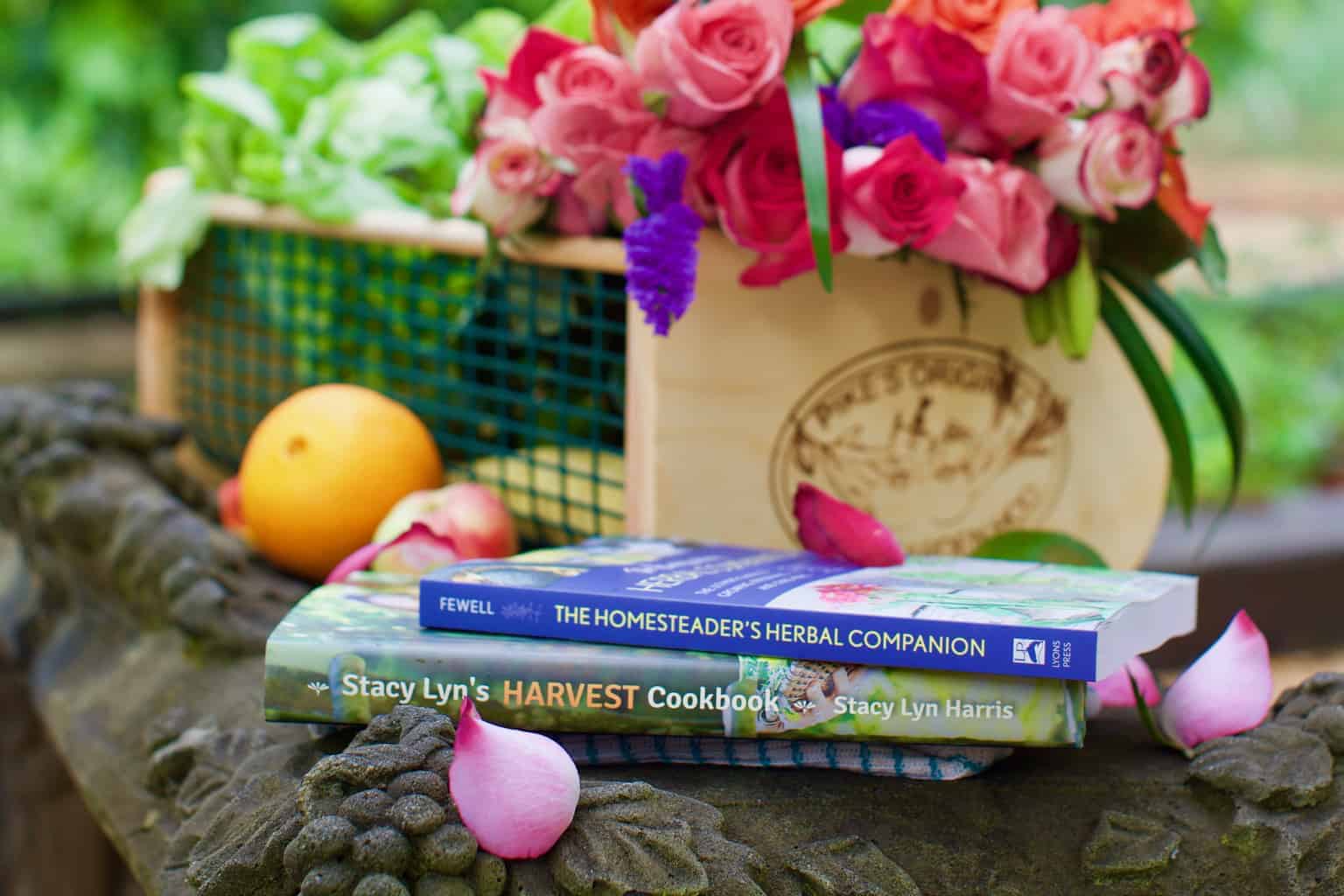
Here’s what you can find in Stacy Lyn’s Harvest Cookbook:

  • The Garden: Heirloom gardening, growing and cooking, types of gardening, preserving, and more!
  • Beyond the Garden: Foraging for wild fruits, herbs, and greens; beekeeping and honey; poultry and eggs
  • From the Pasture: Beef, pork (and other white meats), and lamb
  • Woods and Water: Venison and red meat, sausage making, substitutions, wild game, seafood and fish
  • . . . along with personal stories, history, and packed full of over 100 recipes!

I hope that you’ll check out this delicious homestead cookbook from my friend, Stacy Lyn!

Buy Stacy Lyn’s Harvest Cookbook here!

Watch Stacy Lyn make Venison Scaloppini below!

By: Amy K. Fewell · In: Book Review, Featured, recipes, venison · Tagged: book review, hunting, recipes, Stacy Lyn Harris, Stacy Lyn's Harvest Cookbook, venison

you’ll also love

Homemade Fire Cider | Sometimes it Works, Sometimes it Doesn’t (plus recipe)
How to Make Homemade Herbal Chapstick
Canning Blueberries and Blueberry Pie Filling
Next Post >

Preparing for Emergencies on the Homestead

Primary Sidebar

meet amy

meet amy
hello!

I'm Amy. I love organic food but I love cookies too I love Jesus and His grace. I believe broken people make the biggest impact in the world when they share their stories. I believe in stories, and I'm sharing mine.

Read More

Connect

Search

Ads & Sponsors

200x400

Advertise

Follow Along

@amy.fewell

Processing day doesn’t have to feel like chaos. A Processing day doesn’t have to feel like chaos.

After years of raising and processing our own poultry, I’ve learned that most processing-day disasters don’t happen because of a lack of skill—they happen because of a lack of preparation.

The dull knife.
The empty propane tank.
The missing shrink bags.
The realization halfway through the day that you should have bought twice as much ice.
The stopping a hundred times to deal with your kids wishing you had an outside sink to wash your hands off in.

Sound familiar? 😅

Whether you’re processing your first batch of meat birds or your fiftieth, small mistakes can cost you hours of work, increase stress, and even affect the quality of the meat you’re putting in your freezer.

In my latest blog post, I’m sharing 15 processing day mistakes that waste time and meat, along with practical tips to help you have a smoother, more organized harvest day.

A few of the mistakes I cover:

✔️ Starting too late in the day
✔️ Processing too many birds at once
✔️ Skipping feed withdrawal
✔️ Forgetting packaging supplies
✔️ Not having enough help
✔️ Waiting until the end to clean up

The truth is, processing day is usually won—or lost—the days before processing. A little preparation goes a long way toward making the day more efficient, less stressful, and much more enjoyable.

Have you ever had a processing-day mistake that taught you a lesson the hard way? Share it below—we’ve all been there. 👇

Read the full new article on my website...

🐓 Comment LIST to have it sent directly to your inbox.
Culture has been the topic in a lot of personal co Culture has been the topic in a lot of personal conversations recently. The culture of our society. The culture of the church. The culture of the family. In fact, I should totally talk about this topic more in-depth soon, and how it all coincides together. But today I am reminded of a conversation my husband and I had a few weeks back.

As we were talking about the “last days”, I posed this question—what if culture goes back to Bible culture and it’s all literal? 

We live in a very unique world and country. We expect none of the things we use and love everyday to disappear. But if there’s one thing I know and have witnessed, it’s that all of this is so fragile that it could disappear overnight. Literally. Within seconds. Gone. And suddenly a modern culture would wake up to a culture that pre-dates the 1800s. 

And so my question is this—what if God is preparing His church culture (there’s a shift happening) so that the church will be prepared for the societal culture shock when it happens? 

We’d all be preparing a lot differently, wouldn’t we?
For years, I’ve talked about fragile supply chains For years, I’ve talked about fragile supply chains, rising input costs, foreign dependence, and the vulnerabilities built into our modern food system.

Now, the USDA has confirmed the first domestic case of New World Screwworm in a Texas calf. The screw worm is a parasite that is flesh eating in nature. 

If you’ve listened to my interview with AJ Richards, you may remember him sounding the alarm about this months ago. Many people dismissed it as just another agricultural issue happening somewhere south of the border. But AJ explained something important—this is a food system concern, and it could cause a collapse of the already historically low beef herd in the USA.

These farmers are already facing years of drought, high feed costs, regulatory pressure, and economic uncertainty. When breeding stock leaves the system, rebuilding takes years—not months.

Now add a parasite that can rapidly spread through livestock populations and historically cost producers enormous losses. It may not affect the local small farmer who can monitor his herds easier (and probably has healthier herds). But it will absolutely affect bigger herds that are already struggling.

This is why I continually encourage people to think beyond the grocery store. The big ag food system is not one giant crisis away from collapse. It’s thousands of small pressures accumulating at the same time. Together, they create a system that becomes increasingly expensive, increasingly centralized, and increasingly vulnerable. 

Know your local farmer, raise some of your own food, learn skills, build community networks, and create resilient local food economies before they’re needed.

This is why so many of us have spent years talking about food sovereignty and homesteading. Not because we expect disaster around every corner, but because history repeatedly shows that resilient communities weather storms better than dependent ones.

Whether it’s pest, drought, inflation, fertilizer shortages, disease, or a disruption we haven’t seen yet, the lesson remains the same—the future belongs to communities that can feed themselves. And every year, that lesson becomes harder to ignore.
I have nothing to say. Just a pretty photo dump f I have nothing to say.

Just a pretty photo dump for old time IG sake.

The era where we followed homesteaders and farmers because their content was beautiful and practical and took us to a peaceful place. 

This is my peaceful place.
Most homesteaders raise meat chickens. Very few e Most homesteaders raise meat chickens.

Very few ever stop to ask, “What happens if I can’t buy chicks next year?”

For generations, families didn’t depend on hatcheries to fill their freezer. They developed breeding systems that allowed them to raise meat birds year after year, right from their own homestead.

That’s exactly why we began experimenting with a two-breed meat chicken system.

The goal isn’t to compete with a Cornish Cross. You can’t compete when it comes to saving time and money. The goal is resilience.

A good breeding program allows you to maintain your own flock, hatch your own chicks, improve genetics over time, and continue producing quality meat birds without relying on outside sources. It puts one more piece of your food security back into your own hands.

This approach combines the strengths of two different breeds—one contributing growth and carcass qualities, the other contributing fertility, mothering ability, hardiness, and long-term sustainability. The result is a practical system that can provide meat chickens year-round while allowing you to retain breeding stock for future generations.

If you’ve ever wondered how homesteaders raised meat chickens before modern hatcheries, or if you’ve been looking for a more sustainable long-term poultry plan, this article is for you. It utilizes modern Cornish cross broilers, while having a dual-purpose system back up. 

🐓Comment SYSTEM and I’ll send it directly to your inbox.

Footer

Learn More

Chickens
Homemaking
Herbs
Recipes
Devotionals

Info

About
Contact
Privacy Policy
Shop

stay in the know

Copyright © 2026 · Theme by 17th Avenue