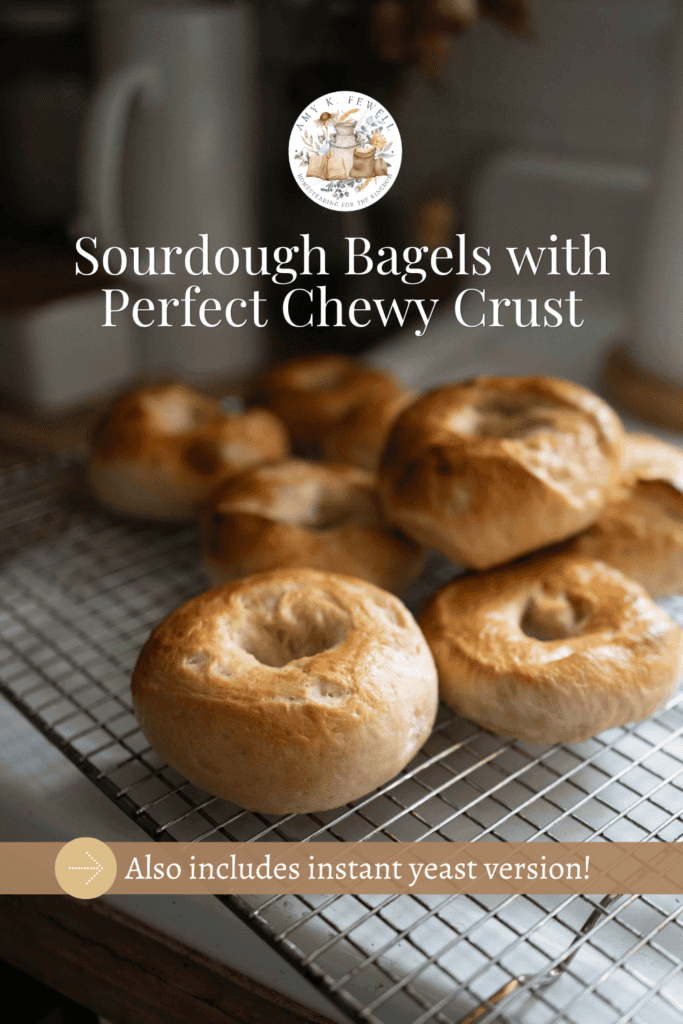
Bagels are good, but sourdough bagels with a chewy crust are so much better. You know that first bite into a real bagel where your teeth sink through a shiny, taut crust into impossibly chewy dough? That texture doesn’t come automatically or from a wood-fired oven in Brooklyn. It comes from boiling the dough in sweetened water before you bake it—a step that gelatinizes the exterior and locks in that signature chew. Most home bakers skip it or rush it, and that’s why their bagels taste like round bread.
This homestead recipe gives you the blueprint for proper bagels using either sourdough starter or instant yeast. The process is the same (except for timing), the texture is identical, and the results rival anything you’d stand in line for.
Here’s how to make bagels that actually taste better than any bagel shop.
Other Recipes You May Enjoy:
- Easy Sourdough Starter and Bread
- Easy Sourdough Pizza Crust
- Easy Sourdough Pie Crust
- Traditional Sourdough Pancakes
- Sourdough Cinnamon Rolls
- Sourdough Dinner Rolls
Where Bagels Actually Come From
Bagels trace back to 17th-century Poland, where Jewish bakers shaped yeasted dough into rings and boiled them before baking. The boil wasn’t optional; it was the defining move that separated bagels from every other bread. When Eastern European immigrants brought the technique to New York in the late 1800s, the boil-and-bake method became the foundation of American bagel culture. Bagel purists still argue that a real bagel requires a short boil in sweetened water, a high-heat bake, and zero shortcuts. This recipe respects that tradition while making it accessible enough to pull off in a home kitchen. You’re not reinventing bagels here, you’re just making them the way they were always meant to be made.
Why This Recipe Actually Works
The boil is what gives bagels their shine and chew—even with sourdough bagels—but the honey in the boiling water is what accelerates the Maillard reaction and deepens the color. Most recipes use barley malt syrup, which is traditional, but honey does the same job and you already have it. You can use either. The short rest after shaping lets the gluten relax so your bagels hold their shape instead of puffing into bread rolls. Sourdough starter adds complexity and a subtle tang, but instant yeast works just as well if you want bagels today instead of tomorrow. The egg wash is non-negotiable if you want that glossy, professional finish with deep coloring. And baking at a high temperature after the boil locks in the crust before the interior dries out. Every step here has a reason, and skipping any of them will cost you texture.
The Tools That Make This Easier
- A large, shallow pan or wide pot for boiling. You need enough surface area to fit 2-3 bagels at a time without crowding. A deep stockpot works, but a shallow pan makes flipping easier and reduces the risk of deflating your dough.
- A slotted spoon or spider strainer to lift bagels out of the water without tearing them. Tongs can pinch the dough and ruin the shape.
- A stand mixer with a dough hook or strong hands. Bagel dough is stiff and takes real kneading. If you’re doing it by hand, expect 8-10 minutes of work.
- Parchment-lined baking sheets to prevent sticking and make cleanup instant. Don’t skip the parchment or you’ll be scraping egg wash off your pans for days.
- A kitchen scale if you want consistent results. Bagels are about ratios, and measuring by weight keeps your dough from getting too wet or too stiff.
If you don’t have a stand mixer, you can knead by hand. If you don’t have a spider strainer, a slotted spoon works. But don’t skip the boil or the egg wash—those are non-negotiable.
What Each Ingredient Does and Why It Matters
Understanding what each ingredient contributes means you can troubleshoot on the fly and adjust based on what you have.
Warm water (1 1/3 cup) activates the yeast and hydrates the flour. Too hot and it kills the yeast, too cold and it won’t wake up. Aim for around 100-110°F, which should feel warm but not hot to the touch. Room temp water works too.
Instant yeast (2 1/2 tsp) or sourdough starter (1 1/3 cup) provides the rise. Instant yeast gives you bagels in a few hours. Sourdough starter takes longer but adds flavor and makes the dough more forgiving. If you’re using starter, skip the water since the starter already contains hydration.
Honey (2 tbsp in the dough, 2 tbsp in the boiling water) feeds the yeast, adds a hint of sweetness, and helps the crust brown. In the boiling water, it creates that glossy, golden exterior. You can swap in sugar, but honey has better flavor.
Flour (3 1/2 cups) is the structure. Bread flour is ideal because of its higher protein content, which gives you more gluten and more chew. All-purpose works in a pinch, but your bagels won’t be quite as sturdy.
Salt (2 tsp) controls fermentation, strengthens gluten, and makes everything taste better. Don’t skip it or reduce it, bagels need that seasoning to balance the sweetness.
Egg (1 egg) and water (1 tbsp) for the wash give you that bakery shine and help toppings stick. Without it, your bagels will look dull and homemade in the worst way.
If you’re using sourdough starter, make sure it’s active and bubbly, a sluggish starter will give you dense, flat bagels.
How to Make the Dough and Shape the Bagels
This is where it all starts, and where most people either nail it or end up with sad bread rings.
- Activate the yeast or prep your starter. If you’re using instant yeast, add it to the warm water in a bowl and let it sit for 5 minutes until it foams. If you’re using sourdough starter, skip this step entirely and just make sure your starter is active and ready to go.
- Mix the dough. Combine your leavening mixture (or starter) with the honey, flour, and salt. Stir until it forms a shaggy mass, then knead by hand for 8-10 minutes or with a dough hook for 6-7 minutes. The dough should be smooth, firm, and only slightly tacky. If it’s too wet, add flour a tablespoon at a time. If it’s too dry, add water by the teaspoon.
- Let it rise. Place the dough in a very lightly oiled bowl, cover it with a towel or plastic wrap, and let it rest. For yeast dough, 1 hour at room temperature is enough. For sourdough, you need 8-10 hours at room temperature (depending on your home temp) or overnight in the fridge. The dough should roughly double in size.
- Divide and rest. Turn the dough out onto a clean counter and divide it into 7-9 equal pieces depending on how large you want your bagels. Shape each piece into a ball and let them rest on the counter for 10 minutes if you used yeast, or 30 minutes if you used sourdough. This rest makes shaping easier and prevents the dough from shrinking back.
- Shape the bagels. Poke a hole through the center of each dough ball with your thumb, then gently stretch it into a ring. The hole should be about 2 inches wide because it will shrink during boiling and baking. Place each shaped bagel on a parchment-lined baking sheet.
Bagel dough is stiffer than most bread doughs, so don’t panic if it feels dense. That firmness is what gives you chew. And don’t skip the rest after dividing, it’s the difference between bagels that hold their shape and bagels that puff into blobs.
After they have been shaped, you’ll put them in your boiling water/honey mixture for 30 to 60 seconds per side. Then place them on the parchment lined baking sheet, brush with egg wash, and bake at 425 for 20-25 mins.
How to Tell When They’re Perfectly Done
Bagels give you clear signals when they’re ready, you just have to know what to look for.
After boiling, the bagels should float to the surface within 10-15 seconds. If they sink and stay down, they’re underproofed and the interior will be dense. If they float immediately, they’re good to go. Boil them for 30-60 seconds per side, just enough to set the exterior without overcooking.
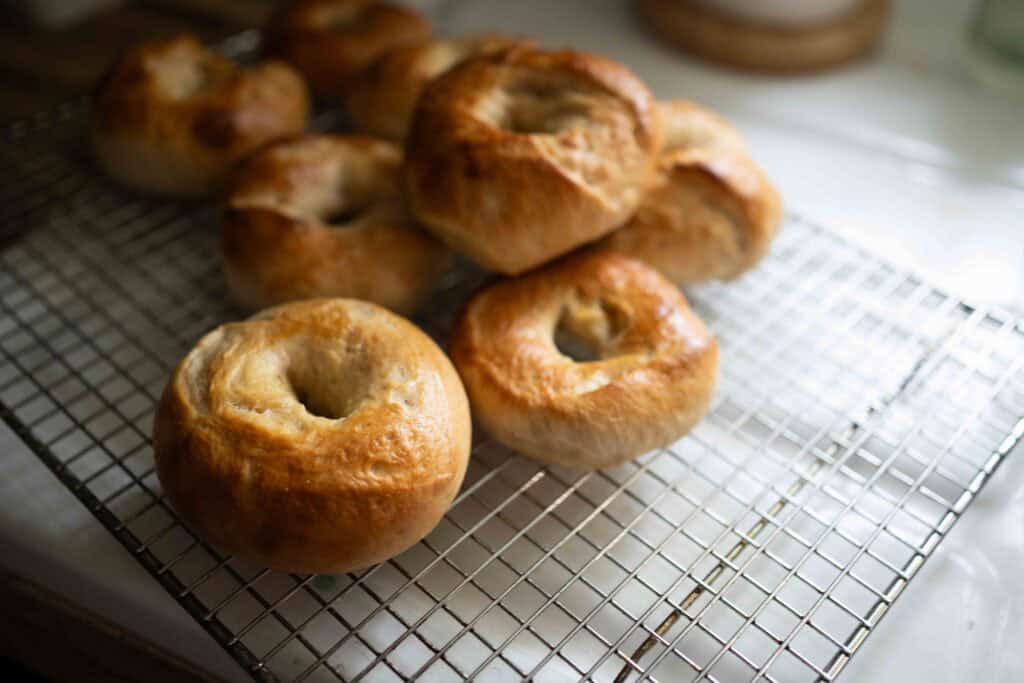
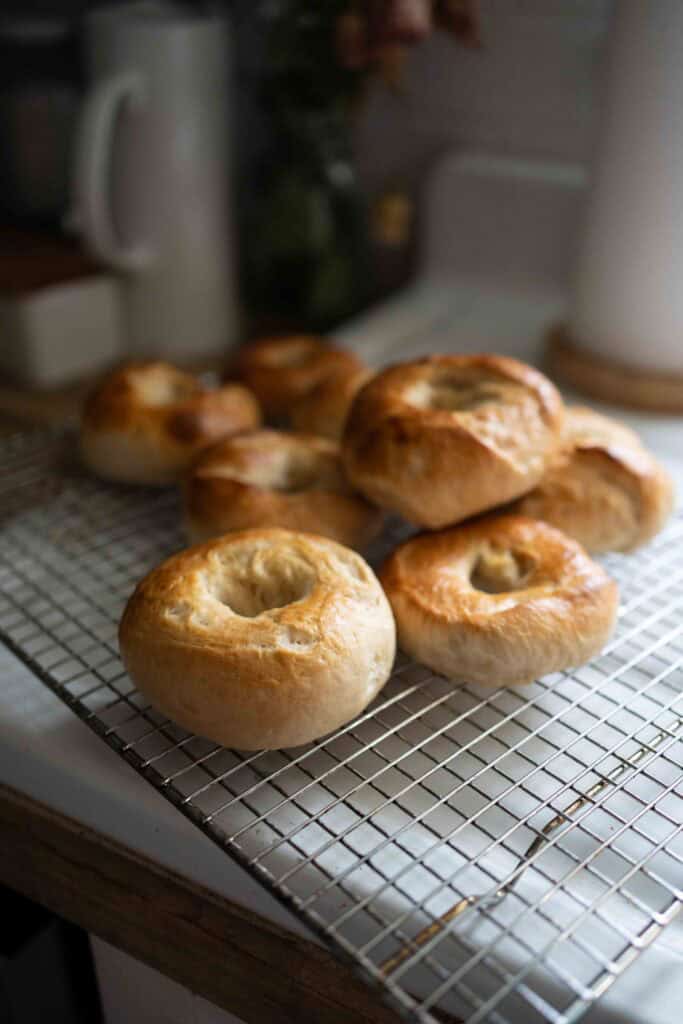
Out of the oven, the crust should be deep golden brown and shiny, not pale or dull. The bottom should sound hollow when you tap it. The interior should be chewy and springy, not bready or cakey. If you slice one open and the crumb looks airy and light, your dough was overproofed. If it’s dense and tight, it was underproofed or the boil was too long.
Texture and color are your best indicators, and once you’ve made a batch or two, you’ll recognize the difference immediately.
Tricks the Pros Use to Level Up Bagels
Professional bagel bakers don’t just follow the steps, they layer in small moves that add up to better results.
- Boil in batches and don’t crowd the pan. Overcrowding drops the water temperature and gives you uneven results. Give each bagel space to float freely.
- Use a spider strainer or slotted spoon to flip and remove bagels. Tongs can deflate the dough and ruin the shape. A wide, flat tool preserves the structure.
- Brush egg wash on right before baking, not after boiling. If you brush too early, the wash gets gummy. Do it just before the oven and the glaze will set beautifully.
- Bake at 425°F or higher. High heat sets the crust fast and prevents the bagels from drying out. If your oven runs cool, bump it to 450°F.
- Add toppings immediately after the egg wash. Everything bagel seasoning, sesame seeds, poppy seeds, or coarse salt all stick best when the surface is still wet.
These aren’t secret techniques, they’re just the habits that separate bagels that look homemade from bagels that look like you bought them.
What to Serve with Your Bagels
Bagels are the main event, but the right pairing makes them unforgettable.
- Classic cream cheese is the obvious move, but try whipped cream cheese with chives, smoked salmon, capers, and red onion for a full-on schmear situation.
- Butter and jam if you want something simple and sweet. A thick layer of salted butter and raspberry preserves hits differently on a warm bagel.
- Avocado, egg, and hot sauce for a breakfast sandwich that actually keeps you full. Toast the bagel, smash the avocado, add a fried egg, and finish with your favorite hot sauce.
- Cold brew or a bold drip coffee to cut through the richness. Bagels are dense and satisfying, so pair them with something that won’t compete.
Bagels are sturdy enough to handle just about any topping, so don’t hold back.
How to Switch It Up Without Breaking the Recipe
Once you’ve nailed the base recipe, you can start playing with flavors and still get great results.
Everything bagels: Mix sesame seeds, poppy seeds, dried garlic, dried onion, and coarse salt. Brush with egg wash and press the bagels into the seasoning blend before baking.
Cinnamon raisin bagels: Add 1 tablespoon of cinnamon and 3/4 cup of raisins to the dough during the final minute of kneading. Skip the egg wash and brush with melted butter after baking for a softer finish.
Whole wheat bagels: Swap up to half the regular flour for whole wheat flour. You may need to add a little extra water since whole wheat absorbs more liquid.
Asiago or cheddar bagels: Fold 1 cup of shredded cheese into the dough after kneading. Top with more cheese after the egg wash for a crispy, savory crust.
Jalapeño cheddar bagels: Add diced pickled jalapeños and shredded cheddar to the dough. The acidity from the jalapeños adds a nice contrast to the richness of the cheese.
The base recipe is flexible enough to handle mix-ins and toppings, just don’t mess with the hydration or the boil, those are the non-negotiables.
How to Store Them and Bring Them Back to Life
Bagels are best within the first 24 hours, but proper storage keeps them good for days.
Room temperature: Store in a paper bag or bread box for up to 2 days. Plastic bags trap moisture and make the crust chewy in the wrong way.
Freezer: Slice the bagels in half, then freeze them in a zip-top bag for up to 3 months. Pull them out and toast them straight from frozen. No thawing needed.
Reheating: Toast them. A quick trip through the toaster or a few minutes in a 350°F oven brings back the crust and warms the interior. Don’t microwave them unless you want rubber.
If you made a big batch, freeze half. Freshly toasted frozen bagels taste better than day-old bagels sitting on the counter.
Bagels are one of those things that sound complicated but aren’t. Once you’ve boiled and baked a batch, you’ll realize the process is just a series of simple, repeatable steps. The texture, the chew, the shine, it all comes down to respecting the boil and not rushing the dough.
Make these once and you’ll never settle for mediocre bagels again.
Sourdough Bagels with Chewy Crust

This no-fail, easy sourdough bagel dough can be made with sourdough starter or instant yeast (I give you both options!). The key is boiling and then baking. Use various flavor and topping additions to this bagel dough base.
Ingredients
- DOUGH INGREDIENTS:
- 1 1/3 cup warm water (or sourdough starter)
- 2 1/2 tsp instant yeast (omit if using sourdough starter)
- 2 tbsp honey
- 3 1/2 cups flour
- 2 tsp mineral salt
- BOILING WATER MIXTURE:
- 6+ cups water
- 2 tbps honey
- EGG WASH:
- 1 egg + 1 tbsp water mixed together
Instructions
- If using yeast, mix together warm water and instant yeast. Allow to activate for 5 mins before proceeding.
- If using sourdough starter, add starter to a large bowl.
- Mix in remaining dough ingredients until it comes together. Knead until smooth (about 8-10 mins by hand or 6-7 mins by stand mixer).
- Place dough in a lightly oiled bowl, cover and let rise until doubled. For yeast dough, this will take about 1 to 1.5 hours. For sourdough this can take up to 12 hours on the counter, depending on your home temperature. You can bulk ferment this dough by making the dough the night before and fermenting in the fridge overnight until the next morning.
- Once dough has risen, form 7 to 9 dough balls and let them rest on the counter for 10 mins (for instant yeast recipe). For sourdough, let rest on the counter for 30 minutes.
- Preheat oven to 425°.
- Prepare your boiling water mixture in a shallow pan. Bring to a boil.
- Take a dough ball and gently make a hole in the middle, stretching slightly, to make a bagel shape. Add the bagel to the water. Add other bagels, but don't overcrowd.
- Boil each bagel for 30-60 seconds per side. Then place on a parchment lined baking sheet.
- Once all bagels are done, brush each bagel with egg wash and add any toppings you'd like. Then immediately place into the oven.
- Bake for 20-25 minutes or until a shiny light brown color.
- Allow to cool on a rack for several minutes before slicing and serving.
Notes
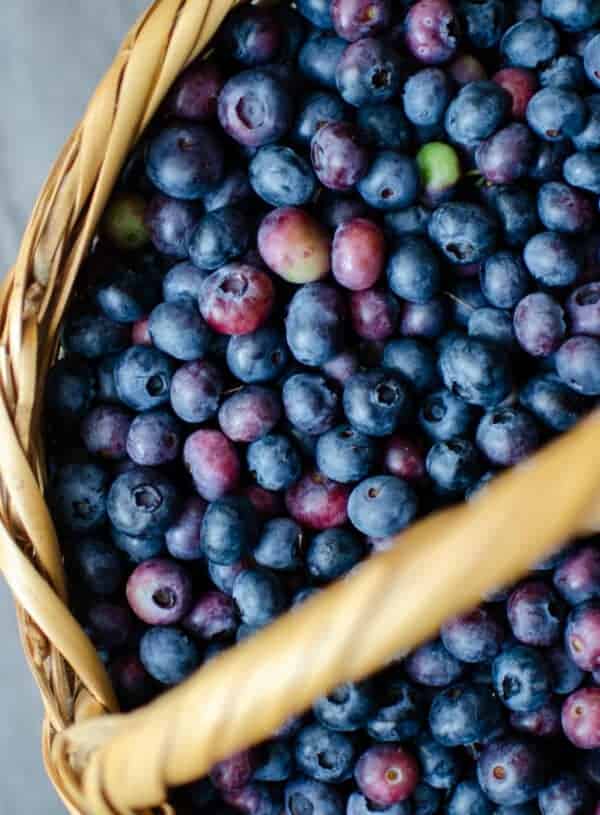
If you would like to add fruit to the dough (like blueberry), take 1/2 cup fruit and 1/4 cup sugar, bring to a boil in a saucepan on the stove top. Allow to cool and then add to the mixture and increase your flour by 1/2 cup.