
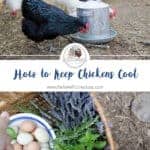
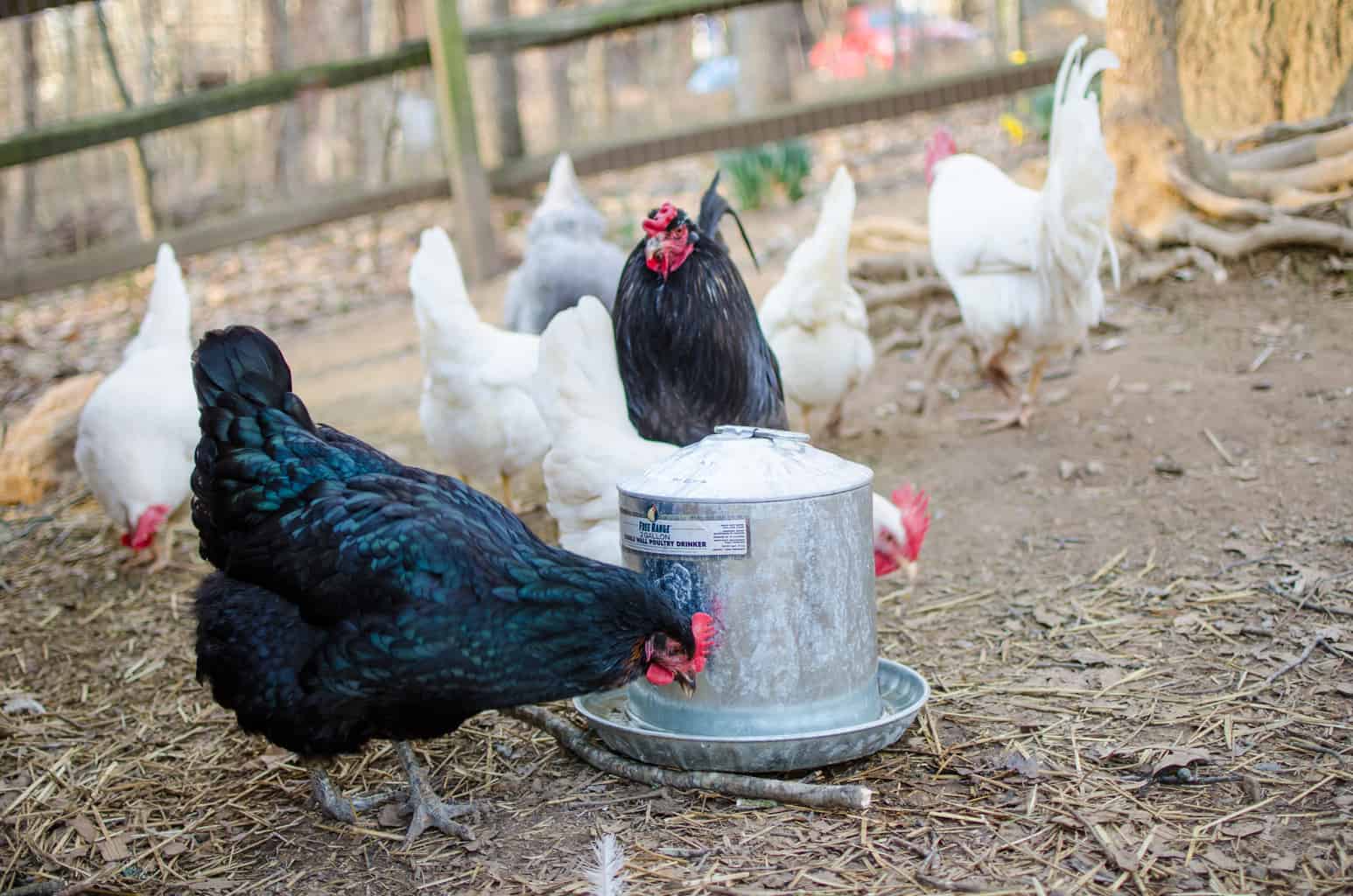
You see it all over the place—there’s at least 85 blogs talking about keeping chickens cool. Give them ice cubes. Hose them down (please don’t). Give them electrolytes and frozen water jugs. I’ve seen it all and heard it all. But here’s the reality—chickens don’t need your help to keep cool. Period. And yet, they kind of do. Check it out . . .
While there are certainly instances where your chickens need assistance, keeping chickens cool or warm isn’t one of them. It’s like the whole dilemma with heat lamps in the winter—the bottom line is, chickens don’t need them. If given the proper tools, not only can you keep chickens cool without giving them icey treats and fans, but your flock will be healthier because of it.
KEY TAKEAWAYS
- Chickens naturally regulate their body temperature without human intervention when provided with basic environmental requirements like shade and fresh water.
- Frozen treats and ice cubes cause chickens’ bodies to repeatedly heat up and cool down unnaturally, which can lead to heat stroke and heat exhaustion.
- Chickens do not sweat and therefore do not need electrolytes unless they are sick, mineral deficient, or in distress.
- Wetting chickens with water or sprinklers traps heat by matting down their feathers, preventing the natural airflow they need to cool themselves.
- Natural cooling methods include ample shade, fresh well-temperature water twice daily, proper coop ventilation, and cooling herbs like sage, lemon balm, peppermint, lemon grass, and red clover.
Keeping Chickens Cool — Disclaimer (sick chickens)
Let me first start this post by telling you that if your chickens already have a health issue, it can and will be amplified by the heat. These are taken on as a case-by-case basis. For example, if you have a chicken that is completely stressed out from the heat because they are already sick or injured, you should make an exception and either separate them in a cooler area with a fan, or bring them indoors to treat them.
Generally, healthy chickens will not need anything but the basics to keep them cool. But it’s best to prepare for emergencies when necessary.
Keeping Chickens Cool (Dont’s)
There are a lot of ways you can help with keeping chickens cool in the summer, but there are a few ways you should reconsider.
Ice cubes and Icy treats
As with any animal, when you give them ice or excessively cold treats, their bodies begin to cool down. The issue is that after a temporary cool-down (normally about 10-15 minutes), their bodies begin heating back up again. But this time, not naturally. Their bodies have already acclimated to the heat slowly with the rising of the sun, but now their bodies are forced to cool down naturally on their own while the temperatures are already hot and heavy. This can lead to heat stroke and heat exhaustion, especially if you are doing this multiple times a day. This causes the chicken’s body to heat up and cool down over and over again until their systems simply fail and become ultimately stressed.
Instead of allowing them to pick at ice cubes and frozen treats, you can stick a regular ice cube (just one) in their waterer to help keep the waterer at a normal, cooler temperature for longer in the mornings. However, do not add ice water to their waterer on a regular basis, especially once it has gotten extremely hot. Regular well water temperature will be just fine.
Getting Your Chickens Wet (with a sprinkler or hose)
Chickens have feathers, not gills. They weren’t meant to be wet as a means to cool off. This is why chickens take dust baths, not wet bird baths. Trying to cool your chickens down with water is the worst way to do it. Their body’s natural way to cool is to allow air to flow through their feathers. If their feathers are matted down with water, you’ll actually hold in more heat than release it. Never, ever, do this.
Frozen Water Jugs
This is a big trend for all livestock, and I really wish we’d stop doing it. Years ago someone told me to put frozen water bottles in with my rabbits to keep them cool in the summer. Guess what, my rabbits started dying. As soon as I took out the frozen water bottles, they stopped dying. This happened to a friend as well. Why? Same issue as the frozen treats.
When you offer your livestock or chickens frozen water jugs to sit beside, once again, it is a temporary cool down. Chickens naturally know how to cool their bodies down if given the proper tools (which we’ll go over shortly). But when we try to intervene with frozen items for a temporary fix to a long term issue, we do more harm than good. Chickens regulate their own body temperature through the genetic abilities that they were blessed with. They don’t need frozen any thing in order to survive.
Electrolytes
Guys, on my lands. I can’t tell you how many times I’ve had this conversation with people. Please do your research, PLEASE.
Chickens don’t sweat. Therefore, chickens don’t need electrolytes unless they are sick. Please stop giving your chickens electrolytes unless they are physically ailed, mineral deficient, or in distress.
Electrolytes are SALT. If you give too much salt to chickens, you’re going to kill them. Literally.In fact, the only reason large scale companies give chickens and poultry electrolytes in the summer is so that they will continue to eat and drink more so that they don’t lose weight before butchering. They are literally giving it to them so that they don’t lose money on meat production during hot seasons. That’s it.
Electrolytes have two jobs—regulating the flow of water in and out of cells, and sparking nerve impulses. You lose electrolytes when your body sweats, or when you’re sick.
Chickens don’t sweat. So unless your chickens are extremely stressed out or sick, please, please, stop giving them electrolytes.
The Temperature Whiplash Effect: How “Helpful” Cooling Methods Actually Trigger Heat Stroke
The single biggest mistake chicken keepers make is creating dramatic temperature fluctuations that their birds’ bodies can’t handle.
How Natural Chicken Thermoregulation Works:
From sunrise to midday, chickens’ bodies gradually acclimate to rising temperatures through:
• Increased panting to release heat through respiratory evaporation
• Holding wings away from body to increase air circulation
• Reduced activity and feed consumption to lower metabolic heat production
• Seeking shade and dust bathing to create insulation barriers
What Happens When You Intervene With Ice:
Morning (9 AM): You give frozen treats → Body temperature drops artificially
15 Minutes Later: Treat is gone → Body must now reheat to ambient temperature
The Problem: It’s already 95°F outside, but the body is starting from an artificially cooled state and working to warm back up while simultaneously trying to cool down from external heat
Midday (12 PM): You repeat with more frozen treats → The cycle repeats
Afternoon (3 PM): Another round → Body systems are exhausted from constant regulation
The Result: The chicken’s thermoregulatory system becomes overwhelmed by conflicting signals, leading to the very heat stroke you were trying to prevent.
The Science Behind the Failure:
Chickens can handle steady heat far better than temperature swings. Their bodies evolved for gradual warming with the sun—not rapid cooling followed by re-heating multiple times daily.
Keeping Chickens Cool (Do’s)
This might seem basic, but keeping chickens cool isn’t rocket science. Here are what your chickens actually and naturally need in order to stay cool during the hot months.
- Shade: and lots of it. If your coop isn’t in a shady area, create one, and make sure it has a open spaces for a breeze. This is your first line of defense with keeping chickens cool. No, the coop doesn’t count as a shady area.
- Fresh cool water: just straight from the well or hose. Offer it to them twice a day if possible in their waterers. Make sure you leave the waterer in a shady place, not in the coop.
- Regular feed and scraps: a normal ration of homemade chicken feed is perfectly fine. You can certainly offer them veggie and fruit scraps, and in fact we encourage it. However, frozen treats aren’t necessary.
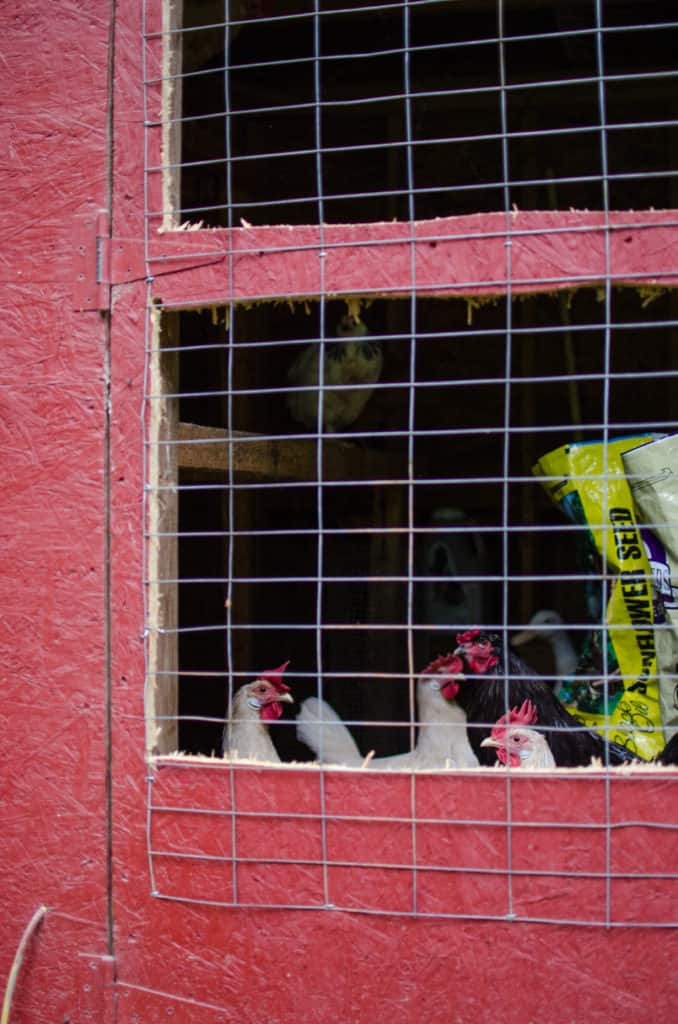
- Ventilation: after the day is done, sometimes the coop is the worst place to be. Make sure your coop has proper ventilation. We do this in the summer by switching out our solid coop door with a screened or wired door (above). This allows the breeze to move through the coop freely, and gives proper and constant ventilation.
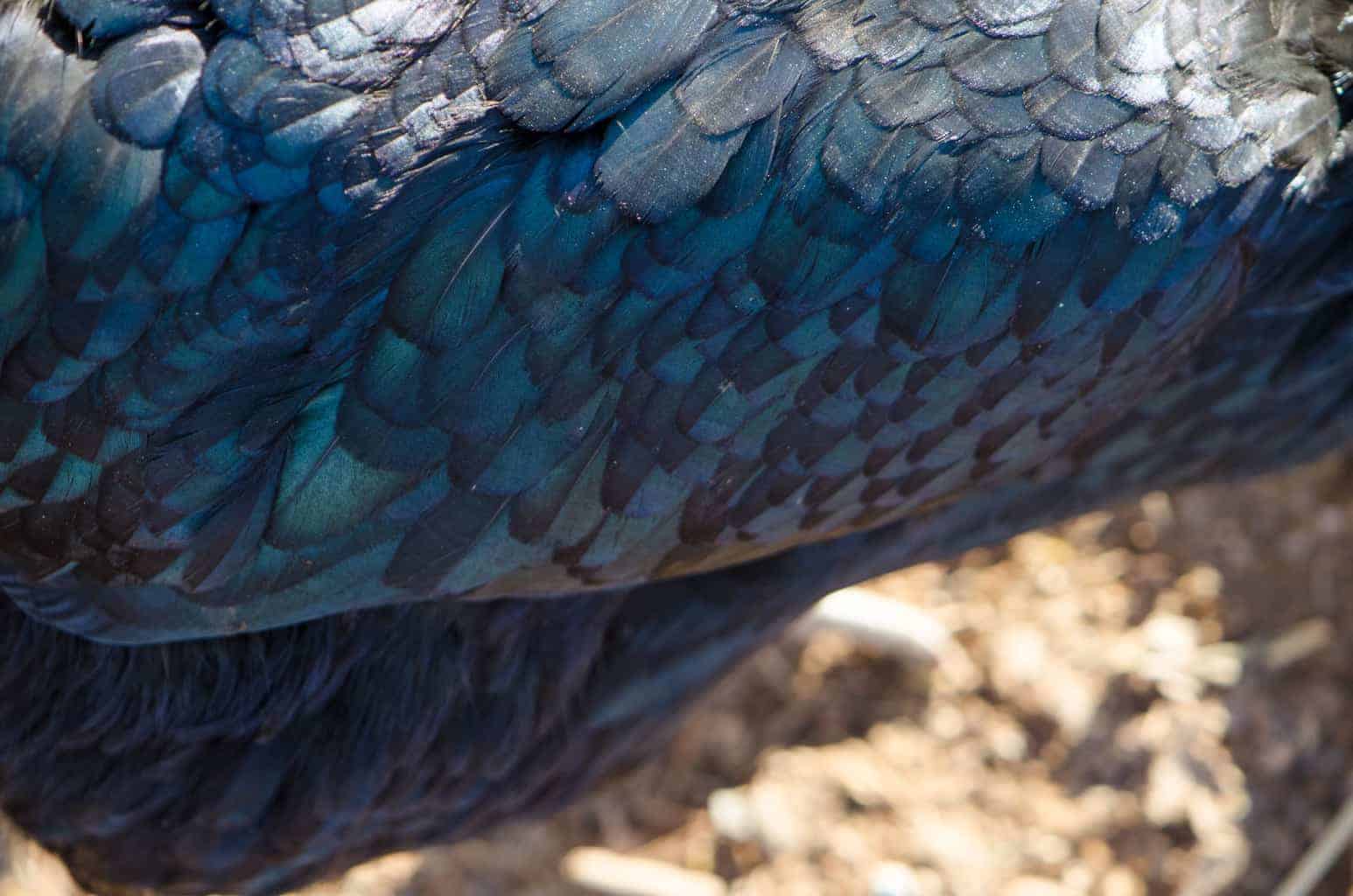
- Cooling Herbs: a great and natural way to help chickens keep cool is by offering them cooling herbs that help their bodies naturally acclimate to heat. Sage, lemon balm, peppermint, lemon grass, and red clover are fabulous herbs to help with naturally keeping chickens cool. Place these herbs in their feed or waterer so that they can eat or drink them freely.
| Herb | Cooling Mechanism | How to Offer |
| Peppermint | Menthol creates cooling sensation, supports respiration | Fresh leaves in waterer or dried in feed |
| Sage | Reduces internal heat production | Dried leaves mixed with feed |
| Lemon Balm | Calms stress response, reduces anxiety | Fresh or dried in nesting boxes and feed |
| Red Clover | Supports circulation and respiratory function | Dried flowers in feed or as free-choice |
| Lemon Grass | Natural cooling properties, supports digestion | Chopped fresh in waterer |
Keeping Chickens Cool the Natural Way!
By offering your chickens shade, fresh water, regular feed and treats, and cooling herbs, your chickens will deal with heat and stress much better than if you were to give them the alternative modern amenities. Remember, nature knows how to take care of itself best, and when given the most natural tools, they will astound us at their abilities.
I hope this blog helped shed some light on modern day chicken keeping issues, and gives you the confidence to supply natural cooling techniques for your chickens that don’t require you to spend a lot of time doing them!
Frequently Asked Questions
What temperature is too hot for chickens?
Chickens can tolerate temperatures over 100°F when provided with proper shade, ventilation, and fresh water. The danger comes not from a specific temperature but from lack of natural cooling resources like shade and airflow. Heat stroke occurs when chickens cannot regulate their temperature naturally due to inadequate environmental conditions, not simply because of high temperatures.
How do I know if my chicken is experiencing heat stress?
Signs of genuine heat stress include persistent panting with an open beak, wings held far from the body, lethargy, loss of appetite that lasts multiple days, pale combs, or collapse. Normal heat management behaviors include moderate panting, seeking shade, reduced activity during peak heat, and increased water consumption. If a chicken shows severe symptoms, separate them to a cooler area with a fan and offer room-temperature water.
Can I use fans in the coop during summer?
Fans can be beneficial if used correctly—they should create air circulation without blowing directly on roosting chickens, as this can still cause temperature regulation issues. The best approach is placing fans to enhance natural cross-ventilation through screened doors and windows rather than creating artificial wind. Only use fans if natural ventilation is impossible due to coop design or location.
Is it okay to give chickens watermelon or cucumbers as cooling treats?
Room-temperature fruits and vegetables with high water content are perfectly fine as treats and can help with hydration. The key is offering them at ambient temperature, not frozen or refrigerated. Watermelon, cucumbers, and leafy greens at normal temperature provide hydration and nutrients without causing the temperature fluctuation problems that frozen treats create.
Should I change my feeding schedule during hot weather?
Many chicken keepers find success offering the main feed ration during cooler parts of the day—early morning and evening—rather than midday. This aligns with chickens’ natural tendency to eat less during peak heat. The metabolic process of digesting food generates internal heat, so allowing chickens to eat when it’s cooler reduces their overall heat load during the hottest hours.
Most Important Insights to Remember
#1 Chickens naturally regulate temperature when given basic environmental tools including ample shade with airflow, fresh well-temperature water, proper ventilation, and cooling herbs—not frozen treats or artificial cooling methods.
#2 Temperature fluctuations from frozen treats cause more harm than steady heat by forcing chickens’ bodies to repeatedly cool down and reheat throughout the day, overwhelming their natural thermoregulation and increasing heat stroke risk.
#3 Electrolytes are unnecessary for healthy chickens in summer heat because chickens don’t sweat and therefore don’t lose electrolytes through normal heat exposure; commercial operations use them only to maintain meat production weight, not for chicken health.
#4 Wetting chickens with water or sprinklers traps heat instead of releasing it by matting down feathers and eliminating the air circulation channels that chickens rely on for natural cooling.
#5 Proper coop ventilation through screened doors and cross-breeze design is more effective than any frozen water jugs or ice cubes because it supports chickens’ natural cooling mechanisms rather than working against them.


Thank you for the great advice
Oh my goodness this video was such a breath of fresh air! I was doing several of the things, Ice cubes, frozen water bottles, and a fan… your video made such sense! We’ve only had them for 3 days and still adjusting to the newness of it all. Thank you for the common sense info! God’s design is pretty incredible!
Im happy you enjoyed it!!
Well I think mostly you are correct. But there are circumstances such as extreme heat like 120F on a constant basis (desert heat) where an ice jug works. Not because they sit by it but they drink the cool water that melts from it since the water jugs in shade are warm. But mostly letting them acclimate to the weather is best cooling the dirt down with some water for dust baths is great and the best is dark shade and a mud puddle. Kiddie pools heat up where mud puddles stay cooler and they scratch and make mud booties for their feet to lock in the coolness and protect against hot ground. Chickens lose heat through their feet/legs. You don’t know chicken heat care until you’ve done it in the desert. Tried everything and its true frozen treats are only temporary relief under extreme circumstances bc it throws their acclimation off cold inside hot on the outside etc.
Our chickens use to go down into our rabbit/tortoise hole to get cool, but we live in Las Vegas so it gets HOT. It’s nice to have a rabbit & tortoise to dig the hole lol(you can forget about using a shovel to dig it cause our ground is full of hard caliche).
I love that you bring up the electrolyte issue. I have had the same conversation with some of my friends/neighbors about keeping chickens cool in the summer here in west TN. Yes, it gets super hot and super humid, but no, your chickens don’t need the extra electrolytes. I do provide a box fan that blow through our coop and run on really hot days, but we also raise some breeds that are more prone to heat stress than others. Our chickens are free-ranged, so they can come and go from the coop as they please during the day. The fan helps with ventilation in the coop and prevents anyone from getting overly hot when they come in to lay.
I have Silkies that are the age to move outside. They’ve been in a portion of the garage with a/c, and we are having a hideous hot spell with extreme humidity. We live in North Texas. I’ve been trying to get them used to the heat by putting them out during a cooler parts of the day. I don’t know if I should just wait until the humidity goes away or keep trying to acclimate them slowly.
I think they will be fine if you stick them outside at night and let their bodies warm up naturally during the day.
Great Information here. I’ve used misters that are at about an 8’ height when the weather tips at high 90’s & above. While the ground does tend to get wet eventually, much of the mist is evaporated but cools the run. Do you feel this is ok?
Keeping the ground cool is fine, but getting the chickens, themselves, wet could cause some issues.
Even though my run is in the shade, I’ve found that my chickens seem to be in heat distress (excessive panting, especially) once the outdoor temperature gets into the 100-115 degree F range. I’ve always been told those kinds of temperatures are dangerous for poultry, because at that point fans just blow hot air and essentially become a convection oven. Are you saying those temperatures are perfectly safe for chickens? Should I not worry if I see them panting?