
• Home
  • Membership
  • Shop
  • Cart
  • Our Farm
  • Gut Health
  • Herbal Practice
  • Buy Trusted Supplements
  • Nav Social Icons

  • Skip to primary navigation
  • Skip to main content
  • Skip to primary sidebar
  • Skip to footer
  • Home
  • Blog
  • About Me
  • Our Farm
  • Gut Health
  • HH Membership
  • My Books
  • Youtube
  • Podcast
  • Homesteading
  • Chickens
  • Herbs
  • Family
  • Farmhouse
  • Homemaking
  • Recipes
  • Sourdough
  • Contact Me
  • Herbal Practice
  • Buy Trusted Supplements
  • Mobile Menu Widgets

    Search

    Connect

Amy K Fewell | Homesteading for the Kingdom

Amy K Fewell | Homesteading for the Kingdom

  • Start Here
    • About Me
    • My Books
    • Podcast
    • Youtube
    • Gut Health
  • Blog
    • herbs
    • Bees
    • chickens
    • rabbits
    • Farmhouse
    • gardening
    • devotional
    • homemaking
    • sourdough
    • recipes
  • Courses & Books
    • HH Membership
    • My Books
  • herbs
  • Podcast
  • Contact Me

Canning Peaches With Raw Honey

July 11, 2016 · In: canning, recipes

Canning Peaches With Raw Honey


Canning is hard work, people—let me tell you. I do a little canning each year, but nothing like what my great Aunt used to do. When I think of a garden and canning, I automatically remember Summertime at Great Aunt Vergie’s house. That woman, she could can. Between her and my Great Uncle Al (who was married to my Great Aunt Rose who deceased very early in life), they must have had a 2 acre garden on Aunt Vergie’s property. They shared the space and worked together. Uncle Al lived all the way up in the big city, and he would come down and garden on the weekends.

Between the two of them, their gardening and canning was simply a way of living. And a pretty darn good way of living. They didn’t have websites and you tube channels. They just….lived.

And over the past few years, I’ve learned to just “live” too. Learning what I can , growing in knowledge, and experimenting with new things.

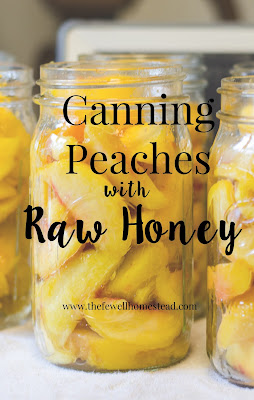
Because of this, last year was an experimental canning season for me. I’ve been canning for a few years now, but last year was the first year I had used raw honey in place of sugar. I specifically tried canning peaches last year. And here’s what I discovered.
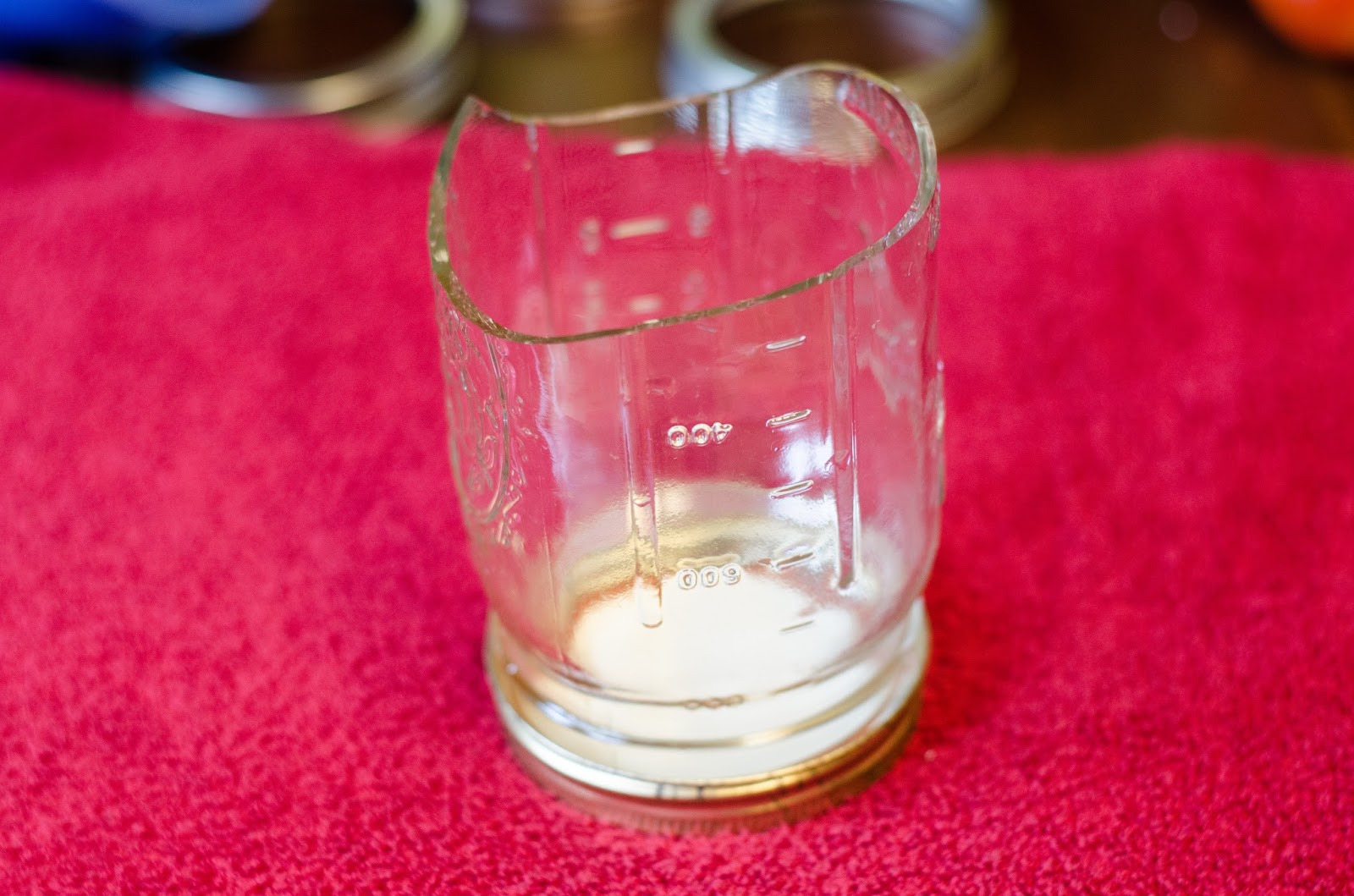
Tip number one….old jars aren’t always reliable.

These jars actually came from my Uncle Al, God bless his soul as he rests in peace. A couple of them had hairline fractures apparently, and burst open in the canner. Now, this isn’t something to be scared of. Since they aren’t pressure canned, no glass shards when zooming through the air!

So, moving along…

Do you have to add sugar to can peaches?

No, absolutely not. You can can peaches (and any other sweet fruit) in water and do just fine. However, without a preservative, they can turn brown and lose some of their sweetness. Some people simply add lemon juice to retain color, but the honey (in this particular fruit) did the job of both. I didn’t want to add refined sugar (though, I could have used raw sugar) so this past year I opted for a cup of raw honey.
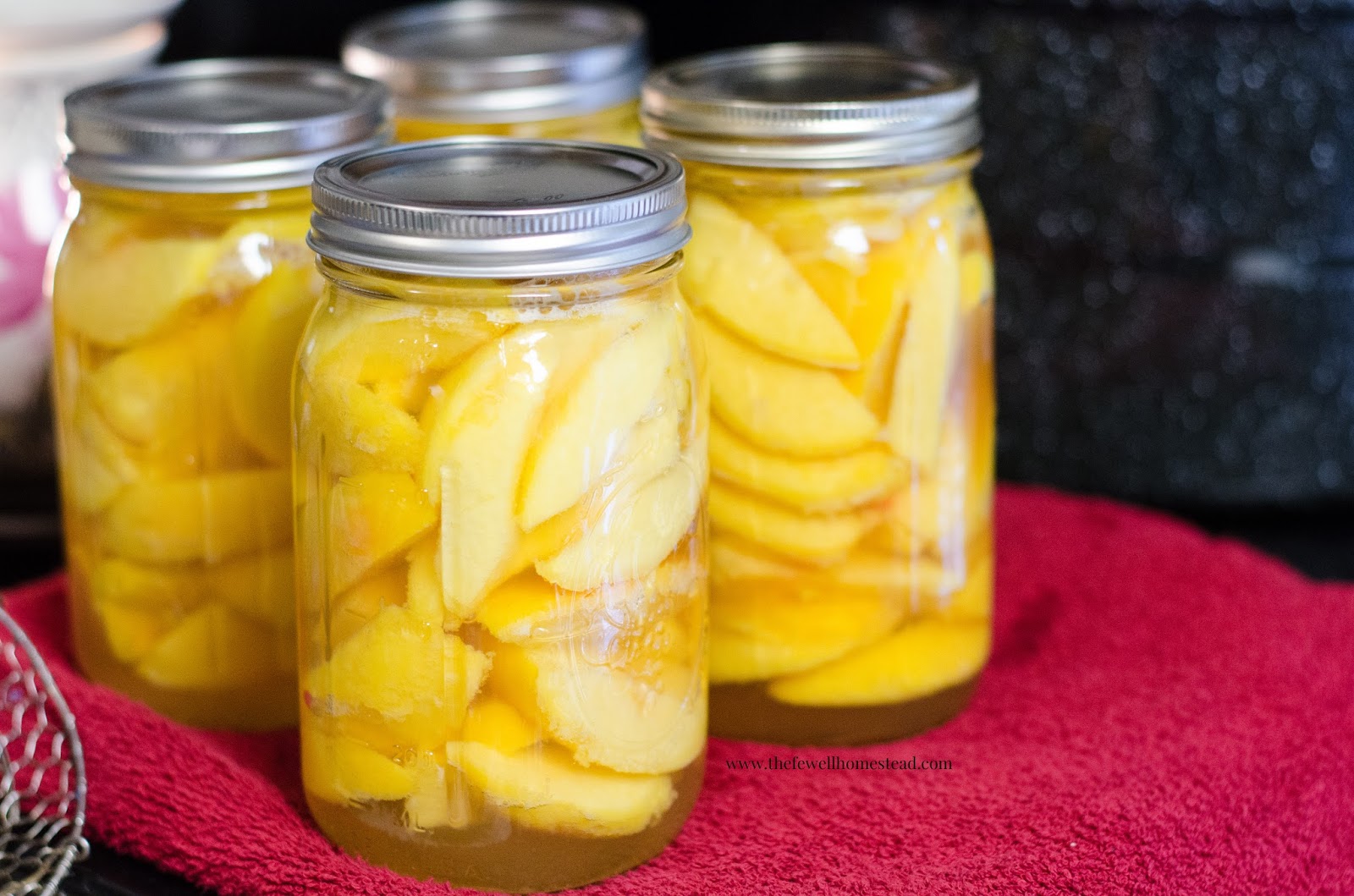
How to Can Peaches with Raw Honey

  1. Start with a pan of boiling water. You’ll want to get the skins off of the peaches without cooking them. You do this very easily by scalding the outside of the peaches in boiling water for 2 minutes, and then dunking them in ice cold water. This is the easiest way to peel peaches without the trouble of using a knife, and without being wasteful. This is easier when the peaches are very ripe
  2. After the skins are removed, bring 8 cups of water and 1 cup of raw honey to a boil in a saucepan. 
  3. As that is coming to a boil, cut up your peaches in slices or just in half, and remove pits. Make sure you also remove the hard red edges on the peaches, as these can sometimes cause issues with the preservation later down the road. Make sure you also remove any really soft brown spots in the flesh as well.
  4. *This step is optional. If you’d like more of a spiced peach rather than regular peaches, you can add a cinnamon stick and nutmeg (etc) to the bottom of your jar.
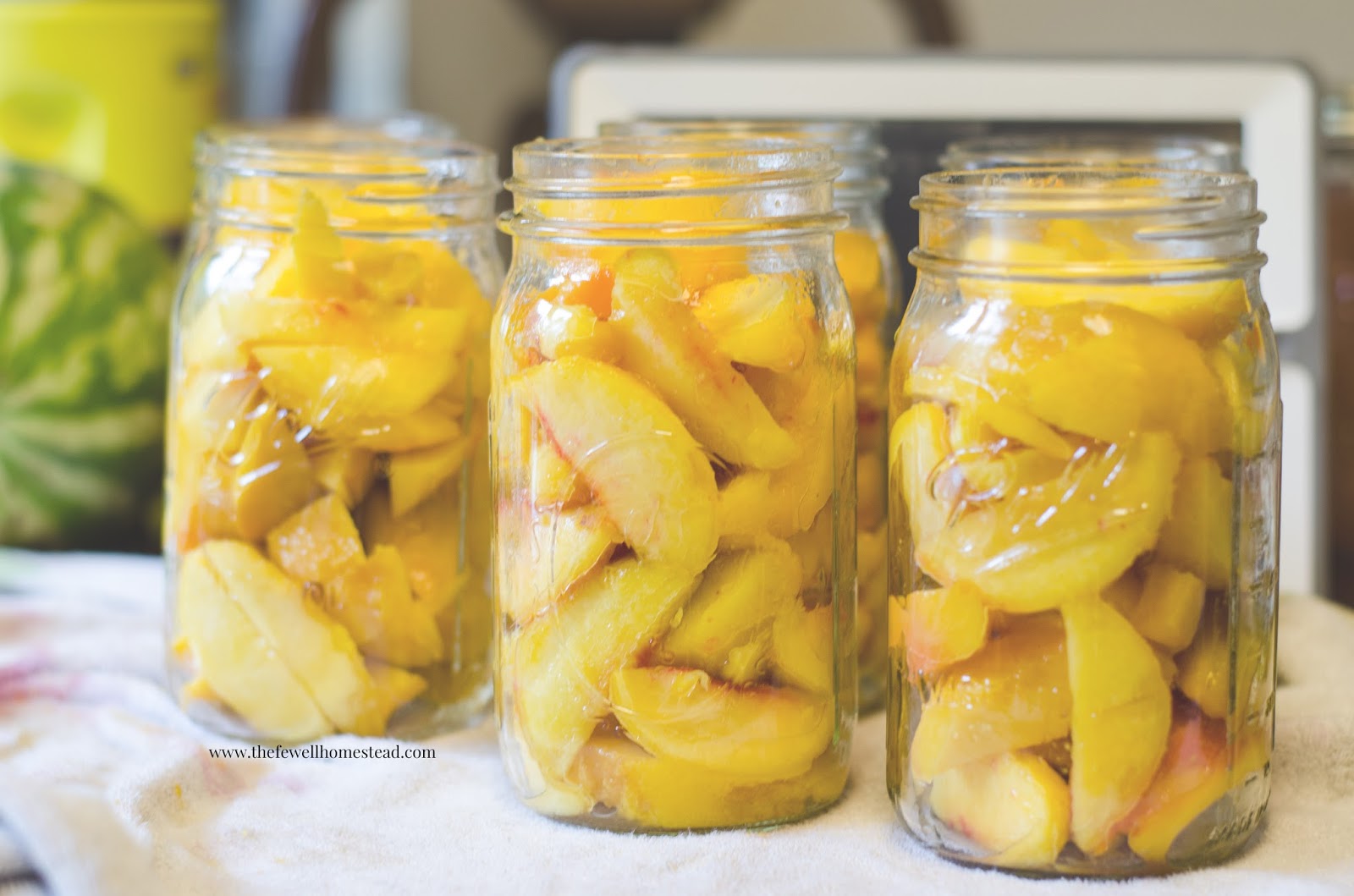
  5. Pack sliced peaches in jars tightly (preferably pit side down), up to the bottom (and even a little above) of the mouth.
  6. Fill the jar up with the hot honey/water mixture, leaving a 1/2″ head space.
  7. Place lid on and ring on with finger tip tightness. Process in hot water bath canner for 20-25 minutes. Once processed, remove them without touching tops of lids, and place them in a level area where they can cool.

Keep in mind that these peaches, once cooled, will have cooked and sank down into the jar a bit. That’s why we always pack as many into our jars as possible.

Once cooled, if any of the lids have not sealed, place those jars in the refrigerator and eat first.

These are delicious to use later in the year for cobblers and pies, or on oatmeal and ice cream!

Now, one year later, I am still just as impressed with the taste and the preservation of the color and sweetness. Also keep in mind that the sweetness can be adjusted by adding more or less honey during the canning process.

Enjoy!
By: Amy K. Fewell · In: canning, recipes · Tagged: canning peaches, DIY, farmhouse, honey, kitchen, raw honey, recipes

you’ll also love

Homemade Fire Cider | Sometimes it Works, Sometimes it Doesn’t (plus recipe)
How to Make Homemade Herbal Chapstick
Canning Blueberries and Blueberry Pie Filling

Reader Interactions

Comments

  1. Pamela says

    March 14, 2021 at 7:10 am

    Fantastic, thank you. I am just getting a beehive so this will come in very handy. I came here via Daisy Luther and have to say what a wonderful site you have.
    I am in Australia and have been prepping for a while. It is not the prepping that I love but the wonders of living with natural things we have been given.
    I look forward to my first honey “crop” via an easy flowhive and can hardly wait to can fruit (experiment).
    Thank you also for the great dehydrated sour dough recipe.
    Cheers
    Pamela

    • Jillian says

      August 24, 2021 at 9:07 pm

      Is it possible to do this without bringing the honey up to boil? Too much heat destroys raw honey’s nutritional value and can also turn toxic for the body.

      • Sandy says

        September 14, 2021 at 10:35 pm

        Hi Jillian,
        I get where you’re coming from and, when not preserving food, I always add honey at the end for this reason.
        But it’s not possible to preserve fruit via canning without bringing all the ingredients to boiling and keeping it there for the specified time. Otherwise pathogens can survive the process and potentially make you very sick.

  2. Manuela says

    March 27, 2021 at 5:54 pm

    Thank you so much for posting this. I used to can years ago and then I quit. Now, with everything that’s been going on I’m determined to get back into it. I have seasonal allergies so I have to avoid sugar. So seeing this recipe is just perfect timing all the way around. Thank you!! 💜

    • Melissa says

      August 10, 2021 at 4:17 pm

      How many quarts will this recipe make?

  3. Coll says

    August 22, 2021 at 2:43 pm

    Every year, usually about 6 months in, my peaches always go brown and mushy. I can them with Honey and a bit of lemon juice. What am I doing wrong?

    • Amy K. Fewell says

      August 30, 2021 at 1:13 am

      that can be one of the downfalls with honey instead of sugar

Next Post >

Facing the Reality of Homestead Confiscation

Primary Sidebar

meet amy

meet amy
hello!

I'm Amy. I love organic food but I love cookies too I love Jesus and His grace. I believe broken people make the biggest impact in the world when they share their stories. I believe in stories, and I'm sharing mine.

Read More

Connect

Search

Ads & Sponsors

200x400

Advertise

Follow Along

@amy.fewell

We have become very good at buying supplements. A We have become very good at buying supplements.

A new vitamin for energy. A probiotic for digestion. An herb for stress. A powder for inflammation. Another bottle promising to support the immune system. And some of those things can be incredibly useful.

But there is a question we often fail to ask:
Is my body able to properly digest, absorb, and use what I am giving it?

Our wellness cabinets can be overflowing while our understanding of the body remains painfully limited. This is why I believe gut health must be approached with education—not simply another shopping list.

You need to understand what prebiotics and probiotics actually do. You need to know where enzymes fit into digestion. You need to learn how food, fiber, fermented foods, herbs, stress, and everyday habits can influence the digestive process.

You do not need to become fearful of food. You do not need to purchase every supplement someone recommends. You do not need to follow every wellness trend that moves across your screen.

But you do need knowledge.

That is why I created The Gut Health Handbook for Women—and Men! It walks you through the foundations of digestive health and gives you practical information you can begin using in your own home.

Before you buy another supplement, take time to understand the body you are trying to support.

🌿 Comment GUT and I’ll send it straight to your inbox.

This handbook is educational and is not a substitute for individualized medical care.
It’s ok if your family is different. It’s ok if y It’s ok if your family is different. 
It’s ok if you stay at home with your kids and raise them the way God intended. 
It’s ok if your kids don’t spend all their waking moments entertained with extra curricular activities away from home.
It’s ok if you make your kids help you clean the house, milk the cows, and weed the garden.
It’s ok if you chose unconventional healthcare and your kids have never been to an allopathic doctor. 
It’s ok if you and your husband actually communicate and love each other.
It’s ok if your teenager has boundaries and they aren’t allowed to be of the world before they are mature enough to handle it with wisdom. 
It’s ok…and I thought you should know that. And I think you should know that if you don’t believe any of those things, too. 

I will never apologize for homeschooling my kids and not allowing them to be part of an indoctrinated system. I have seen that village, and I want no part of it. The fornication culture, competition culture, and consumer culture isn’t for us. We unsubscribe. 

Instead I want kids who an independent, self-driven, discerning, clear minded, honoring, not fighting to “be loved”, wise, kind, modest, loving, and courageous. I want my boys to be warriors, yet gentle enough to hold their wife and babies. I want my girls to be gentle, but courageous enough to stand up against injustice. 

There is an innocence that our children have been losing sooner and sooner with each generation. I want my kids to be informed but not consumed. I want their minds to be full of Christ before the world fights for their attention. I want their lives to be influenced by God fearing people so they aren’t corrupted by worldly people when they leave here. I want them to be so confident in who they are in Christ, that no one can convince them they aren’t good enough.

And that’s ok.
I've been talking about famine, but I had no idea I've been talking about famine, but I had no idea that God would be talking to me so personally about famine right here on my homestead this year. Not in the way you may think.

In the springtime I began ripping this wild herb out of my garden beds. It didn't make sense—the seed bank in these beds should be long gone of weeds overtaking them. But here I was, ripping out this plant by the barrel load. 

Suddenly I stopped, got out of my tunnel vision, and thought to myself—if it doesn't make sense, then what is God trying to show me? My goodness, was I shocked when I really dove into the history and uses of this beautiful wild plant. 

Historically, lambs quarters was used as a crop for livestock and humans because it was drought resistant. During great famines, lambs quarter leaves were eaten extensively, and the seeds were saved and used like quinoa. This plan is still widely used in places like Africa today, where produce and rain is scarce. 

Lambs quarters has pretty much every mineral your body would ever need. It has 200% MORE calcium, iron, magnesium, potassium, zinc, vitamins, Omega-3 fatty acids, and protein than kale and spinach (and other common leafy greens). Making it the exceptional famine food. 

Our ancestors ate it regularly as a gentle anti parasitic, anti inflammatory, antioxidant, and for liver support.

I plan to save most of the seeds from the plants I've let take over a bed, and cultivate it widely on our homestead.

I wrote all about this incredible plant in a brand new blog post on my website. 
 
🌾 Comment LAMB and I'll send it straight to your inbox.
Last week I talked about capacity, and how some pe Last week I talked about capacity, and how some people just have lesser capacity than others. But also, that there is wisdom in knowing when you should, and should not, have high capacity. Seasons of rest are essential. Maybe you’re a mom and littles and you have to put other things on the back burner. Being high capacity in a delicate season like that will likely burn you out of all the things. Maybe you’ve had health issues and need to lighten the load. But low capacity should never be because you lack self confidence or you’re lazy. 

This week, though, I want to talk about some real truth around capacity. Because the reality is that you can increase capacity, and you can decrease capacity, but you cannot SUSTAIN high capacity. It won’t work. This is where we see what we call “burn out”. 

A wise person will understand that in order to increase capacity higher, you must push yourself to beyond anywhere you have ever been in a season. Eventually, the capacity evens out, if you do it well, and you reach a point and begin to decrease that capacity before expanding again.

You can decrease capacity in order to rest, evaluate, heal, plan, organize, and test yourself.  Or, as in the seasons I mentioned above.

But never, can you ever, forever sustain a high capacity. 

You can have a bigger capacity than someone else. But having a larger capacity and living in “high capacity” are different. Most real leaders naturally have the gift and ability to manage a large capacity. They expand and decrease, and expand again—each time that expansion building out a larger foundation so that building increase happens more quickly each time.

But good leaders know that they can go go go (sometimes for months and years) at that rate, yet eventually they will have to lessen the load so they can recoup before they build up more capacity. The foundation remains, and is ready for them to expand again when they have rested.

Rest. Excel. Rest. Repeat. 
Less capacity. Higher capacity. Less capacity. Repeat. 

It’s all about balance, friends. You can do it. 💛
Alright friends, here’s your Weekly Ag Brief — the Alright friends, here’s your Weekly Ag Brief — the week in food, farming, and freedom. 🌾

🪰 SCREWWORM: A flesh-eating fly is spreading through Texas livestock — 30+ animals now, including sheep and goats. Easy to spot and treat if you’re paying attention. Check your animals, especially newborn navels.

🥬 PARASITE IN THE LETTUCE: Cyclospora has sickened 840+ people across 31 states — a parasite whose only known host is human beings. Officials suspect store-bought leafy greens. Which makes you wonder about all that “biosolids” (a tidy word for treated human sewage) D.C. spent years pushing farmers to spread on their fields. You know what never has this problem? The lettuce in a pot on your porch.

💵 DISASTER $: USDA quietly improved its farm disaster programs — predator losses now paid at 100%, unborn livestock covered back to 2024, some of it automatic. (I don’t take government money — but if you would, it’s there.)

🔬 TESTING: For the first time, USDA/HHS/EPA will test processed foods for heavy metals. Good — now do glyphosate.

🏛️ FARM BILL: The Senate’s back, aiming to mark up “Farm Bill 2.0.” This is the big one. Watch it religiously.

🇺🇸 KNOW YOUR FARMER: Ten more companies adopted the “Product of USA” label, and Farm to School hit a record $20M for local food in schools.

🫐 RECALL: Frozen organic blueberries at Publix (8 states) tied to an E. coli outbreak — check for lot 60401.

The thread through all of it? The closer your food is to your own hands, the safer it is.

Full breakdown on my Substack — comment BRIEF to have it sent to your inbox

Footer

Learn More

Chickens
Homemaking
Herbs
Recipes
Devotionals

Info

About
Contact
Privacy Policy
Shop

stay in the know

Copyright © 2026 · Theme by 17th Avenue