• Home
  • Membership
  • Shop
  • Cart
  • Our Farm
  • Gut Health
  • Herbal Practice
  • Buy Trusted Supplements
  • Nav Social Icons

  • Skip to primary navigation
  • Skip to main content
  • Skip to primary sidebar
  • Skip to footer
  • Home
  • Blog
  • About Me
  • Our Farm
  • Gut Health
  • HH Membership
  • My Books
  • Youtube
  • Podcast
  • Homesteading
  • Chickens
  • Herbs
  • Family
  • Farmhouse
  • Homemaking
  • Recipes
  • Sourdough
  • Contact Me
  • Herbal Practice
  • Buy Trusted Supplements
  • Mobile Menu Widgets

    Search

    Connect

Amy K Fewell | Homesteading for the Kingdom

Amy K Fewell | Homesteading for the Kingdom

  • Start Here
    • About Me
    • My Books
    • Podcast
    • Youtube
    • Gut Health
  • Blog
    • herbs
    • Bees
    • chickens
    • rabbits
    • Farmhouse
    • gardening
    • devotional
    • homemaking
    • sourdough
    • recipes
  • Courses & Books
    • HH Membership
    • My Books
  • herbs
  • Podcast
  • Contact Me

{Homestead Cooking} Strawberry Jam

May 21, 2015 · In: canning, recipes

Last year was the very first year we went strawberry picking. It was a no-brainer this year. We had to go strawberry picking at Messick’s Farm again this year. And then when we discovered that they were running a special of buy two-gallons get one free, we were on it!
When we got home with this years pick, I instantly knew what I would make first — strawberry jam. Last year I wanted to make it so badly, but never had a chance to make anything but a quick strawberry jamy-syrup topping for ice cream. This year, it was much different.

There was some amazing, yummy goodness going on in my kitchen the other day….


And I just have to share the recipe with you.

This is a recipe that is found all across the internet, in cookbooks, and in your grandmas memory. It is quick and easy, and not to mention, very simple. It has been tried and tested for years, and it’s about time you put it to test for yourself.

Homemade Strawberry Jam
2 quarts of fresh strawberries (de-stemmed and sliced in half)
1/3 to 1/2 cup fruit pectin (depending on your preference of thickness)
4 tbs fresh lemon juice
1 tsp butter
7 cups refined sugar (organic cane juice works too)
— Before you begin — 
Whenever making jam, you want to make sure that you have all of your utensils and ingredients together before you begin. All jars need to be sterilized and set aside before starting your jam. Make sure you have jars, lids, a ladle, and a jar funnel for pouring the jam into your jars. Have all of this ready before proceeding to make the jam.
 
Measure 2 quarts (I just use quart jars) of de-stemmed and sliced strawberries into a large bowl.
Smash strawberries to break into smaller pieces and to release juice from the berry. If you prefer not to have larger chunks in your jam, then you’ll need to pulse your berries in a food processor a few times.
Pour crushed berries into a large (6 qt +) pan.
Add pectin, butter and lemon juice to crushed berries.
Bring to a boil over medium high heat — stirring constantly. Do not allow it to scorch on the bottom.
Pour in pre-measured sugar until it is completely dissolved. Stir constantly.
Bring mixture back up to a boil that cannot be stirred down, stir constantly for 2 minutes while it boils.
Make sure you are careful and do not burn yourself! Boiling jam is extremely sticky and painful!
After 2 minutes, immediately remove from heat and immediately skim off what little foam may be on top of jam.
Quickly ladle into jars, cap with lid and ring. Do not tighten too hard — fingertip tightening.
Over the next few hours your jars will begin to seal themselves. They will last in your pantry for well over a year or more.
If any of your jars do not seal, remove the lid, replace with new lid, and place in a hot water bath canner for 20 mins.
————–
Don’t want to use commercial fruit pectin? Try making your own! Click here to find out how.

By: Amy K. Fewell · In: canning, recipes · Tagged: canning, jam, strawberries, strawberry jam

you’ll also love

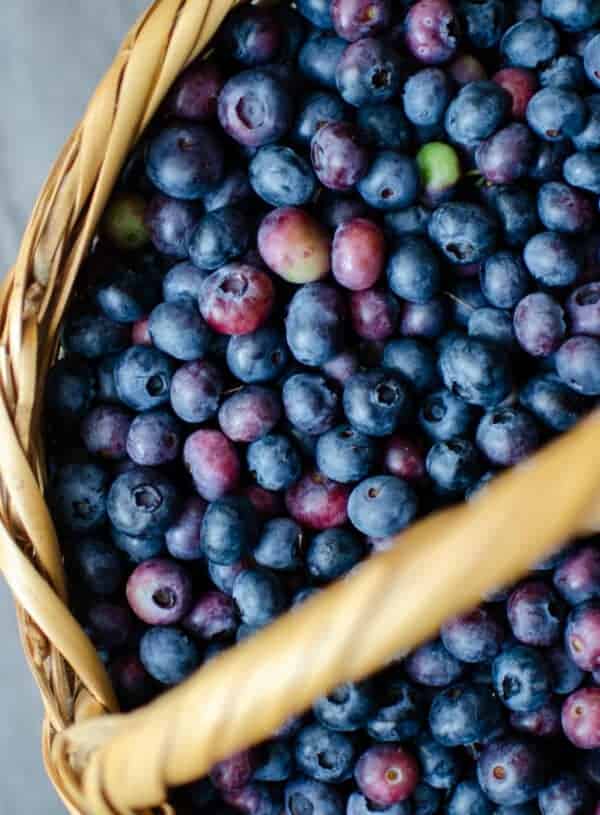
Canning Blueberries and Blueberry Pie Filling
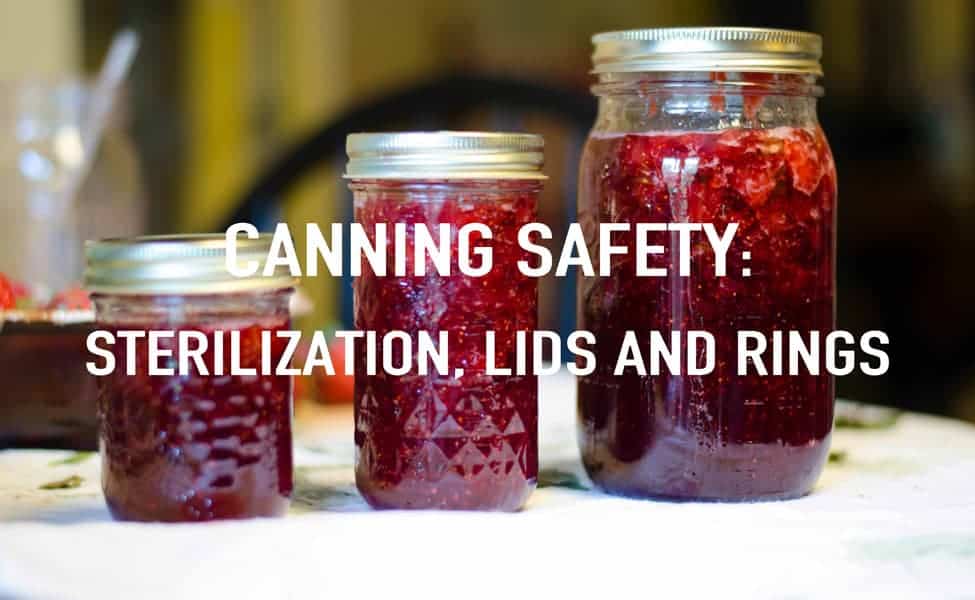
Canning Safety | Sterilization, Lids and Rings
Peppermint Chocolate Crinkle Cookies
Next Post >

10 Differences Between the Proverbs 31 Woman and the Modern Housewife

Primary Sidebar

meet amy

meet amy
hello!

I'm Amy. I love organic food but I love cookies too. I love Jesus and His grace. I believe broken people make the biggest impact in the world when Jesus makes them whole, and when they share their stories. I believe in stories, and I'm sharing mine.

Read More

Connect

Search

Ads & Sponsors

200x400

Advertise

Follow Along

@amy.fewell

America’s 250th birthday. 9/11 was 25 years ago. America’s 250th birthday. 9/11 was 25 years ago. 

We have entered the Hebrew calendar year of 5787. And we are headed into 2027. 

Two very important cross overs in our history right now. 

The number 25 means “grace upon grace”.

The number 7 means “completion”. 

The numbers 9 and 11 mean judgement. They were important in history long before now. 

This isn’t numerology, it’s history. God is a God of numbers—from the beginning of time. 

Friends, prophetically speaking, I believe we are headed into a final year of “grace upon grace”. This era we have been in is closing—coming to completion. And a new era is about to open. 

I keep sensing in my spirit “make 2027 count”. And I would be saying this with a loud horn if I could, from the mountain tops. 

Whatever it is you’ve been procrastinating on—MAKE 2027 BE THE YEAR you stop waiting, procrastinating, or being lazy about it. 

What lies on the other side is not something many will expect. Nor are many ready for. 

The realms are shaking. And whatever is not of Yahweh will be shaken once more. In every way.

He is for us, He is with us, and He will guide us. 

Make it count.
“Now there was a famine in the land…” That’s how “Now there was a famine in the land…”

That’s how Genesis 26 opens, and I couldn’t get past it. Famine is a topic Yahweh has brought to my attention over and over these last few years, and as a watchman, I take note. So I sat in this chapter. It isn’t a story about scarcity. It’s a story of sustainability and favor.

In the middle of a famine, Isaac planted crops and reaped a hundredfold the very same year. His flocks, herds, and household grew so large that the Philistines envied him. They filled his father’s wells with dirt. And King Abimelek finally told him, “Move away from us; you have become too powerful for us.”

Isaac wasn’t powerful because of armies or gold. He was powerful because he could sustain his household. His wealth was the riches of the earth: food, livestock, linen, trades, and skills. He didn’t need a king to take care of his family. He did that with the help of Yahweh.

And that has always intimidated the kingdoms of this world.

Wells weren’t just water. They were a claim to the land. Filling in Abraham’s wells tried to erase his family’s inheritance. Isaac dug them back open.

Peace didn’t come at the first well, or the second. It came at the third, Rehoboth: “Now the Lord has given us room and we will flourish in the land.” Settling took patience and maturity.

Favor didn’t mean skipping the work. Isaac still had to dig, plant, and do his due diligence.

The same king who sent him away came back asking for a treaty, because they “saw clearly that the Lord was with you.”

When God rests the favor of sustainability on a people, the world takes notice. Some will try to squash it. Others will fear and reverence it.

Friends, this is the mission of the church. Not just physical sustainability, but spiritual. We are a sovereign people in the Kingdom of Yahweh, called to be a house of provision and refuge, a traveling Goshen in a hungry land. We don’t walk in fear of earthly kingdoms. We walk in the fear of the Lord.
He still shows favor on the Isaacs.

Read more in this new Substack post…

Comment ISAAC to have it sent to your inbox.
Most people look at a peach tree and think about t Most people look at a peach tree and think about the fruit, but peach leaf has a long history of use in traditional herbal medicine.

Herbalist Matthew Wood describes peach (Prunus persica) as primarily cooling, moistening, soothing, and calming, particularly when tissues are hot, dry, irritated, and hypersensitive.

Traditionally, peach leaf has been used for:

• Nausea + vomiting — especially a hot, irritated, overly sensitive stomach
• Pregnancy-related nausea — a traditional use of peach leaf
• Digestive irritation — including abdominal tenderness and an irritated stomach
• Dry, irritating coughs — when respiratory tissues feel hot, dry, ticklish, and sensitive
• Allergic irritation — especially with redness, dryness, itching, and hypersensitivity
• Dry, reactive skin — when tissues are red, hot, itchy, or irritated
• Nervousness + restlessness — particularly with overstimulation and difficulty settling down
• Menopausal heat — especially hot flashes accompanied by dryness and irritation
• Urinary irritation — when bladder tissues are hot, tender, and irritated

The energetic picture is what ties these seemingly unrelated uses together:

HOT + DRY + IRRITATED + SENSITIVE

Peach leaf is both cooling and moistening, making it particularly interesting when heat and dryness exist together.

This is why learning herbal energetics matters. Instead of simply asking, “What herb is good for this symptom?” we learn to ask, “What is happening in the tissues, and which herb matches that pattern?”

Now is the time to grab those peach leaves before they begin to turn in the changing of seasons!
Are you ever overwhelmed by all the information an Are you ever overwhelmed by all the information and headlines you read? Headlines don’t bother me one bit—because I know I am held in the hands of Yahweh. But I am prone to the desire to consume information. I want to learn how things work, how I can fix something, how I can make our family more sustainable, the teachings of theology, or the traditional discoveries of the earth, health, and wellness. 

I often think of Solomon and the Apostle’s writings—what is life if I gain all the knowledge and wisdom in the world but lose my soul? What is it if I have not love? 

I feel like the last few years of my life has been increasingly frantic. Static. I can pinpoint the spiritual encounter when this started. Yet as this year draws closer to an end, I feel the Lord drawing me deeper into a reset. I have clearer vision of His will for our lives as a family. I have refreshed revelation of our mission. And over the last week or so I’ve been feeling like this weight coming off of me bit by bit. 

It has been a process, but a beautiful one. I have looked back on the last three years and seen the hand of God, but also the distractions of the enemy. And yet in those distractions God was still merciful and gracious. Still teaching and humbling me. Still loving me. Even when I am prone to “gain knowledge”, still reminding me of His parameters and boundaries. 

We never reach “there”. We are always waiting to arrive somewhere, but that never happens when you’re on mission with Him. The mission just keeps expanding—just as the parable of the mustard tree says. So if you are waiting to reach that “place” of comfort or “figured it out”, it doesn’t work that way. The kingdom builds on every next step—so does the mission God gave you. 

And so, when your heart is overwhelmed because you realize you’ve been trying to do it from a place of “knowing”, goto the Rock that is higher. Higher, because He has greater vision, ability, and mercy for what is to come. 

I am excited about 2027. Even in the turmoil that I know is about to begin—as a disciple of the Most High, my soul awaits to see the promises He has made, for He is faithful and just, a refuge in times of trouble. Selah ❤️‍🔥
The headline sounds revolutionary: “Trump Signs Or The headline sounds revolutionary: “Trump Signs Order to Help Ranchers Bypass USDA-Inspected Processing Facilities.”

But what does the executive order actually do?

It directs the USDA to:

• Investigate unfair or monopolistic practices in the meatpacking industry.

• Review regulations and remove unnecessary reporting and overly prescriptive inspection requirements where current law allows.

• Expand cooperative inspection programs that let qualifying state-inspected processors sell meat across state lines.

• Provide training and technical assistance to small processors.

• Help farmers locate slaughter and processing options.

• Work toward a guaranteed-loan program for small and regional processors.

• Report within 60 days on the laws preventing state-inspected or custom-exempt meat from entering interstate commerce.

These may be worthwhile steps, or not. Processing consolidation has left family farmers with fewer choices, longer wait times, higher costs, and less control over the food they raise.

But here is the important part:

This order does NOT immediately give farmers a new legal right to butcher their livestock and sell that meat directly to consumers, especially across state lines. It does not eliminate federal inspection requirements or make custom-exempt meat legal for interstate commerce.

The order repeatedly states that USDA must act “consistent with applicable law.” An executive order can direct an agency to use authority it already has, but it cannot erase or rewrite federal statutes.

For lasting change, Congress must pass laws creating a clear, lawful path for family farmers and small processors to feed their communities. We’ve said this before—we aren’t fixing this in 4 years without a miracle—pass the Farm Bill!

A farmer selling meat directly to an informed neighbor is not the same as an industrial corporation distributing millions of pounds through a national supply chain. Our laws should recognize that difference.

This order may open a door and identify the barriers. But it does not finish the work.

Executive action may begin the conversation.

LEGISLATION is what can make the change real, durable, and firmly rooted.

Footer

Learn More

Chickens
Homemaking
Herbs
Recipes
Devotionals

Info

About
Contact
Privacy Policy
Shop

stay in the know

Copyright © 2026 · Theme by 17th Avenue