• Home
  • Membership
  • Shop
  • Cart
  • Our Farm
  • Gut Health
  • Herbal Practice
  • Buy Trusted Supplements
  • Nav Social Icons

  • Skip to primary navigation
  • Skip to main content
  • Skip to primary sidebar
  • Skip to footer
  • Home
  • Blog
  • About Me
  • Our Farm
  • Gut Health
  • HH Membership
  • My Books
  • Youtube
  • Podcast
  • Homesteading
  • Chickens
  • Herbs
  • Family
  • Farmhouse
  • Homemaking
  • Recipes
  • Sourdough
  • Contact Me
  • Herbal Practice
  • Buy Trusted Supplements
  • Mobile Menu Widgets

    Search

    Connect

Amy K Fewell | Homesteading for the Kingdom

Amy K Fewell | Homesteading for the Kingdom

  • Start Here
    • About Me
    • My Books
    • Podcast
    • Youtube
    • Gut Health
  • Blog
    • herbs
    • Bees
    • chickens
    • rabbits
    • Farmhouse
    • gardening
    • devotional
    • homemaking
    • sourdough
    • recipes
  • Courses & Books
    • HH Membership
    • My Books
  • herbs
  • Podcast
  • Contact Me

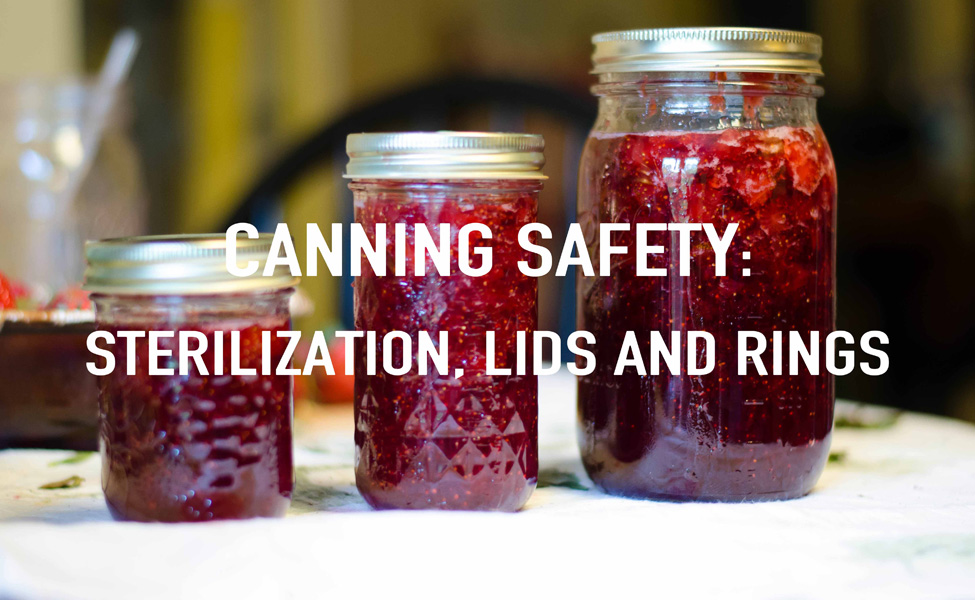
Canning Safety | Sterilization, Lids and Rings

February 8, 2016 · In: canning, homesteading

I know that so many of us are just beginning to plant seeds indoors, and some are starting to plant seeds outside as well. Canning isn’t that far off in the distance, and I want you and your family to have the healthiest experience that you can possibly have this canning season—whether you’re a new canner or an experienced one.
As I made my way to my pantry this morning, I went to grab a jar of peaches to place on my son’s breakfast plate. What I didn’t realize is that I had picked up my experimental jar from last Summer. This just came from me not paying much attention and having too many things on my mind. Thankfully, I religiously inspect my canning jars often, and have ever since I’ve had a little one in the house. Having children just makes you all the more careful when it comes to health. I placed the jar down and noticed just the slightest bit of mold growing around the rim. There’s no way I could feed this to him, and then I realized my experiment from last Summer. I would have realized it either way, as the ring was on it.
Last Summer when I canned peaches, I had noticed a trend going around in the blog-o-sphere that said you didn’t “have” to sterilize your jars by boiling them in a water bath before canning. You could simply wash them in hot, soapy water and keep them warm until ready to fill.
So, I tried it with one can out of each batch I was doing during that 2 week time period. One of peaches, and one later that fall of applesauce.
I also tried keeping the rings on the jars.
My findings 6 months later?
Not only had one of my jars’ seals come undone, but both jars had mold growing inside of them. In fact, my applesauce had fermented, which means the seal broke not long after canning it.

There are so many factors that you need to understand when canning, but here are the main ones.

  • Sterilize your jars properly — in a hot water bath/boil. Include the lids as well if you’re extra cautious.
  • Tighten your rings when canning to only finger tip strength — and then take them off once the jar has sealed. Otherwise, leaving the ring on can cause the seal to break in the future.
  • Use re-usable lids OR buy new lids each year — because ultimately, your metal lids will wear out and become unreliable. Please buy reusable lids or brand new metal lids each year. 


When all else fails, if you’ve done everything right, you should still check each can before eating. Something could have gotten into a jar without you knowing before you sealed it. Make sure you are checking your jars monthly, if they’ve been stored for more than a year. Rotate jars (oldest in front, newest in back) to use up the oldest canned items first.

Find out more in this quick video I put together from my pantry this morning.

Haven’t subscribed to our YouTube channel yet? Do so while you’re there!

By: Amy K. Fewell · In: canning, homesteading · Tagged: canning, safety, sterilization

you’ll also love

Canning Blueberries and Blueberry Pie Filling
{Homestead Cooking} Strawberry Jam
Wintertime Hatching

Reader Interactions

Comments

  1. Leah says

    July 14, 2021 at 12:35 am

    Hey Amy! Do you have a recommendation for a canner? I’m looking to purchase one and need some direction.
    Thank you!

    • Amy K. Fewell says

      July 16, 2021 at 2:56 am

      The presto canner’s are great. But if you’re going to get one I REALLY recommend an All American canner

Next Post >

Why We Support Certain Methods of Commercial Farming

Primary Sidebar

meet amy

meet amy
hello!

I'm Amy. I love organic food but I love cookies too. I love Jesus and His grace. I believe broken people make the biggest impact in the world when Jesus makes them whole, and when they share their stories. I believe in stories, and I'm sharing mine.

Read More

Connect

Search

Ads & Sponsors

200x400

Advertise

Follow Along

@amy.fewell

This… This…
Day 485 of healing my body after baby number 4. It Day 485 of healing my body after baby number 4. It’s a journey, especially running on 3-4 hours of sleep every night with only a partially weaned baby. But, nevertheless, it is. Thankfully I can support my body through it, and you can too! 

This nourishing herbal infusion brings together herbs that support the body through stress, hormonal changes, inflammation, and digestive discomfort.

I add ½ to 1 tablespoon of each dried herb to my infusion teapot, pour hot water over the herbs, cover, and allow them to steep before straining. You can drink 2-3 cups per day. This little tea pot makes about 3 normal sized coffee cupfuls of tea.

• Rose supports the nervous system, uplifts the mood, and gently nourishes the heart and reproductive tissues during hormonal transitions.

• Stinging nettle provides nutrient-rich support with iron, calcium, magnesium, and other trace minerals important to the endocrine system.

• Lemon balm calms stress-related tension while supporting healthy digestion, mood, sleep, and thyroid function.

• Peach leaf is traditionally used as a cooling, moistening herb for heat, irritation, nausea, and nervous tension that may accompany hormonal changes.

• Turmeric supports a healthy inflammatory response, liver function, digestion, and the body’s metabolism and elimination of hormones.

• Peppermint cools excess heat and supports digestion, liver function, mental clarity, and relief from occasional nausea or headaches.

This is a beautiful example of how herbs can nourish multiple systems at once—the nervous, digestive, endocrine, and reproductive systems—while also supporting the body’s foundational nutritional needs.
In a world that is increasingly fake, uniqueness a In a world that is increasingly fake, uniqueness and the ability to be known by something deeply personal, such as your name, is important. This seal says “House of Fewell”. Because as we move into the times ahead, you’ll be known in your community by which “house” you’re from (I’ll write about this more soon). Not just your family name, but the house of Yahweh. 

So, I thought I’d start a new family tradition. Bring back the signet and wax seals.
Two people can both tell you they have “poor circu Two people can both tell you they have “poor circulation” and need completely different herbal approaches.

One may be pale, chilly, sluggish, have cold hands and feet, prefer warm food, and feel considerably better when the weather warms.

Another may flush easily, run hot, dislike summer heat, become restless when overheated, and notice inflammatory complaints worsening with warmth.

The complaint may be the same, but the pattern is not.

In traditional Western herbalism, Heat/Excitation represents excessive activity. We may observe warmth, redness, flushing, irritation, restlessness, a more active pulse, and blood tending toward the surface.

The herbal direction may include cooling, calming, relaxing, or moderating herbs such as yarrow, rose, lemon balm, hibiscus, hawthorn, and elderflower.

Cold/Depression represents insufficient activity. We may see pallor, cold hands and feet, sluggish peripheral circulation, low energy, slower digestion, worsening with cold, and improvement with warmth or movement.

Here we may consider warming and stimulating herbs such as ginger, cayenne, rosemary, cinnamon, angelica, and historically sassafras.

But this is where herbalism requires more than matching symptoms to herbs.

Cold hands do not automatically mean Cold/Depression. Tension and constriction can also restrict blood flow to the extremities. Likewise, heat can exist alongside stagnation.

One symptom does not make a tissue state.

Instead of asking:
“What herb improves circulation?”

Ask:
"What is the blood actually doing—and why?"

Is the person hot or cold? Tense or relaxed? Stagnant or moving freely? Dry or damp? Depleted or robust?

Once we understand the direction of the pattern, we can begin choosing herbs much more intelligently.

Part Two of my "State of the Blood" series is now available inside the Homestead Herbalist membership.

🌿 Comment LESSON and I'll send it to your inbox!
Reach out! 🇺🇸 👩🏻‍🌾 Reach out! 🇺🇸 👩🏻‍🌾

Footer

Learn More

Chickens
Homemaking
Herbs
Recipes
Devotionals

Info

About
Contact
Privacy Policy
Shop

stay in the know

Copyright © 2026 · Theme by 17th Avenue