
• Home
  • Membership
  • Shop
  • Cart
  • Our Farm
  • Gut Health
  • Herbal Practice
  • Buy Trusted Supplements
  • Nav Social Icons

  • Skip to primary navigation
  • Skip to main content
  • Skip to primary sidebar
  • Skip to footer
  • Home
  • Blog
  • About Me
  • Our Farm
  • Gut Health
  • HH Membership
  • My Books
  • Youtube
  • Podcast
  • Homesteading
  • Chickens
  • Herbs
  • Family
  • Farmhouse
  • Homemaking
  • Recipes
  • Sourdough
  • Contact Me
  • Herbal Practice
  • Buy Trusted Supplements
  • Mobile Menu Widgets

    Search

    Connect

Amy K Fewell | Homesteading for the Kingdom

Amy K Fewell | Homesteading for the Kingdom

  • Start Here
    • About Me
    • My Books
    • Podcast
    • Youtube
    • Gut Health
  • Blog
    • herbs
    • Bees
    • chickens
    • rabbits
    • Farmhouse
    • gardening
    • devotional
    • homemaking
    • sourdough
    • recipes
  • Courses & Books
    • HH Membership
    • My Books
  • herbs
  • Podcast
  • Contact Me

How to Make Dehydrated Sourdough Starter

April 21, 2020 · In: recipes, sourdough

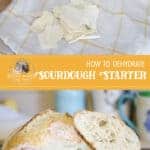
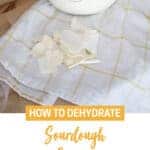
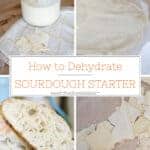
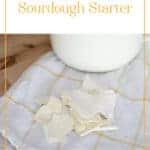
How to Dehydrate Sourdough Starter
How to Make Dehydrated Sourdough Starter

So you have a healthy sourdough starter but you want to preserve it for later use. How do you do that? Well, it’s super easy. Instead of wondering where to buy sourdough starter, you can dehydrate your own starter and then reactivate it at a later time when you’re ready to use it! I’m going to show you the easy way to dry sourdough starter!

In this post, we’re going to talk about the simple process of dehydrating your active starter, right on your countertop. No dehydrator or complicated process necessary!
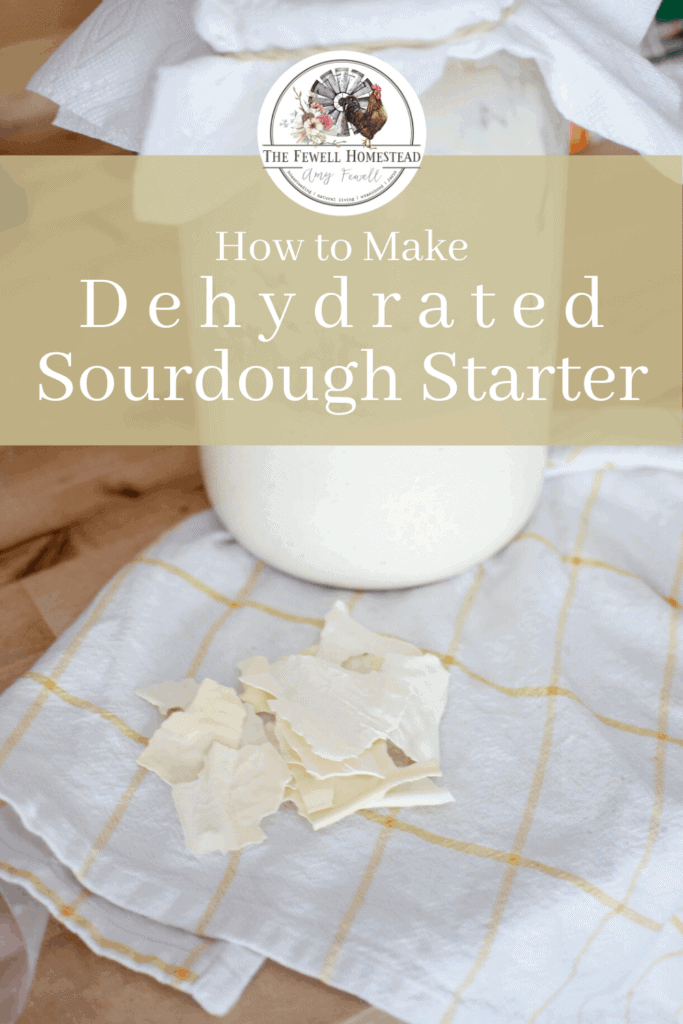
Dehydrate Your Sourdough Starter!

First, make your own sourdough starter

If you don’t already have an active starter, you’ll need to make one. But since you’re here, you probably already have your own starter. If not, you can find my sourdough starter recipe here.

Next, dehydrate your sourdough starter

Make sure that your sourdough starter has been active for a few days. Each day you’ll have sourdough discard. You can use this to dehydrate, or just take out a little bit of non-discard to make dry sourdough starter.
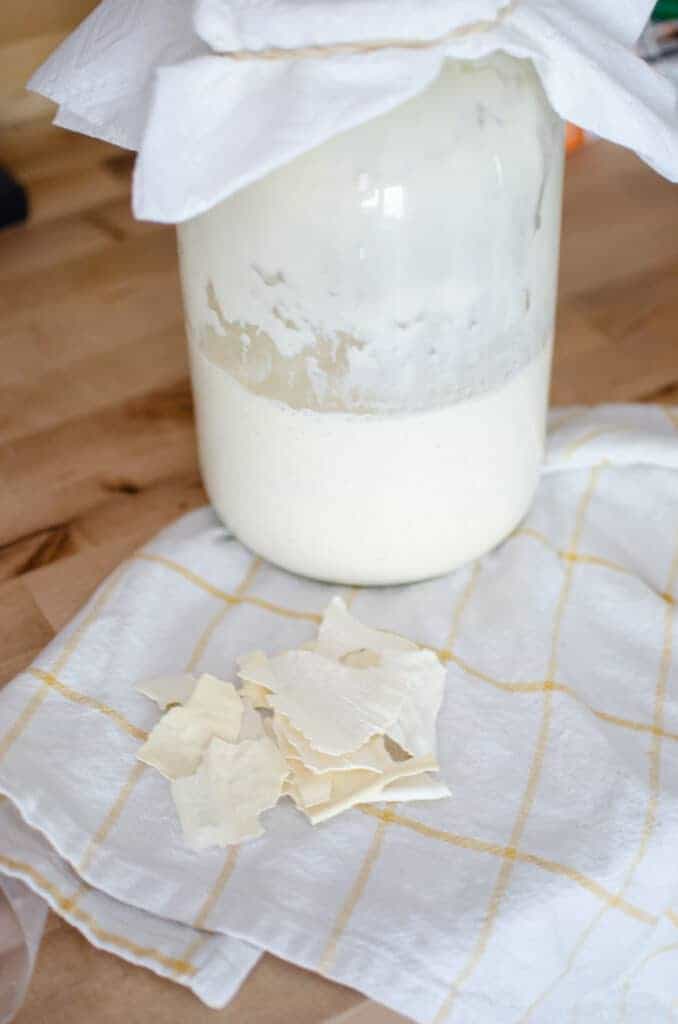
Make Dry Sourdough Starter

How to Dehydrate Sourdough Starter:

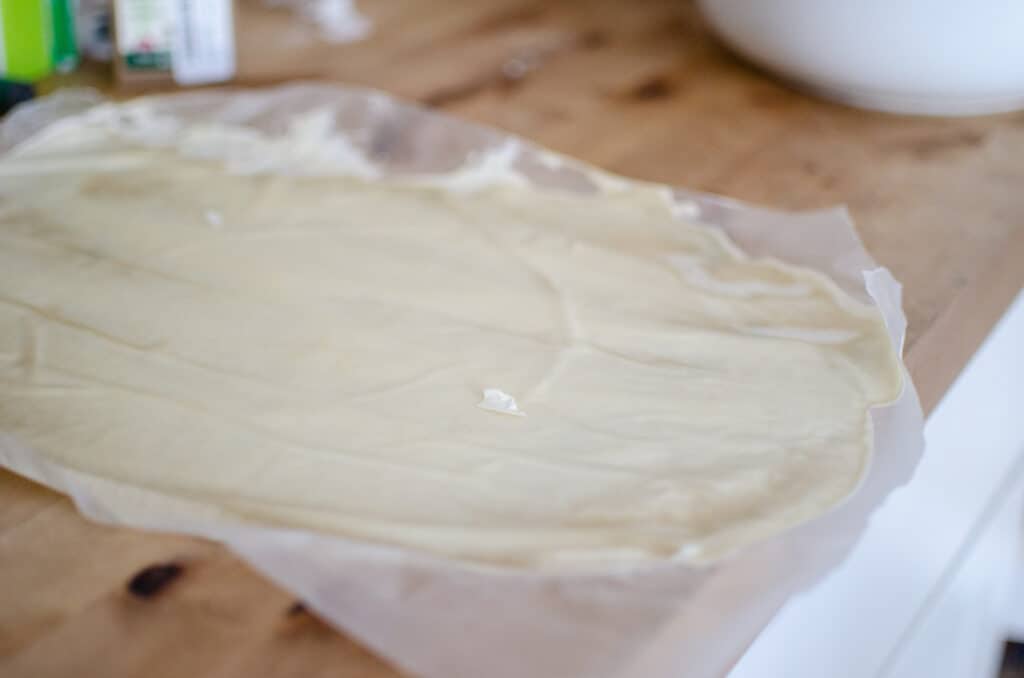
  1. Simply lay a piece of wax paper or parchment paper on your counter and pour out some of your starter.
  2. Next, spread the sourdough starter very thin on the wax/parchment paper.
  3. Let the starter and wax/parchment paper set and dry for at least 24 hours. The entire starter should be dry and easy to crumble.
  4. Once dry, crumble the starter into smaller pieces and place in an air tight container or plastic bag. Store in your pantry. You can add a moisture absorber too if you’d like!
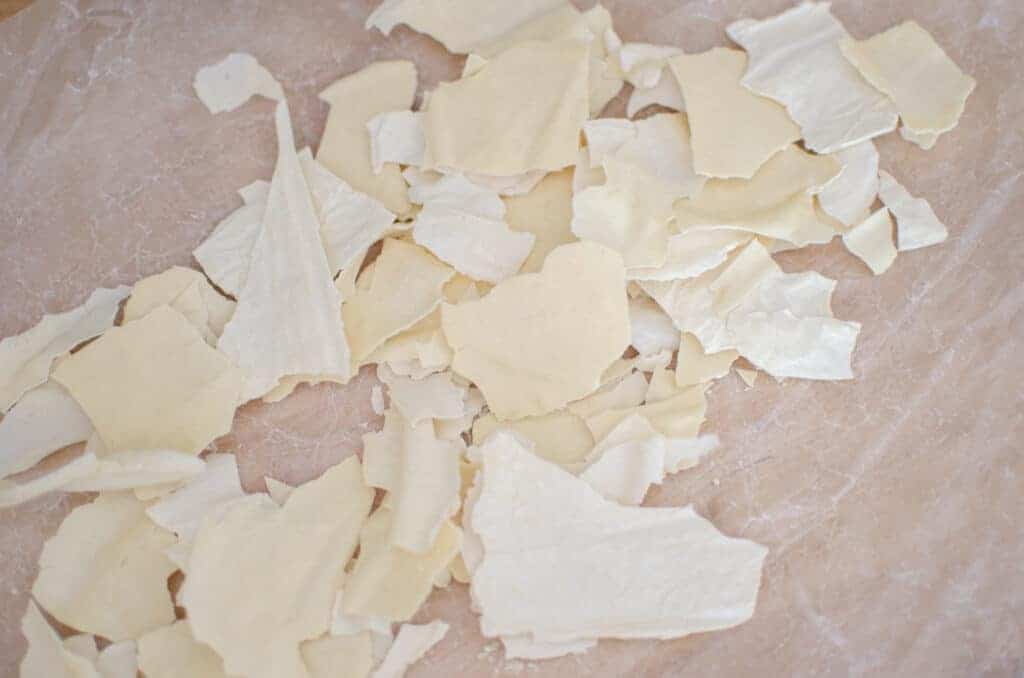
That’s it! That’s all you do!

This is a really great option if you want or need to take a break from sourdough, or if you’re just scared that your sourdough starter might go bad. Have this stored away in your pantry for later use, and a peace of mind!

How to Rehydrate Your Dehydrated Sourdough Starter

When you’re ready to rehydrate it, here’s what you do.

  1. Place your dehydrated starter in a jar with 1/4 cup of water for 3 hours.
  2. After 3 hours, add 1 cup of unbleached flour, 1 cup of milk, and 1 tbsp of sugar to your sourdough and water mixture.
  3. For the next 3 days, pour off some of the starter and add 1 cup of unbleached flour, 3/4 cup of milk, and 1 tbsp of sugar.
  4. Once your starter is rehydrated and active (it takes about 3 to 4 days), you then switch over to feeding it 1/2 cup of unbleached flour and 1/4 to 1/2 cup of water everyday after discarding the extra starter.

Other posts you may enjoy:

  • Easy Sourdough Starter and Bread Recipe
  • Easy Sourdough Pie Crust | Sourdough Discard
  • Sourdough Cinnamon Rolls (Long-Fermented)
  • Sourdough Dinner Rolls (Long-Fermented)
  • Sourdough Biscuits
  • Traditional Sourdough Pancakes | Sourdough Discard

By: Amy K. Fewell · In: recipes, sourdough · Tagged: recipes, sourdough, sourdough starter

you’ll also love

Sourdough Bagels with Perfect Chewy Crust
Homemade Fire Cider | Sometimes it Works, Sometimes it Doesn’t (plus recipe)
How to Make Homemade Herbal Chapstick

Reader Interactions

Comments

  1. Sherry says

    May 2, 2020 at 1:25 pm

    How long can this sour dough starter be stored?

    • amyfewell says

      May 4, 2020 at 1:31 am

      up to 1 year

  2. Steph says

    May 21, 2020 at 9:08 pm

    Can you use raw milk?

    • amyfewell says

      May 22, 2020 at 12:04 am

      you can!

  3. Amanda says

    April 19, 2022 at 12:30 am

    Why do you have to use milk when rehydrating instead of water? P.S. I love how simple this is! Very excited to try 🙂

Next Post >

Easy Sourdough Pie Crust

Primary Sidebar

meet amy

meet amy
hello!

I'm Amy. I love organic food but I love cookies too. I love Jesus and His grace. I believe broken people make the biggest impact in the world when Jesus makes them whole, and when they share their stories. I believe in stories, and I'm sharing mine.

Read More

Connect

Search

Ads & Sponsors

200x400

Advertise

Follow Along

@amy.fewell

This does absolutely nothing to fix the declining This does absolutely nothing to fix the declining American beef herd.

Just so we’re all on the same page.

Flooding the market with cheaper imported beef doesn’t rebuild American herds. It doesn’t shorten the supply chain. It doesn’t help cattle producers recover from years of drought, high feed costs, high input costs, land pressure, and shrinking margins.

What it does do is train American consumers to expect beef at a price that may not reflect what it actually costs an American rancher to raise it.

You cannot say you want to rebuild the American beef herd while simultaneously undercutting the market American cattle producers depend on.

Cheap beef today does not necessarily equal food security tomorrow.

If we actually want a strong domestic beef supply, we need more cattle raised here. More processing capacity here. More resilient regional food systems. And ranchers who can actually make enough money to keep raising cattle.

Because once the American rancher is gone, bringing in cheaper beef from somewhere else isn’t a solution.

It’s dependency.

And that is the exact opposite of food security.
I have found myself increasingly unfollowing so ma I have found myself increasingly unfollowing so many voices and ministries online recently. Not because I disagree with them. Not because I think they are false. Although there has been some of that, too. 

No, I’ve not been unfollowing because of any of that. I’ve been unfollowing because when I see the post, it influences my thoughts. It could be a true post, or it could be partial truth, but here’s the thing…

1. I don’t need to constantly have a “yes-man” influencing what I’m thinking or saying. We all know this is how the algorithm works, even in ministry. 

2. I don’t constantly need a super generic “prophetic word” that I can apply to my life and be side tracked by said “prophetic word”. Totally over those, and the lack of accountability in that, by the way. 

3. I don’t need to constantly see the same false or over exaggerated reports that are created to incite emotion or action without intimately knowing the situation.

4. I don’t need to see people who have an opinion on everything yet they rarely lift a finger to actually do what they believe in the advancement of the church. It just makes me angry. 

5. I don’t need to know the next big thing in life, the major trends, the territory wars, or the divisiveness. 

One of the greatest quotes someone said to me in my teen years was this—be informed but not consumed. 

It’s ok to know. But when it becomes influential, it’s time to reevaluate. 

I want to hear what God is saying to ME—not the popular people that sit in an echo chamber with each other and fuel off one other online. 

I want to read trusted voices, not just people I followed because they said one good thing that I agreed with. 

I want my feed to be full of people that know how to do confrontation, exhortation, prophecy, and theology well. 

I want to follow accounts that aren’t full of fake homes, fake families, and fake kindness. 

I want the imperfect people who know they didn’t deserve mercy, but received it, and that breaks and restores them daily.

And you know what I’ve noticed? 
I hear God better.
I read the word more.
I cry almost every time I read scripture.
And I see myself more clearly, because I see Him more clearly.
We harvested elderberries this week, and there’s m We harvested elderberries this week, and there’s more where these came from!

Everyone makes the syrup. Almost nobody knows what’s actually in the jar.

Elder (Sambucus nigra, and our native S. canadensis) earns its reputation on chemistry, not just folk medicine. The dark pigment in those berries is anthocyanin—mostly cyanidin-3-glucoside and cyanidin-3-sambubioside—alongside quercetin, rutin, chlorogenic acid, and vitamin C. That color IS the medicine. Pale syrup means weak syrup.

Fun note: the branches of elder fans out like bronchial passages of the lungs. This “signature of doctrine” often points to elderberry and flower having an affinity for the lungs and respiratory tract. We know now that elderberry is a cytokine modulator, and we saw it help throughout the 2020 pandemic for this reason. 

📖 Human trials: A small 2004 influenza study found symptom relief roughly four days sooner. A 2016 trial of 312 air travelers found shorter, milder colds. There was also a trial during the H1N1 outbreak that showed significant help!

🦠 Lab work: Elder’s flavonoids appear to bind viral surface proteins and interfere with entry and replication.

🌼 Traditional use: Centuries of European household medicine, where the flowers were the fever remedy—a relaxing diaphoretic that helps the body sweat through a fever rather than suppress it. The berries were food and winter tonic.

Important to note…

• Berries should be in a decoction, not an infusion. Simmer covered, low, 20–30 minutes. Boiling hard destroys the anthocyanins.

• Plant two cultivars. Elder is poorly self-fertile and yields are dismal without a partner.

Your hands will stain when you harvest them. But it’ll be worth it.
Every year I wish more and more that I could open Every year I wish more and more that I could open my own brick and mortar wellness center. The amount of people that ask for my assistance is insane. And while I do see clients in my home and through tele-health sessions, this season with young children needs my attention more than a business. 

So what will I do? I’ll teach YOU all the things. The mama who has her own littles. The practitioner wanting to learn more about natural wellness. All of this is through my Homestead Herbalist membership. 

This most recent lesson is about something so many new herbalists and practitioners aren’t taught. Herbalism becomes much more useful when we stop asking only, “What herb is good for this?” We have to stop throwing supplements at people based on “what it does”—this isn’t holistic healthcare. This is allopathic medicine masked as holistic healthcare. 

Two people can have the same complaint and need very different herbal support. Let’s consider the common cough.

A cough might be hot and dry, cold and damp, congested and stagnant, or tight and spasmodic. The symptom may be the same, but the tissue state underneath it changes the herbs we choose.

That’s where herbal energetics come in.

Instead of memorizing endless “herb for ailment” lists, we learn to ask:

Is it hot or cold?
Damp or dry?
Tense or lax?
Moving or stagnant?

Herbal actions tell us what an herb does. Energetics help us understand how it acts and what kind of tissue pattern it may best support.

The more you understand energetics, the more you begin to understand not only why an herb may work—but why it may not be the right herb for this particular person.

That is where herbalism becomes more than memorization.

It becomes observation, discernment, and careful stewardship.

🌿 Comment ENERGETICS and I’ll send the lesson straight to your inbox.
This is your reminder to become a student of the w This is your reminder to become a student of the word, not just a hearer. You can sit in church your entire life and hear someone preach, but that is not the same as doing deep dives into the word yourself. That feeling when you read and a thought pops into your head “what does that mean?” Priceless. The thread begins to unravel as you research and try to understand more. 

One of those things for me this week has been studying Melchizedek. If you were to only read the Old Testament account of Melchizedek, there wouldn’t be much to know. But combined with the New Testament, and the ancient writings and documentation of this incredible “king”, the picture becomes more clear. 

It becomes most clear in Hebrews, as the writer begins to unpackage the parallel of Melchizedek and Jesus—both high priests appointed by God. But interestingly, Melchizedek was a high priest centuries before the levitical priesthood was ever established. This is why scripture says that “Levi was still in the loins of Abraham”, and Melchizedek existed long before Levi was even born or established as priestly.

God has had me sitting in Genesis for a few weeks. It’s a book we feel like we know well, but until we dive deeply into it, do we know it well, or do we know it how someone else taught it in that one hour Sunday sermon 10 years ago? I’ve sat in Genesis for 2 weeks now and I’m barely halfway through. 

It may seem unimportant—what does Melchizedek matter to Christian’s now? Why do Adam, Noah, and Abraham’s covenant matter now? But they matter greatly. Because they are mirrored in the New Testament church—the priestly kingdom that God established. If you don’t understand Melchizedek, and the fact that he was before and outside of the established tribes of Israel, and appointed long before that, then you won’t understand the correlation between a religion of tradition versus a relationship and worship in freedom. 

It is not the levitical priest that Jesus is compared to—it is the priest of the order of Melchizedek. And that’s important. It’s important in how we believe, how we perceive, and how we advance and take dominion. 

I hope to write deeply about this soon.

Footer

Learn More

Chickens
Homemaking
Herbs
Recipes
Devotionals

Info

About
Contact
Privacy Policy
Shop

stay in the know

Copyright © 2026 · Theme by 17th Avenue