• Home
  • Membership
  • Shop
  • Cart
  • Our Farm
  • Gut Health
  • Herbal Practice
  • Buy Trusted Supplements
  • Nav Social Icons

  • Skip to primary navigation
  • Skip to main content
  • Skip to primary sidebar
  • Skip to footer
  • Home
  • Blog
  • About Me
  • Our Farm
  • Gut Health
  • HH Membership
  • My Books
  • Youtube
  • Podcast
  • Homesteading
  • Chickens
  • Herbs
  • Family
  • Farmhouse
  • Homemaking
  • Recipes
  • Sourdough
  • Contact Me
  • Herbal Practice
  • Buy Trusted Supplements
  • Mobile Menu Widgets

    Search

    Connect

Amy K Fewell | Homesteading for the Kingdom

Amy K Fewell | Homesteading for the Kingdom

  • Start Here
    • About Me
    • My Books
    • Podcast
    • Youtube
    • Gut Health
  • Blog
    • herbs
    • Bees
    • chickens
    • rabbits
    • Farmhouse
    • gardening
    • devotional
    • homemaking
    • sourdough
    • recipes
  • Courses & Books
    • HH Membership
    • My Books
  • herbs
  • Podcast
  • Contact Me

{Raising Dairy Goats} From someone who’s never owned them….

July 31, 2014 · In: homesteading

A couple of months ago my neighbor brought me some fresh goats milk, and I have been hooked ever since. I could not believe the richness and flavor that was GOOD. I had witnessed people drinking goat’s milk before — you know, that nasty odor-full sour milk. But this was nothing like that. I would soon find out that it was due to good husbandry skills and a clean environment

And so began my want….or…need….to have dairy goats.

Husband did not understand this need, hence, why we do not have them yet!

Men….pffft….
Anyhow….
http://www.woolydogdown.com/3


Husband agreed to consider it if I could gather all of the information together about dairy goats and present it to him. He wanted to know three specific things….


  • How much was it going to cost him?
  • How often do they need to be milked by me?
  • Where on earth are we going to put them?

See what I did there?….

So needless to say, he gave me a week to figure this all out. Husband underestimate’s my ability to research things, so I only needed 6 hours. Call me an overachiever…I dare you…

Here are the things that I discovered:
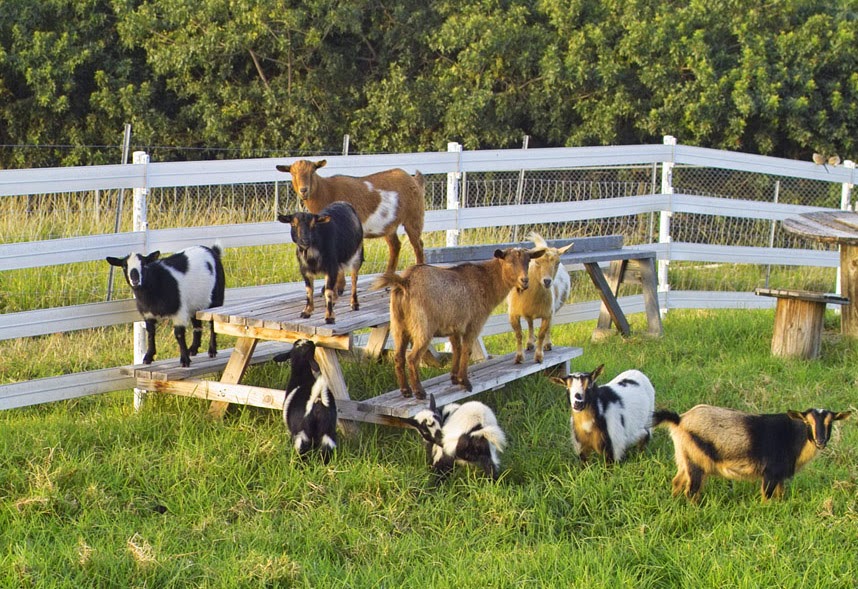
http://www.silveroaksranch.com/
What are the basics?
First of all, you’ll need to know how to refer to your goats, no matter what breed.
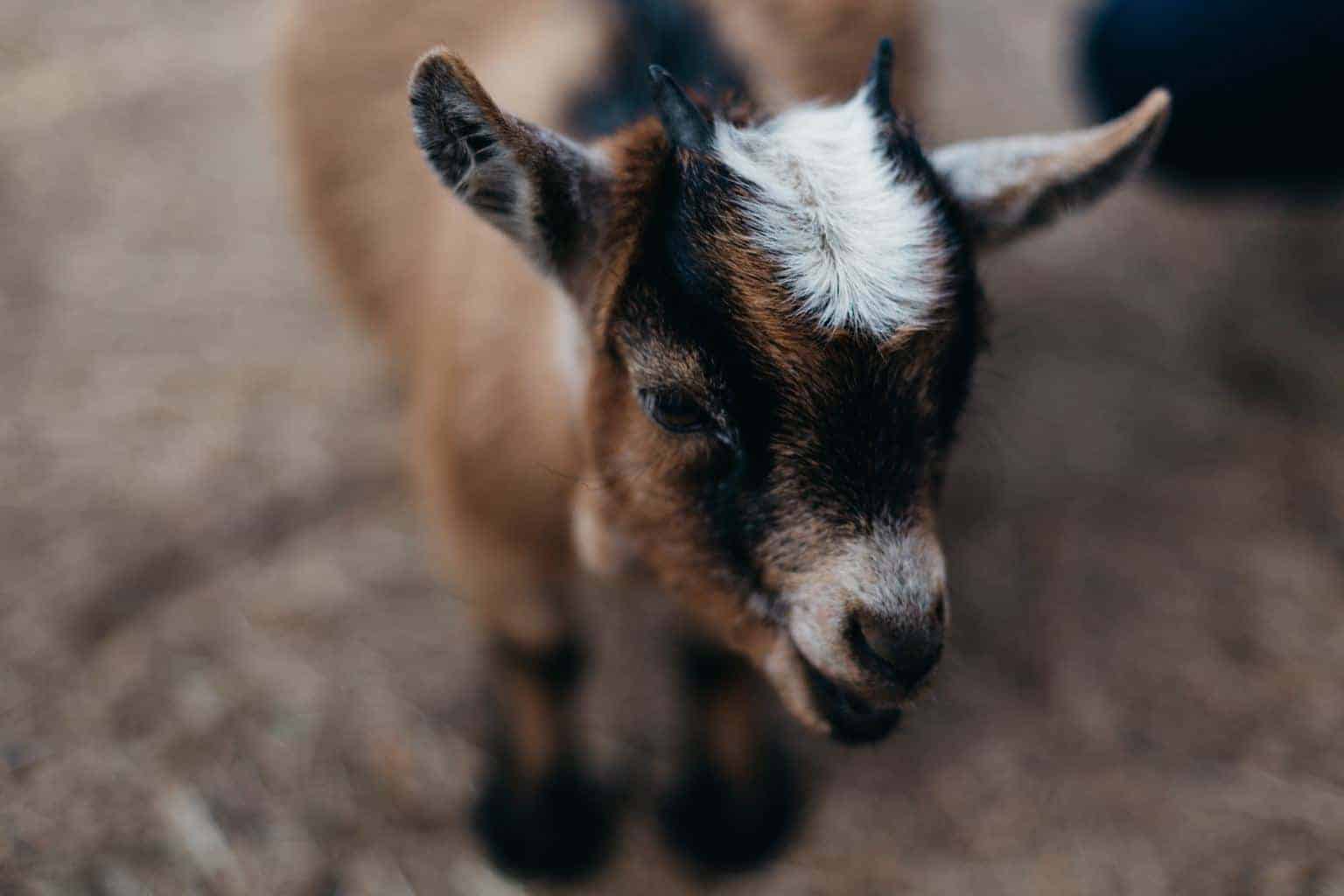
Goat babies are called “kids”.
A female juvenile goat is called a doeling.
A male juvenile goat is called a buckling, or if he is “fixed”, he is called a whether.
An adult female goat is called a doe, and an adult male goat is called a buck (or whether).
You should know that you will need to have 2 or more goats at one time. Because goats are companion animals, you cannot (or should not) only have one goat. They will be very sad, and who wants a sad goat? Besides, they will drive you crazy with their cries for a companion all day long.
You can purchase goats as kids, or you can purchase them as adults. In many cases, it is better to purchase them as kids because they become used to you and are easier for milking when they are older. However, sometimes that’s just not what you want, you want to get started right away. In which case, you can purchase does and bucks, and breed them  yourself, or you can purchase does that are already bred. Prepare yourself to spend between $75 to $500 for a goat. Quality milking goats are much more expensive, but well worth the money.
There are many things that you’ll need to look for when choosing to buy a goat. Make sure they come from milking lines. Many times people purchase goats that are just a particular breed that they want, but as with anything, if they are not bred for quality, then you’re stuck with a goat that isn’t a good milker for multiple reasons. Adult does will need to have large enough udders/teets for milking. If they are too small, they are useless because you will not be able to milk efficiently.
You should also make sure that the environment that they were born in is clean and disease free. Goat’s can get diseases quickly and die, just like any other animal. It helps tremendously if you purchase a goat from a breeder that has tested negative for diseases and has a closed herd. Again, you truly do get what you pay for. My motto has always been, “if you’re going to do something, do it right and offer the best.” If I cannot offer the best to my family or customers, it’s not worth my time, and every single one of them knows that!
What kind of goats?
Because of their small body type, I decided that Nigerian Dwarf goats would be the best option for us. They also have a very high fat content in their milk, which makes it extra creamy and perfect for making cheese and butter — however, you may consider buying a cream separator for goat’s milk, as it is naturally homogenized (see product list below). Homogenized means that the cream and milk are naturally combined, so there is no cream that quickly rises to the top, as it does in cow milk etc. However, a separator isn’t necessary — you can read more here when that time comes.
There are, of course, many other dairy goat options, such as the Nubian (gorgeous goats!), LaMancha, Alpine, Oberhasli, Toggenburg, Saanen, and Sable. The most popular are the Nigerian Dwarf, Nubian, and LaMancha. The bigger the goat, the more milk they produce, of course.
What about the milk?
Goats must be bred yearly in order to have a milk supply. Each doe can have 2-4 kids (yep, that’s what they’re called!) at a time. You can then sell or retain the kids. But if you’re like us, you’d want to sell them. Goat kids can sell between $75 and $250 each here in Virginia, depending on the breed and quality. This will help offset your yearly feed cost.
Once your doe has kidded, the babies will need to nurse for about 2 weeks before you start milking. The amazing thing about goats is that they hold back milk for their babies, so you can get your milk, and babies still have enough for them as well! Does that are already milking but are preparing to kid should be dried out 2 months before kidding, so you’ll need to stagger your pregnancies if you want milk all year long.
Goats can produce up to (and sometimes more) a 1/2 gallon to a gallon per goat, per day. It all depends on the breed. This means that if you have two milking does at one time, you could potentially be milking a gallon  to two gallons each day (again, depending on the breed). This was appealing to me, as I have friends and family members that would be interested in milk shares. And it would give me a lot of milk to make butter and cheese with (which my egg customers would love!).
In the state of Virginia, you are not legally allowed to buy raw milk (of any kind or breed). However, you are allowed to “own” a share in a goat herd, and you pay monthly for the upkeep and care of the goat. Normally, you would pay a $35 or so, one time fee for your “share” of the goat (which you would receive back if you chose to stop your share). Then you would pay a monthly fee, designated by the farmer, for the boarding of the goat. In return, you would receive your milk each week in 1/2 gallon glass jars. It is up to the farm as to how much milk you receive, each farm and homestead is different. Some only give a 1/2 gallon each week as your milk share, other’s give a full gallon.
I had figured up that we could be getting as much as 7 gallons of milk per week. Since we only go through 3 or so ourselves (I’d be making butter and cheese), we may have room for one milk share to begin with. Which would help offset the cost of feed.
Housing, shelter, and space needed?
Because I am choosing to go with Nigerian Dwarf goats, they need a lot less space than a full size goat would. They can easily fit on an open 1/4 acre by themselves, and even smaller. However, we prefer that our animals have free roam, and lots of it.
Goats don’t need an elaborate shelter, but they do need something that gets them out of the elements — rain, snow, wind, cold and heat. We found a lot of great things on pinterest that showed us how to build shelters out of re-purposed wood and other items. Make sure they have a nice bed of hay, and you’re good to go. I, personally, would add a sliding door for those downright frigid winter nights.
What do you feed them? How much does it cost?
This was the kicker for me, and the one thing I could not convince husband to reason with me on. He’s a math whiz, and a darn good one. I am no match for his mad arithmetic skills.
Milking does eat alfalfa bales and grain/feed. Since we raise our animals all naturally, we would need to find a non-gmo feed and alfalfa bales. That’s the whole point of raising what we eat, right?
Non-milking does do not (and probably should not) need to eat alfalfa like milking does do, they can have hay. Hay is a dime a dozen around here, and I could get some from my grandfather or friends (we have lots of actual farmer friends!)
Two does would go through 1 bale of alfalfa per week. A bale of alfalfa in VA can range from $5 to $10, depending on the quality. We would need 60-80 bales of alfalfa to get us through the year.
We live on a half acre, where in the heck am I putting 60-80 bales of alfalfa?!
At $5 a bale, it would cost (for alfalfa alone) $300-$400 a year for the bales.
Grain/feed is $16-$20 per bag, depending on the brand. We would need 2 bags per month, so $32+ per month, $384 per year.
The total cost per year for feed would be $600-$700. That’s roughly $1.64 per gallon of milk, but only if we milk 7 gallons a week, and that’s just not going to happen because the longer a doe milks, the less milk you get from her until she kids again.
It comes out to $50-$60 per month to tend to them, which really isn’t too bad….as long as nothing goes wrong.
Other costs that you need to consider…..
Shelter:  are you going to purchase one or make your own?
http://novitiatehomesteader.blogspot.com/

Milking stand : again, are you making your own or purchasing one? You can make your own for as low as $20, or as much as $100.

Half Gallon Mason Jars — you can purchase them from your local feed store, TSC, or on amazon.

One or two Milk Pails — because you’re going to need to put that milk into something before bottling it!
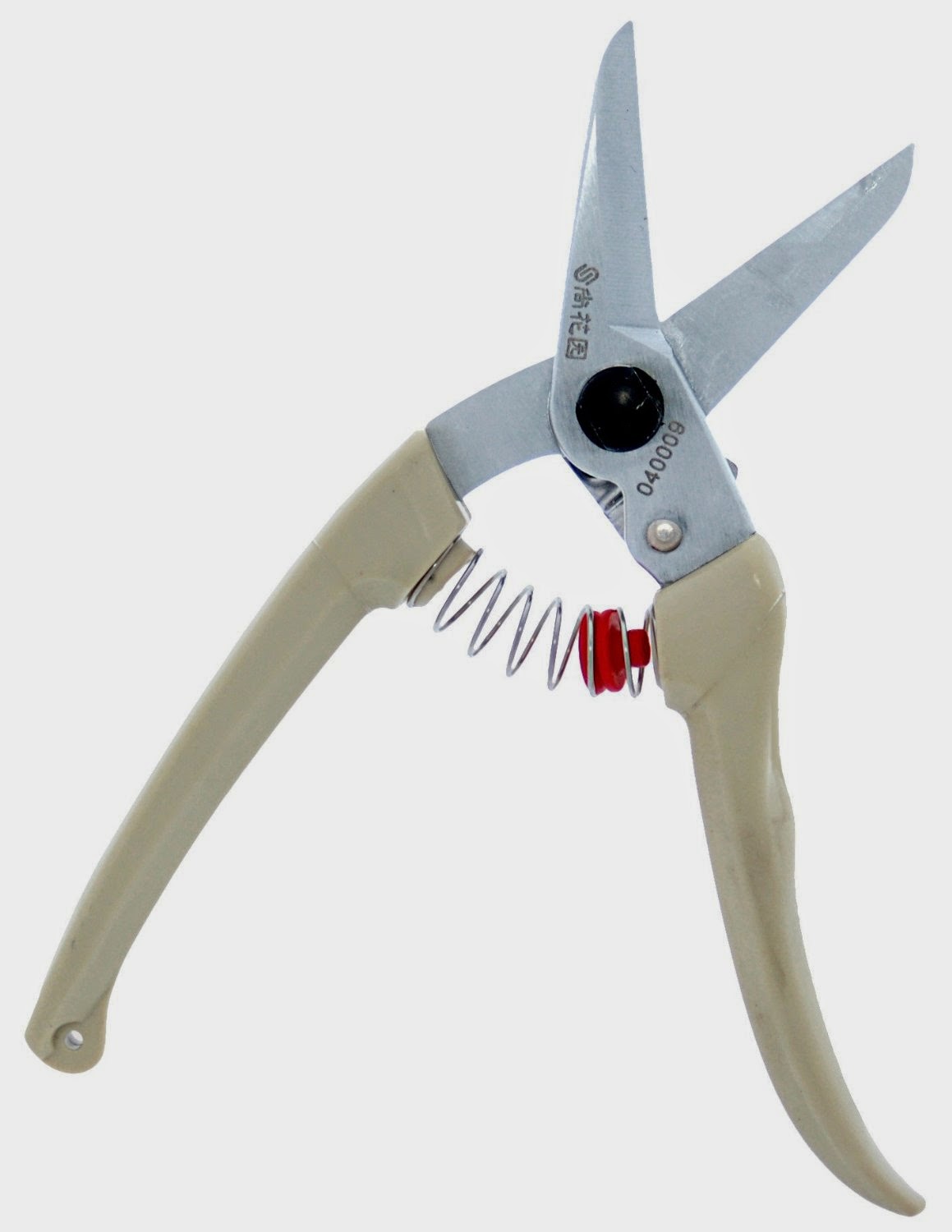
Hoof trimmers: because those hoofs don’t trim themselves.

Mesh Funnel: to trap any hair or debris that got into the milk on the way back to the house.

There are other things that you can buy to make your life easier, but you’ll figure that out as you go along.

…after all, I’ve never even owned goats, but my word, can I research them!!

In the end, we are in the middle of doing small renovations to our home in hopes of selling this coming Spring (2015). Our goal is to purchase a larger lot of land with a home already on it, or on which we can put our home. This would give us more room for more animals and a more self sufficient lifestyle.

But as we know, sometimes life has different plans for us — so if that time never comes, we will be happy and extremely grateful for what we have already….

I wish you the best of luck in your dairy goat journey, if you decide to take that journey. And one day, when we have more land (prayerfully in the next year!), be fully prepared to be bombarded with goat blogs!!

happy homesteading,
amy


**Linked up over at The Elliott Homestead!!**

By: Amy K. Fewell · In: homesteading · Tagged: goats

you’ll also love

Facing the Reality of Homestead Confiscation
So you have all these chicken eggs, but what do you do with them when you can't eat them all? Learn how to preserve chicken eggs in a few easy steps.How to Preserve Chicken Eggs
The Cost of Homesteading
Next Post >

All in the name of Love + Humility

Primary Sidebar

meet amy

meet amy
hello!

I'm Amy. I love organic food but I love cookies too I love Jesus and His grace. I believe broken people make the biggest impact in the world when they share their stories. I believe in stories, and I'm sharing mine.

Read More

Connect

Search

Ads & Sponsors

200x400

Advertise

Follow Along

@amy.fewell

I wrote this substack some time ago and then forgo I wrote this substack some time ago and then forgot to finish the series. But it seemed really relevant to share once again. It's the last I'll share on this!

It's one of the most quoted phrases in Scripture—and one of the most misunderstood.
For generations, a single verse has been lifted out of context to build entire doctrines that limit, discourage, or even silence women whom God has clearly called to serve, teach, prophesy, disciple, and lead under His authority. But what if we've been reading Paul's words without reading the entire letter? What if we've missed the historical context, the original language, and the broader testimony of Scripture?
Throughout the Bible, God consistently uses women to accomplish Kingdom purposes. One of the issues is that the American version of church is not the New Testament version and structure.
Deborah judged Israel. Huldah prophesied to kings. Priscilla instructed Apollos. Phoebe served the early church. Anna proclaimed the coming Messiah. Philip's daughters prophesied. At Pentecost, Peter declared that the Spirit would be poured out on sons and daughters, fulfilling Joel's prophecy.
So how do we reconcile those examples with passages like 1 Timothy 2?
The answer isn't found in reading one verse in isolation—it's found in studying the WHOLE counsel of God.
In this article, I take a deep dive into the Greek language behind "authority", "dominion", and "silence," examine the context surrounding Paul's instructions to Timothy, and explore why many common assumptions about this passage deserve a second look. We also look back to Genesis, the design of marriage, mutual submission, and the biblical pattern of accountability within the body of Christ.
The goal isn't to promote cultural trends or modern ideologies.
The goal is to return to Scripture itself.
The Kingdom needs men who sacrificially lead and protect.
The Kingdom needs women who faithfully steward the gifts God has entrusted to them.
If you don't read the whole Book, it's easy to build an entire doctrine on a single sentence.
🌿Comment SILENT and I'll shoot you the link to your inbox!
I have always thought it was so interesting, and s I have always thought it was so interesting, and so telling, when people believe that a woman in a leadership position in the church means she is against men and out of order. 

But many of the same people are ok with a woman in leadership in earthly things, like business, and politics. 

Here’s the reality, men and women were created completely different. We have different emotions, abilities, and giftings. The men I know that are extremely confident in their manhood and burly in nature will immediately tell you they need a woman to help keep them organized. And the women that are confident in their womanhood and feminity will immediately tell you that they need men to help keep them grounded, logical, and not emotionally driven. 

The kingdom was created to be whole—not half. 

So when people say things about women in ministry with a broad stroke, it hurts the body of Christ. Because there is neither male nor female, Jew nor Gentile. 

There are certainly women who should not be in leadership. I have met many of them. They actually do disrespect men and always think men are out to get them. These are the women that we are warned about throughout scripture and the Early church writings. But that does not give the Church the right to broad stroke women as a whole.

That would be like me saying that men are conniving, aggressive, and mean just because I’ve experienced that from a few men in church. But that would be silly and incorrect, wouldn’t it? 

The most healthy church bodies that I’ve been a part of have men as strong leaders with women as complimentary leaders, and never having rule over one another. Who has the final say? Jesus does. Because isn’t that what the church was created to do—seek God in all things? Together?

We must start from the beginning in America. Starting with what the actual early church looked like. When we begin to see that the ministry roles listed in scripture (apostle, prophet, evangelist, pastor/shepherd, teacher) were never governing roles (like elders and deacons), we might simmer down a bit and realize this isn’t as hard as the church Pharisees have made it. 

@thechurchstorehouse has free teachings on this �
The spirit of tradition and religion at its finest The spirit of tradition and religion at its finest. Paul said he told Peter “to his face” when religion and tradition began to creep back into his theology, doctrine, and practices. I like his style—bring it back to the church.

Trust me, when you come face to face with the spirit that silences the voices of half of the body of Christ, every evil thing will follow. It’s a nasty looking stronghold that loves to hate. It’s the same demon that hates Jews, people of color, and the right to life. It’s the same spirit that hides sexual immorality and oppresses through control and dictation.

The SBC is out of alignment with Christ because it has been taught to be out of alignment. It’s taught religion. This is why scripture says in Galatians 1:8 “But even if we, or an angel from heaven, preach any other gospel to you than what we have preached to you, let him be accursed.”

I’ve heard it all. I’ve seen every scripture manipulated. I’ve seen every controlling man try to school me about it. And I’ve watched every single one of them walk away angry (which is very telling) when they can’t explain the women in the Bible that lead….because they can’t explain it without adding something to scripture that isn’t written there. Aka, taught religion. 

Watch out, friends. We need the fear of the Lord. Only in America is this still an argument. Demons look at this and laugh. But that’s the thing, most of these people don’t believe in spiritual realms, either. At least, outside of heaven.

I’ll keep coming face to face with the people that get delivered from this spirit and the sin that they harbor because of it. And I’ll rejoice with them when they are finally set free ❤️‍🔥

Keep pursuing the kingdom, friends.

——

@officialjosephz says— The Southern Baptist Convention meeting in Orlando just passed an amendment banning female pastors and females preaching at the assembled gathering of their churches. 

To enact permanent change to their constitution, it has to pass at their next annual meeting in 2027 as well.
Today I have been alive on earth for 39 years. As Today I have been alive on earth for 39 years.

As I prayed myself to sleep last night, it went something like this…

Thank you, Yahweh, for creating me. You knew me before the foundations of the earth, and you knit me together perfectly. 

Thank you, Yeshua, for giving me new life in the Kingdom of God.

Thank You for the life partner you’ve given me to call husband—he is irreplaceable. Thank you for blessing me with children that bring me joy. Thank you for the hard times that have taught me how to be content in all circumstances. Thank you for the rebukes that have refined my rough edges (and continue to). Thank you for Your grace that is sufficient for all of my imperfections. Thank You for Your unconditional love when I feel unloveable. Thank You for giving me wisdom and gifts to further Your kingdom.

Thank You for asking me to walk in victory alongside of You in the tasks You’ve put my hands to. 

Forgive me when I have doubted and not trusted You. 

Help me continue to plow in the direction You’re going. Help me continue to build fertile soil for the seeds to be sown. Show me my blind spots, that they may be rooted up and replaced with new growth. 

Thank you for another year on this beautiful place called earth. Teach me Your ways, and Your heart, O LORD. ❤️‍🔥
For most homesteaders and herbalists, mullein is t For most homesteaders and herbalists, mullein is the herb you reach for when someone has a cough, congestion, or irritated lungs.

But mullein’s story goes much deeper than that.

For centuries, herbalists used mullein in cases of chronic respiratory illness, including conditions that modern medicine would later identify as mycobacterial diseases. Today, we know that the mycobacteria family includes tuberculosis (TB), as well as non-tuberculous mycobacteria (NTM)—environmental organisms commonly found in soil, water systems, and even household plumbing.

What’s particularly interesting is that mullein contains compounds such as saponins, flavonoids, iridoids, and verbascoside (acteoside), which researchers have found to possess antimicrobial, anti-inflammatory, and immunomodulatory properties.

Mullein’s long history of use for persistent respiratory complaints, combined with emerging scientific research, helps us understand why generations of herbalists considered mullein one of the premier herbs for lung support.

As herbalists, we should always be careful not to overstate what an herb can do. Yet we should also appreciate the wisdom of traditional plant medicine and continue exploring why certain plants earned their reputations over centuries of use.

Mullein remains one of my favorite herbs for supporting respiratory wellness, soothing irritated tissues, and helping maintain healthy lung function.

Sometimes the plants growing in our pastures, roadsides, and fence rows have stories that modern science is only beginning to rediscover.

🍃 Comment MULLEIN and I’ll send the entire article about this beautiful herb to your inbox!

Footer

Learn More

Chickens
Homemaking
Herbs
Recipes
Devotionals

Info

About
Contact
Privacy Policy
Shop

stay in the know

Copyright © 2026 · Theme by 17th Avenue