• Home
  • Membership
  • Shop
  • Cart
  • Our Farm
  • Gut Health
  • Herbal Practice
  • Buy Trusted Supplements
  • Nav Social Icons

  • Skip to primary navigation
  • Skip to main content
  • Skip to primary sidebar
  • Skip to footer
  • Home
  • Blog
  • About Me
  • Our Farm
  • Gut Health
  • HH Membership
  • My Books
  • Youtube
  • Podcast
  • Homesteading
  • Chickens
  • Herbs
  • Family
  • Farmhouse
  • Homemaking
  • Recipes
  • Sourdough
  • Contact Me
  • Herbal Practice
  • Buy Trusted Supplements
  • Mobile Menu Widgets

    Search

    Connect

Amy K Fewell | Homesteading for the Kingdom

Amy K Fewell | Homesteading for the Kingdom

  • Start Here
    • About Me
    • My Books
    • Podcast
    • Youtube
    • Gut Health
  • Blog
    • herbs
    • Bees
    • chickens
    • rabbits
    • Farmhouse
    • gardening
    • devotional
    • homemaking
    • sourdough
    • recipes
  • Courses & Books
    • HH Membership
    • My Books
  • herbs
  • Podcast
  • Contact Me

Homesteading; It Takes a Village

June 3, 2017 · In: homesteading

Homesteading: It Takes a Village

The new “self”-sufficiency movement has taken over the country and the world. From state to state, continent to continent, the word “self-sufficiency” and “homesteader” are now common terms that most people have heard at some point or another. The question, however, is often asked — What is a Homesteader? or What is the definition of self-sufficient?
 
When in reality, I think the question should really be, What’s the Process of Becoming These Things?
 
In fact, looking back through history, you might be surprised to realize that “self” sufficiency wasn’t really even popular unless you were mountain folk. And even then, it still didn’t mean what you think it did. Quite often, it wasn’t “self” at all. Homesteading?…..it took a village. It took a community. Or at least a few families.
You can open any history book and learn about living off the land. In fact, the term “self-sufficiency” is a more modern term that people use. Often times, people think it means completely relying on yourself for all of your needs, but when we think about it, how contradictory is that to history? If you’re a Christian, it’s absolutely contradictory to the Bible. I think we simply keep shooting ourselves in the foot when we understand self-sufficiency to mean that we’d never have to depend on someone else for our needs. Preposterous!

Throughout history, villages, towns, tribes, and families depended on one another to make it through life. Just take a look at our ancestors from the Great Depression. The ones who survived? They made it through because it literally took a village.

While their lives weren’t necessarily at the mercy of another person’s grip (that’s a fabulous visual of self-sufficiency), they did have to barter, trade, and work with one another in order to share harvests and to have certain things that they needed or couldn’t grow on their own land.

Just as society is now, they all had different gifts and talents to offer, different things that grew better on their land, while also having some knowledge of the same skill sets that they were born with (knowing how to wild forage, for example). Some people had more land than others, therefore growing more to sell and trade with their community. While others were dealt cards in life that left them in difficult situations, causing them to have to live within the community or city completely—working for their living, with little space to garden or raise animals.
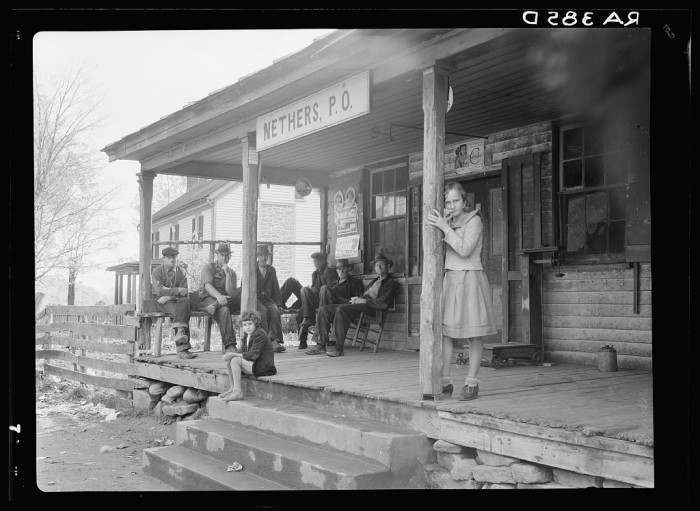
Locals gather on the porch of the post office in the small town of Nethers in Madison County, VA 1935. || Arthur Rothstein / Library of Congress LC-DIG-fsa-8b26683

Life isn’t much different now.

I could live on 10 acres of land, but I may not have the time to grow enough wheat for my family each year. The beauty of that is that I can go to the store to buy wheat, or, I can depend on a fellow homesteader or farmer who does have the time and space to grow enough wheat, and then some. Or, maybe my neighbor grows a garden and wild forages, she preserves her food and she’s good for the winter. But maybe she doesn’t have the ability to harvest meat or eggs from her homestead. Well then, come right on over, I’ve got you covered! We can barter with eggs and meat for sacks of flour or wheat.

It doesn’t mean I’m mooching off of someone or being lazy—it means that I’m leaning on my community, and guess what, my community leans on me too. That’s the beauty of it all.
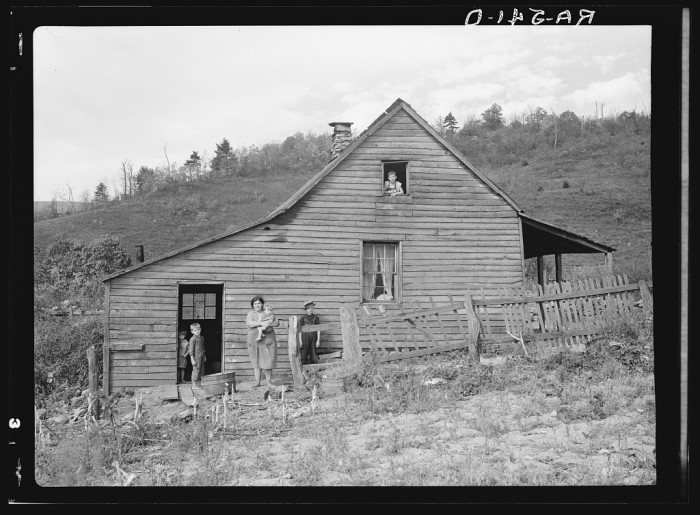
The Dodson family at home in the small community of Old Rag in Page County VA before they were relocated, 1935 || Arthur Rothstein / Library of Congress LC-USF34-T01-000541

Homesteading and self-sufficiency were never terms that were used to isolate. If you isolate yourself completely, you may not survive. You may survive for an amount of time, but what about when you get sick or need a doctor? Or at least someone that can help you recuperate. What happens when a drought hits and you can’t grow anything? What happens when you’re in the dead of winter and you run out of lard or butter? What happens when your milk cow or goat dries up and your baby is crying and you need that milk? I highly doubt most people would throw their hands up and say, “well, I’ll just deal with it.” No, indeed. They would lean on their fellow man for help, as long as they aren’t too prideful.

You could rely on a food stashed pantry or the likes thereof, but even then, you still need something from someone, even if it’s just community. And eventually, that pantry runs dry.

Certainly, there are exceptions. There are those people who go missing and live in the wild for decades on their own. There are mountain men who you never see. But is that really realistic for millions of people who want to start homesteading? Probably not.
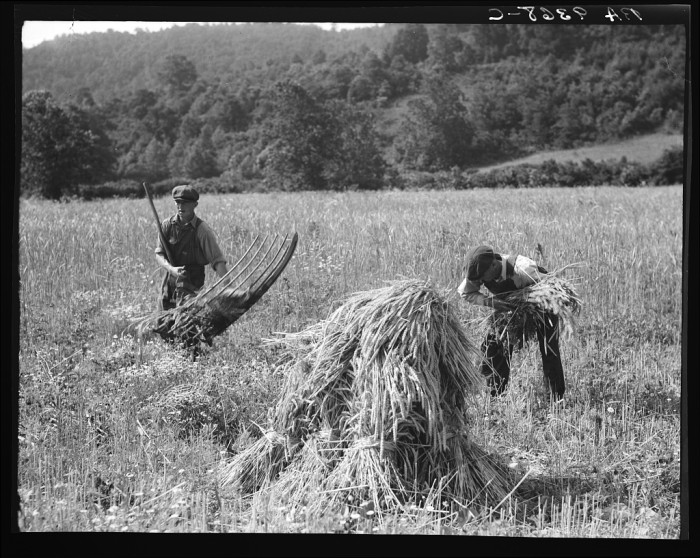
Young farm boys cradling wheat on a farm near Sperryville in Rappahannock County, VA 1936. || Dorothea Lange / Library of Congress LC-USF34-009368

The moral of the story is, homesteading does, indeed, take a village. It takes hands that are willing to work, not just to survive on their own, but for others as well. Whether that looks like going to the store, patronizing your local farmer or homesteader, raising more than you need to help others, lending a helping hand during harvest, bartering for goods and services, or living in a community of like minded individuals.

When you begin your journey into homesteading, or to live a more self-sufficient lifestyle, going into this realizing that it’s ok to buy goods from the farmer’s market or your local farmer is completely liberating. Knowing that you can’t grow everything on your homestead, unless you take up being a vegetarian and veganism, or you change your diet to consume things seasonally (which is possible), is liberating. Maybe you’ll have to buy flour, wheat, oil, medical supplies, paper products, rags, clothing, gasoline. It could be any number of things. Big or small. But at some point, you’re going to have to have to step off your property and barter or buy something from someone. Or maybe you’ll be the one offering help.

That’s why we were put here, after all. To help, to grow, to learn.

The number one reason people stop homesteading is because they’ve been given a false reality that they have to do it all. But in a westernized culture, getting back to our roots overnight isn’t a possible task. It takes years, decades, centuries. We’ve lost entire generations that knew how to do this, and yet they still took the time to dress up and go into town to chew the fat with their neighbors and towns people on the front porch of an Old Country Store, or to buy a sack of wheat. Boys who’d run through fields without shoes on, yes, without shoes on—they are rare to find now days. We’ve lost children who are respectful and who know the meaning of hard work before they are 5. We’ve lost men who want to work hard, get their hands dirty, and provide for their families. They’ve forgotten how to hunt and fish. And we’ve lost women who know that being in the kitchen and the garden or field isn’t oppressive, but necessary, and rewarding, and full of satisfaction.

In order to get back to our roots, we’re all learning together. We’re learning from each other, from our ancestors, from history books—and we all bring something to the table in talent, skill, and growth.

Don’t lose out on that. Don’t isolate yourself because that’s what you think you’re “supposed” to do. Because I assure you, you’ll miss out on so much goodness and education from your community. And one day,  you just may have to call on them when you’re in need.

More than anything, however, is that we’re leaving behind a legacy for future generations. Let’s not teach them that they have to isolate themselves in order to do it the “right” way.

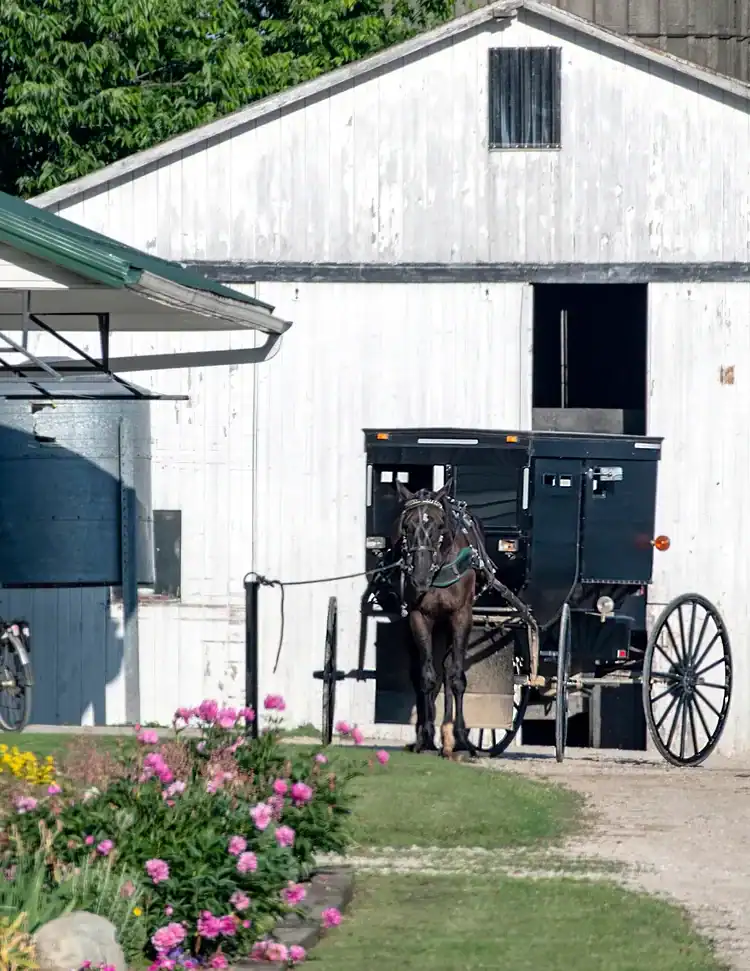
For more Great Depression photos and stories from my area of Virginia, click here. 

By: Amy K. Fewell · In: homesteading · Tagged: community, homesteading, village

you’ll also love

It’s Time to Build Goshen
When Governments Herd People to New Regions and States
The Two-Breed System for Year-Round Meat Chicken Breeding
Next Post >

8 Common Chicken Illnesses & How to Treat Them

Primary Sidebar

meet amy

meet amy
hello!

I'm Amy. I love organic food but I love cookies too. I love Jesus and His grace. I believe broken people make the biggest impact in the world when Jesus makes them whole, and when they share their stories. I believe in stories, and I'm sharing mine.

Read More

Connect

Search

Ads & Sponsors

200x400

Advertise

Follow Along

@amy.fewell

The headline sounds revolutionary: “Trump Signs Or The headline sounds revolutionary: “Trump Signs Order to Help Ranchers Bypass USDA-Inspected Processing Facilities.”

But what does the executive order actually do?

It directs the USDA to:

• Investigate unfair or monopolistic practices in the meatpacking industry.

• Review regulations and remove unnecessary reporting and overly prescriptive inspection requirements where current law allows.

• Expand cooperative inspection programs that let qualifying state-inspected processors sell meat across state lines.

• Provide training and technical assistance to small processors.

• Help farmers locate slaughter and processing options.

• Work toward a guaranteed-loan program for small and regional processors.

• Report within 60 days on the laws preventing state-inspected or custom-exempt meat from entering interstate commerce.

These may be worthwhile steps, or not. Processing consolidation has left family farmers with fewer choices, longer wait times, higher costs, and less control over the food they raise.

But here is the important part:

This order does NOT immediately give farmers a new legal right to butcher their livestock and sell that meat directly to consumers, especially across state lines. It does not eliminate federal inspection requirements or make custom-exempt meat legal for interstate commerce.

The order repeatedly states that USDA must act “consistent with applicable law.” An executive order can direct an agency to use authority it already has, but it cannot erase or rewrite federal statutes.

For lasting change, Congress must pass laws creating a clear, lawful path for family farmers and small processors to feed their communities. We’ve said this before—we aren’t fixing this in 4 years without a miracle—pass the Farm Bill!

A farmer selling meat directly to an informed neighbor is not the same as an industrial corporation distributing millions of pounds through a national supply chain. Our laws should recognize that difference.

This order may open a door and identify the barriers. But it does not finish the work.

Executive action may begin the conversation.

LEGISLATION is what can make the change real, durable, and firmly rooted.
There is something that happens when someone passe There is something that happens when someone passes away and they were impactful in, or upon, your life. As you sit with the thought that the breath of life—the space—that this person had in this world no longer exists, you find you want to be a little more like them in your own space. 

When my grandmother died, I wanted to remember all the best things about her. Her unconditional kindness. Her ability to remain calm. How she would sing and pray all the time in her home. I haven’t even remotely attained those character traits yet, but I’m getting there.

You think of someone like the great agrarian and writer, Wendell Berry. His convictions drove him to do and write in a certain way. He didn’t just talk about what he believed—he did it. And it makes my convictions stronger as I think about what he stood for, how he wrote, and how he lived.

The pattern is that when someone you love, or who greatly inspired you, leaves this earth—you begin to realize that you want to become someone who fills the void of their goodness within the earth. They must not be forgotten. Convictions grow stronger. Changes are made. Others are inspired.

And in pondering this, I thought to myself—this must be how the disciples felt when Jesus died. And it broke me. 

I have never seen my Savior or LORD face to face. I did not walk with Him as the dirt dusted our feet along a journey to a new city that would come to know His greatness. I never sat with Him personally, shoulder to shoulder, to be mentored. I don’t know how He wrote letters or notes. But upon the history written in scripture, I know Him.

And I think this is exactly how his friends and disciples felt after He died. And of course in His case, He rose again. 

Within each one of them, it was as if a fire were shut up inside of them. They did not have to be convinced of conviction and to act upon it. They loved Him so much that when they thought of Him, they lived better. They filled the void that was left. They told everyone about Him, and they wanted them to fill the void too.

Do I love Him this way? Do I miss my Lord so much that I want to take His place until He returns? This is the way—this is the que
He was one of the most brilliant writers in the wo He was one of the most brilliant writers in the world. A true agrarian heart with wisdom that surpasses so much of this current generation. I recommend every book he has written, especially The Unsettling of America. 

We used his “Peace of Wild Things” poem on one of our @homesteadersofamerica tshirts one year. It feels appropriate to share it again now. 

“When despair for the world grows in me
and I wake in the night at the least sound
in fear of what my life and my children’s lives might be,
I go and lie down where the wood drake
rests in his beauty on the water, and the great heron feeds.
I come into the peace of wild things
who do not tax their lives with forethought
of grief.  I come into the presence  of still water.
And I feel above me the day-blind stars
waiting with their light. For a time
I rest in the grace of the world, and am free.”
 
From The Selected Poems of Wendell Berry (Counterpoint, 1999)

May he be resting in peace, even now.
There is a question I believe modern homesteaders There is a question I believe modern homesteaders need to start asking:

“Are we moving because God told us to move—or because fear told us to run?”

Historically, governments have displaced, relocated, incentivized, and concentrated populations for all kinds of reasons. Sometimes by force. Sometimes through policy. Sometimes under the banner of “progress,” “safety,” or the greater good.

My own family was affected by this one-hundred years ago when hundreds of families (2,000+ people) were removed from the mountains of Virginia to create Shenandoah National Park. These were farmers, families, churches, and communities. People who knew how to grow food, steward land, raise children, and live largely independent of government systems.
And now, nearly 100 years later, I find myself watching another migration.

Homesteaders are leaving states they believe no longer represent their values. They’re moving toward states considered more conservative, more rural, more affordable, or more “free.”

And I know that for many, God really IS moving them.
But we still need discernment. Because politics can change overnight.

Governors change. Legislatures change. Laws change. The “safe state” today may not be the safe state tomorrow.
So what happens then? Do we pack up and move again?
There comes a point when we have to ask:
“Has God called me to leave—or has He called me to stand?”

If God tells you to move to Texas, go to Texas.
If He tells you to move to New York, go to New York.

Because ultimately, our security was never supposed to be found in a red state, a blue state, a rural county, or a particular zip code.

Our safety is in the hand of Yahweh.

Sometimes obedience means going, sometimes obedience means staying.

But what if, maybe, some of this is all just the government herding people like sheep into certain locations? 

🌿 Comment DISPLACED and I’ll send it to your inbox!
Our last two babies have been intense. Meaning—the Our last two babies have been intense. Meaning—they are non-stop and never sleep. Ever. I was awake all night last night, and maybe got an hour of sleep. This is nightly. This will be the longest stretch with no sleep, as the older of the two was weaned by now and started transitioning to sleeping on her own at this age.

Is it hard? Yes. Did I almost start crying last night because I was so exhausted physically and mentally? Yes. Did I think about hurting my children? Never. Not once. Not ever. 

The trend that I’m seeing online right now of mothers hurting their children is heart breaking—not for the mother, but for the children. I can sympathize greatly with the stresses of life, but I cannot understand hurting a child…ever. 

Society has a “me” problem. A generation of people who grew up either entitled or as orphans in their own home, and all they can think about is “how can you take care of ME”. They don’t want to face reality like an adult. At some point in adulthood, when we become parents, we don’t get that privilege anymore. We become the nurturer, not always the nurtured.

So when I see the tik tok trend where a mother is pouring water on her screaming 8 month old, and just keeps doing it with the baby distressed, all because she “stands” with a mother who supposedly killed her children, it doesn’t take long for me to realize there’s a demonic agenda sweeping the nation and world right now. Abortion wasn’t good enough—the enemy needs ALL of them dead. And he will make you sympathize with murder and fits of rage in the process.

Women in our society have an idle and idol problem. Idle hands with nothing to do but scroll and compare instead of build a home (her job and role). Idol because we live in a culture that pushes “self” before selflessness. 

The world needs Jesus. 
Younger women need older women. 
Families need to return to the core of the home life.
Husbands and wives need to return to bearing the burden together.

Children are a gift and inheritance—never a burden. Does it mean you’ll be tired? Yes. But it is just a season, friend. And that season passes us by so quickly.

Footer

Learn More

Chickens
Homemaking
Herbs
Recipes
Devotionals

Info

About
Contact
Privacy Policy
Shop

stay in the know

Copyright © 2026 · Theme by 17th Avenue