






• Home
  • Membership
  • Shop
  • Cart
  • Our Farm
  • Gut Health
  • Herbal Practice
  • Buy Trusted Supplements
  • Nav Social Icons

  • Skip to primary navigation
  • Skip to main content
  • Skip to primary sidebar
  • Skip to footer
  • Home
  • Blog
  • About Me
  • Our Farm
  • Gut Health
  • HH Membership
  • My Books
  • Youtube
  • Podcast
  • Homesteading
  • Chickens
  • Herbs
  • Family
  • Farmhouse
  • Homemaking
  • Recipes
  • Sourdough
  • Contact Me
  • Herbal Practice
  • Buy Trusted Supplements
  • Mobile Menu Widgets

    Search

    Connect

Amy K Fewell | Homesteading for the Kingdom

Amy K Fewell | Homesteading for the Kingdom

  • Start Here
    • About Me
    • My Books
    • Podcast
    • Youtube
    • Gut Health
  • Blog
    • herbs
    • Bees
    • chickens
    • rabbits
    • Farmhouse
    • gardening
    • devotional
    • homemaking
    • sourdough
    • recipes
  • Courses & Books
    • HH Membership
    • My Books
  • herbs
  • Podcast
  • Contact Me

Canning Peaches With Raw Honey

July 11, 2016 · In: canning, recipes

Canning Peaches With Raw Honey


Canning is hard work, people—let me tell you. I do a little canning each year, but nothing like what my great Aunt used to do. When I think of a garden and canning, I automatically remember Summertime at Great Aunt Vergie’s house. That woman, she could can. Between her and my Great Uncle Al (who was married to my Great Aunt Rose who deceased very early in life), they must have had a 2 acre garden on Aunt Vergie’s property. They shared the space and worked together. Uncle Al lived all the way up in the big city, and he would come down and garden on the weekends.

Between the two of them, their gardening and canning was simply a way of living. And a pretty darn good way of living. They didn’t have websites and you tube channels. They just….lived.

And over the past few years, I’ve learned to just “live” too. Learning what I can , growing in knowledge, and experimenting with new things.

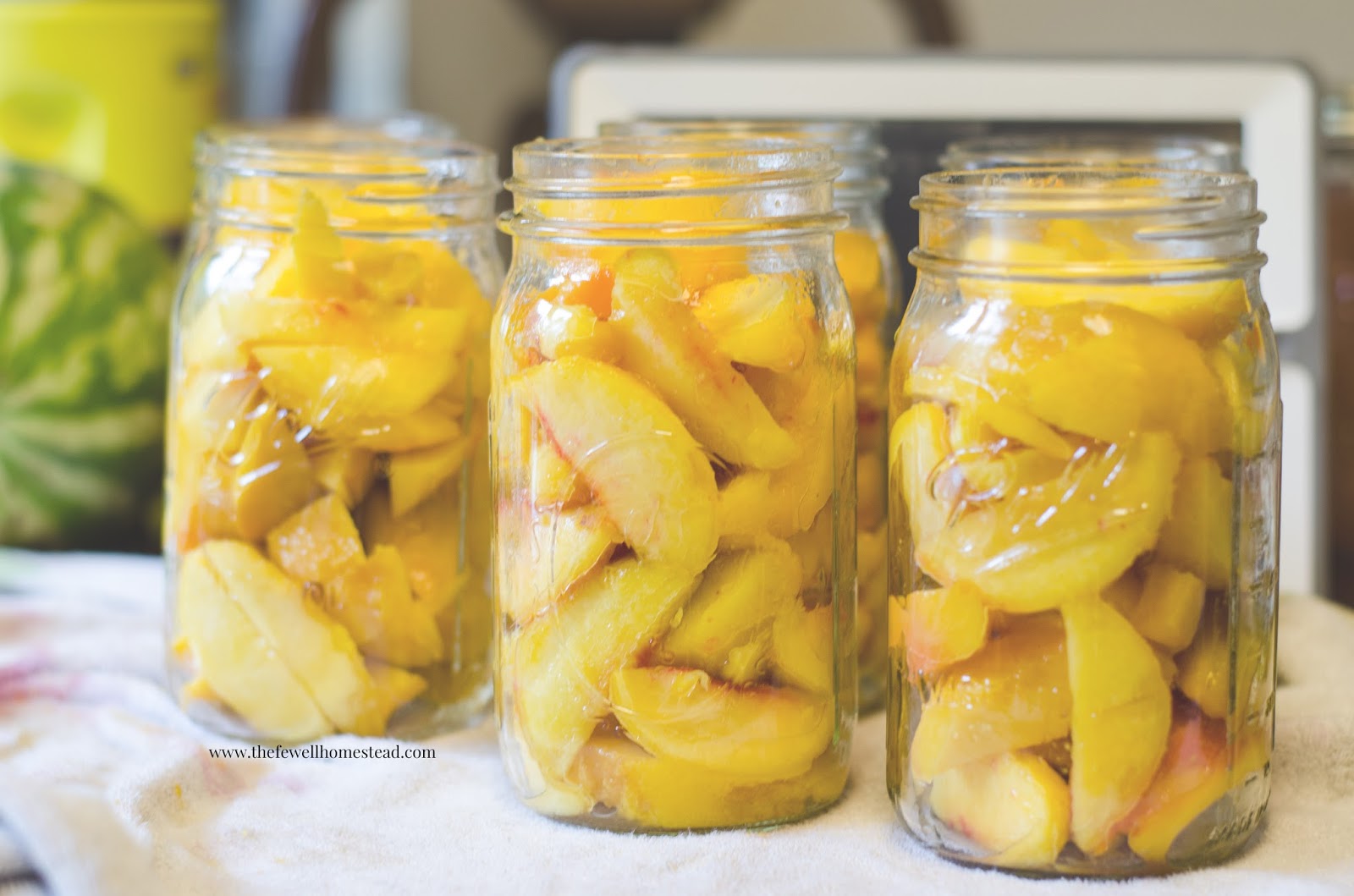
Because of this, last year was an experimental canning season for me. I’ve been canning for a few years now, but last year was the first year I had used raw honey in place of sugar. I specifically tried canning peaches last year. And here’s what I discovered.
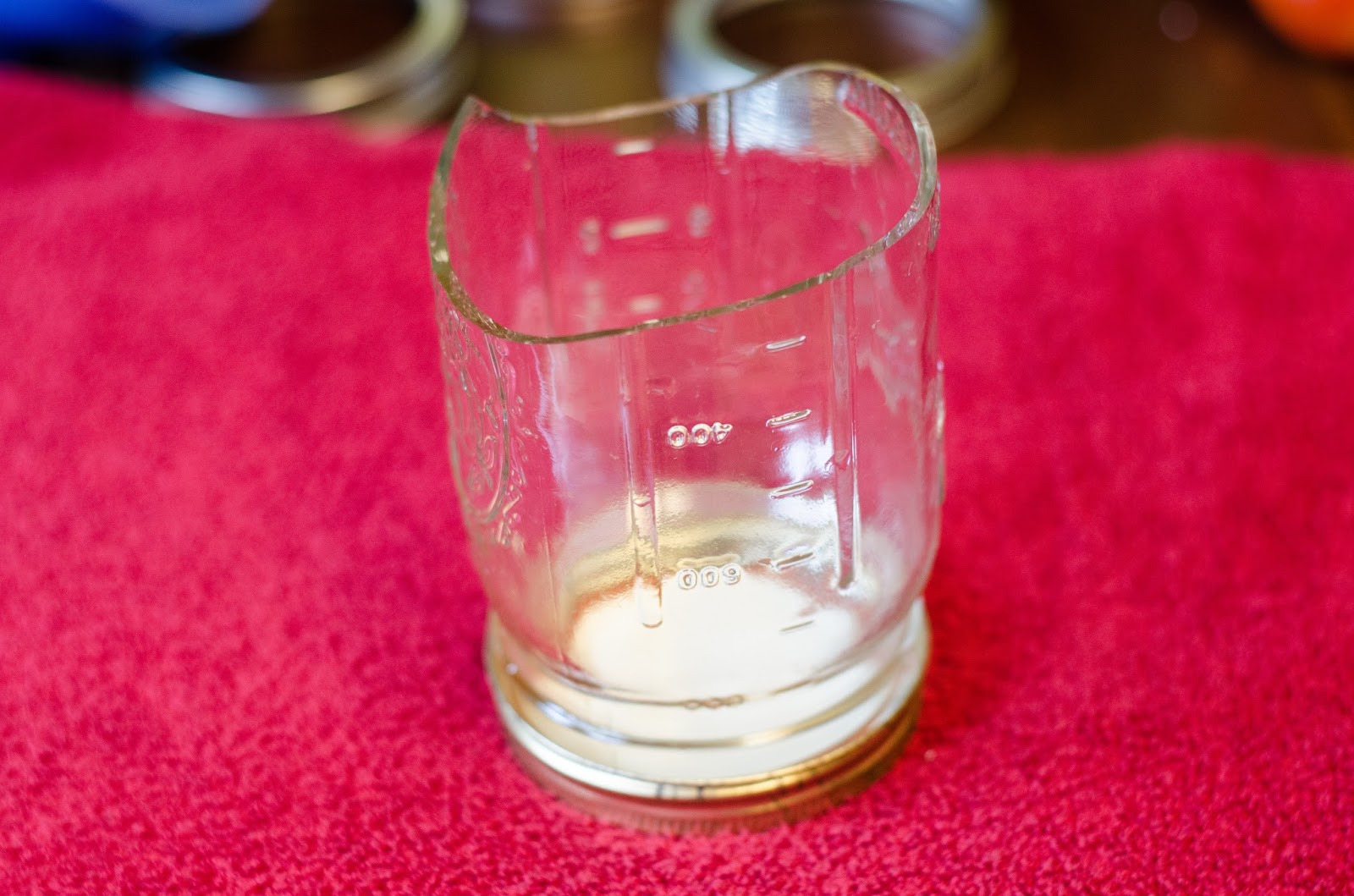
Tip number one….old jars aren’t always reliable.

These jars actually came from my Uncle Al, God bless his soul as he rests in peace. A couple of them had hairline fractures apparently, and burst open in the canner. Now, this isn’t something to be scared of. Since they aren’t pressure canned, no glass shards when zooming through the air!

So, moving along…

Do you have to add sugar to can peaches?

No, absolutely not. You can can peaches (and any other sweet fruit) in water and do just fine. However, without a preservative, they can turn brown and lose some of their sweetness. Some people simply add lemon juice to retain color, but the honey (in this particular fruit) did the job of both. I didn’t want to add refined sugar (though, I could have used raw sugar) so this past year I opted for a cup of raw honey.
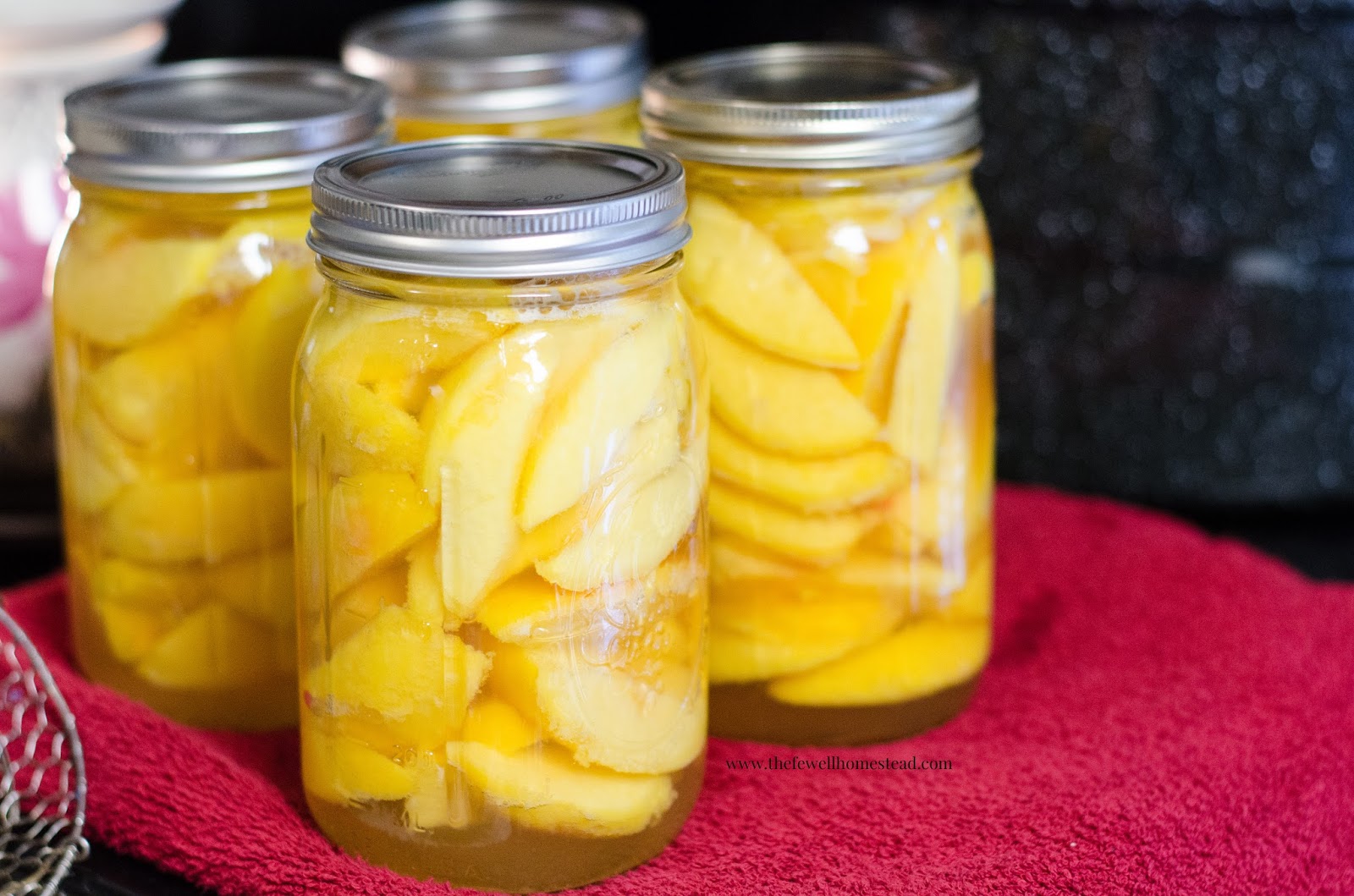
How to Can Peaches with Raw Honey

  1. Start with a pan of boiling water. You’ll want to get the skins off of the peaches without cooking them. You do this very easily by scalding the outside of the peaches in boiling water for 2 minutes, and then dunking them in ice cold water. This is the easiest way to peel peaches without the trouble of using a knife, and without being wasteful. This is easier when the peaches are very ripe
  2. After the skins are removed, bring 8 cups of water and 1 cup of raw honey to a boil in a saucepan. 
  3. As that is coming to a boil, cut up your peaches in slices or just in half, and remove pits. Make sure you also remove the hard red edges on the peaches, as these can sometimes cause issues with the preservation later down the road. Make sure you also remove any really soft brown spots in the flesh as well.
  4. *This step is optional. If you’d like more of a spiced peach rather than regular peaches, you can add a cinnamon stick and nutmeg (etc) to the bottom of your jar.
  5. Pack sliced peaches in jars tightly (preferably pit side down), up to the bottom (and even a little above) of the mouth.
  6. Fill the jar up with the hot honey/water mixture, leaving a 1/2″ head space.
  7. Place lid on and ring on with finger tip tightness. Process in hot water bath canner for 20-25 minutes. Once processed, remove them without touching tops of lids, and place them in a level area where they can cool.

Keep in mind that these peaches, once cooled, will have cooked and sank down into the jar a bit. That’s why we always pack as many into our jars as possible.

Once cooled, if any of the lids have not sealed, place those jars in the refrigerator and eat first.

These are delicious to use later in the year for cobblers and pies, or on oatmeal and ice cream!

Now, one year later, I am still just as impressed with the taste and the preservation of the color and sweetness. Also keep in mind that the sweetness can be adjusted by adding more or less honey during the canning process.

Enjoy!
By: Amy K. Fewell · In: canning, recipes · Tagged: canning peaches, DIY, farmhouse, honey, kitchen, raw honey, recipes

you’ll also love

Sourdough Bagels with Perfect Chewy Crust
Homemade Fire Cider | Sometimes it Works, Sometimes it Doesn’t (plus recipe)
How to Make Homemade Herbal Chapstick

Reader Interactions

Comments

  1. Pamela says

    March 14, 2021 at 7:10 am

    Fantastic, thank you. I am just getting a beehive so this will come in very handy. I came here via Daisy Luther and have to say what a wonderful site you have.
    I am in Australia and have been prepping for a while. It is not the prepping that I love but the wonders of living with natural things we have been given.
    I look forward to my first honey “crop” via an easy flowhive and can hardly wait to can fruit (experiment).
    Thank you also for the great dehydrated sour dough recipe.
    Cheers
    Pamela

    • Jillian says

      August 24, 2021 at 9:07 pm

      Is it possible to do this without bringing the honey up to boil? Too much heat destroys raw honey’s nutritional value and can also turn toxic for the body.

      • Sandy says

        September 14, 2021 at 10:35 pm

        Hi Jillian,
        I get where you’re coming from and, when not preserving food, I always add honey at the end for this reason.
        But it’s not possible to preserve fruit via canning without bringing all the ingredients to boiling and keeping it there for the specified time. Otherwise pathogens can survive the process and potentially make you very sick.

  2. Manuela says

    March 27, 2021 at 5:54 pm

    Thank you so much for posting this. I used to can years ago and then I quit. Now, with everything that’s been going on I’m determined to get back into it. I have seasonal allergies so I have to avoid sugar. So seeing this recipe is just perfect timing all the way around. Thank you!! 💜

    • Melissa says

      August 10, 2021 at 4:17 pm

      How many quarts will this recipe make?

  3. Coll says

    August 22, 2021 at 2:43 pm

    Every year, usually about 6 months in, my peaches always go brown and mushy. I can them with Honey and a bit of lemon juice. What am I doing wrong?

    • Amy K. Fewell says

      August 30, 2021 at 1:13 am

      that can be one of the downfalls with honey instead of sugar

Next Post >

Facing the Reality of Homestead Confiscation

Primary Sidebar

meet amy

meet amy
hello!

I'm Amy. I love organic food but I love cookies too. I love Jesus and His grace. I believe broken people make the biggest impact in the world when Jesus makes them whole, and when they share their stories. I believe in stories, and I'm sharing mine.

Read More

Connect

Search

Ads & Sponsors

200x400

Advertise

Follow Along

@amy.fewell

That’s all… That’s all…
You know you want this BRAND NEW recipe on the blo You know you want this BRAND NEW recipe on the blog!

My family has grown to absolutely love homemade bagels. They are so easy and versatile. But there are bagels—and then there are real, chewy, shiny, homemade bagels.

The kind where your teeth sink through a beautifully browned crust into a dense, satisfying center. The kind that can hold a generous layer of cream cheese without collapsing into a soft little bread ring.

And the secret is not complicated. You have to boil them.

That brief boil in honey-sweetened water is what sets the outside of the dough and creates the signature crust that makes a bagel taste like an actual bagel. It is one small, old-world step that modern recipes are often tempted to skip—and it makes all the difference.

This recipe can be made with active sourdough starter for a slower ferment and deeper flavor, OR with instant yeast when you would rather have fresh bagels the same day.

Mix the dough. Let it rise. Shape it. Boil it. Brush it with egg wash, add your favorite toppings, and bake it until the crust is glossy and golden.

It is a simple process, but it produces the kind of breakfast that reminds you why learning to make food at home is worth the effort.

Make them plain, cover them in everything seasoning, add cheese, fold in cinnamon and raisins, or turn them into hearty breakfast sandwiches.

Save this post for your next baking day, and find the complete printable recipe, instructions, troubleshooting tips, and flavor variations on my website.

🥯 Comment BAGEL and I’ll send it straight to your inbox.
The older I get, the more I understand that people The older I get, the more I understand that people speak from their experiences, knowledge, and where they are in that moment in life. Ten years ago I would’ve told you differently than I do now about various topics. Ten years from now I’ll probably think differently than I do today about various topics. 

Why? Because of my growth (or God forbid, the opposite). Because I have new information, new experiences, and new ideas. I have fresh revelation, more grace, and the will to understand rather than quickly jump to conclusions. 

I saw a post recently in the homesteading world that I didn’t agree with. But just a few years ago I would have. And maybe in five years I will again. But because of the season in life that I’m currently in—it doesn’t pertain to me right now. I nod and move on—not judgement. Just applause for that person and their life. 

Does that mean the person is wrong? No. They may be wrong for my current season, but not for theirs, and not for others like them who are also in the same season as them. 

I’m not talking about blatant falsities. I’m talking about hearing someone say something that isn’t wrong, but you just don’t agree with it because you can’t apply it to your life experiences right here and now. But you’ll suddenly feel ignorant when you realize that one day, you may agree with them because it now applies. 

Your life shifted and now you feel what they were saying. Your knowledge increased so now you understand more clearly. Your sphere got changed or got bigger and now you have clarity on what they said because others have said it too. 

I hope we all begin to look at life from this way. Myself included. Because often times, I forget. And I hope we have grace to manage the times we, and others, failed. 

We live in our own life bubbles. When something contrary to how we do everyday life challenges us or makes us uncomfortable (within boundaries), we push it away and tag people with labels. But community is vast. The body of Christ is many and yet one. Movements do exactly that—moving and changing, ebbing and flowing. 

For what purpose? That we may all come to know the fullness of Yahweh, His glory, and His nature. Amen.
Most of America sees the onion as nothing more tha Most of America sees the onion as nothing more than a flavor enhancer for a weeknight dinner. But the mighty onion is so much more than that.

Throughout history, Allium cepa has been used medicinally. European herbalists recognized its antiseptic and diuretic properties long ago. In Germany, it's even been approved for limited treatment of arterial hardening. And historically, onion was cooked in milk and eaten to clear congestion in the lungs.

So why does this humble kitchen staple work so well? It comes down to sulphur. The onion breaks down the mucus membranes in your body—you already know this, because it's exactly why you cry when you cut one. That same sulphur is what makes onion so fabulous for coughs, colds, and congestion, and it gently breaks through barriers in the body—thinning lung mucus, reaching ear infections, and drawing infection out of boils and cysts.

A few of the ways we use it around our home:

🧅 Cough syrup — Thinly slice a raw onion into a jar, cover with raw honey, and let it sit. After 3 hours you'll see a thin syrup forming, but wait the full 24 hours for the most potency. Strain, refrigerate, and it keeps practically indefinitely.

🧅 Onion on the feet — For nighttime coughs, place raw onion slices on the soles with a cloth, cover with a sock, and leave overnight. The sulphur absorbs through the skin and works while you sleep.

🧅 Earaches — Warm an onion, wrap it in a thin cloth, and rest it against the ear. Gentler than oils in the canal, especially for little ones.

🧅 Boils & cysts — A warm onion wrapped over the area overnight helps draw the infection to a head so it can drain.

🧅 Sore throat — Wrapping raw onion slices against the throat for a few hours (overnight is best) has helped many people.

The next time you're staring at that onion thinking it's only good for seasoning, remember—you've got a master medicinal plant sitting right in your kitchen. One that's been used for centuries. One you can grow right in your own garden bed.

Full breakdown—including the hour-by-hour extraction timeline—is on the blog. 

Comment ONION and I’ll send it straight to your DMs
Turn the tv off. Put the phone down (seriously, no Turn the tv off.
Put the phone down (seriously, not figuratively).

Stop filtering everything through what you know and have experienced. Start filtering things through the realization that you actually don’t know everything. You can learn something new. Maybe that thing that makes you uncomfortable is really just stretching you. Maybe that conversation that made you mad really just exposed a part of you. Maybe the inconvenient interruption just shows you a place where you need to be refined.

There are few daily things in life that need your attention. 
Jesus.
Your spouse.
Your children.
Your home.
Your immediate circle of relationships. 
Your work.

In that order.

Not your desires. Not your reels. Not your video games. Not your “me time”. Don’t get me wrong, those things can be included. But they aren’t the main thing.

If you can sit down and spend an hour scrolling through reels or talking to your friend, but you can’t sit down for an hour straight and talk to your kids without feeling inconvenienced—that’s a problem. 

If you can accomplish 15 hours of work in a day but you ignore your spouse because you’re tired and just want to veg out—that’s a problem. 

If you can do “all the things” but don’t make time for Jesus, even if your kids are a distraction—there’s a problem. 

It’s ok to say “I’m tired and need help,” or “I can’t do this the same way anymore.” It’s ok to admit mistakes and change methods. It’s ok to be tired while admitting you love to work. It’s ok to step back from relationships that drain you. It’s ok to take a break when you need to. It’s ok to set boundaries.

But it’s not ok to stay there. 

It’s not ok to quit.

Faithfulness and steadfastness is the key. 
Rest is the key. 
Avoidance and feeding your flesh is not. 

That’s a hard pill to swallow—for ALL of us. 

May we evaluate our lives always. May we show ourselves, and others, grace as we grow together.

Footer

Learn More

Chickens
Homemaking
Herbs
Recipes
Devotionals

Info

About
Contact
Privacy Policy
Shop

stay in the know

Copyright © 2026 · Theme by 17th Avenue