
What to forage in spring—that’s a hot question this time of year. The herbalist’s medicinal year doesn’t begin in the fall with cold and flu season. It begins in the spring, as plants begin to come alive. The herbalist waits for herbs to forage in spring, and what to forage in spring will depend on your location. However, there are quite a few common wild herbs you can forage for just about anywhere in North America (and beyond). In this blog post, we’ll take a look at six medicinal herbs you can forage in spring, right now! And if they haven’t popped up yet, they will soon!
Before we begin, it’s important to know a few things about foraging for wild herbs. A quick reminder to forage responsibly, and some tools you’ll need.
- If you aren’t certain that the herb you’re seeing is the herb you’re looking for, I would encourage you to bring a sample home to study before using it in any herbal preparations.
- Remember to leave a few plants behind so that the plant reseeds, or regrows.
- Never harvest directly off the side of the road, as water and rain run off can cause chemicals from the road to leech into your roadside plants.
- Always take gloves with you, as some plants can sting (like stinging nettle).
- Be sure to take a basket (or two) and some sharp garden shears.
Alright, now that we’ve gotten those things out of the way, let’s dive into six herbs to forage in spring.
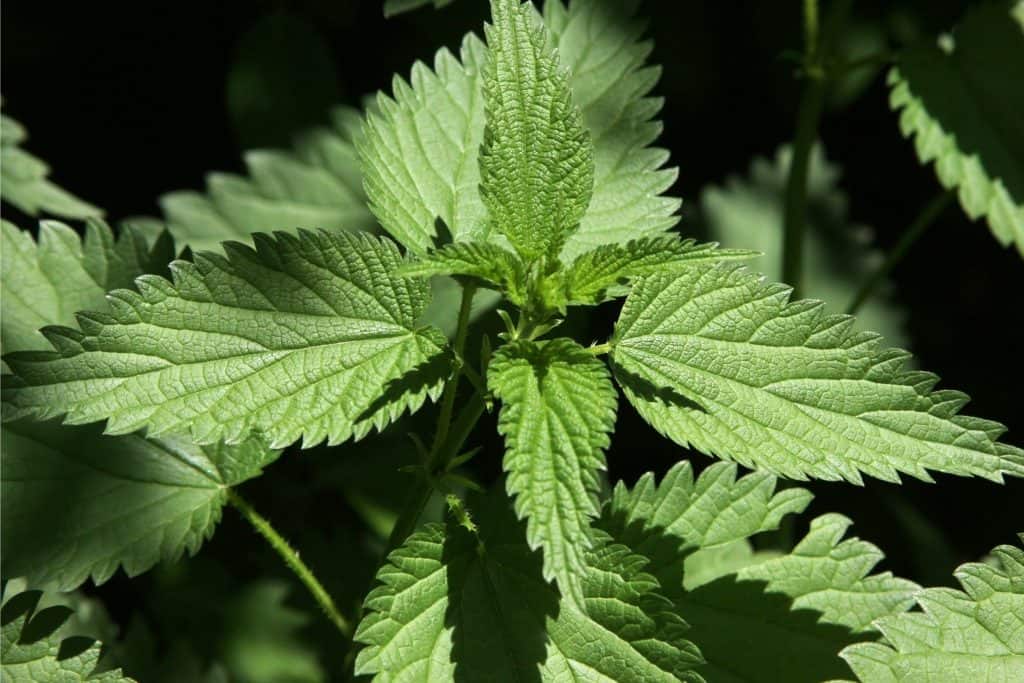
Stinging Nettle (Utica dioica L.)
Stinging nettle is often used as an overall body tonic. This is one herb that can be eaten, infused into tea, or used as a medicinal herb every day. It’s full of minerals and vitamins that your body will absolutely love. Greek physicians Dioscorides (first century C.E.) and Galen (ca. 130–200 C.E.) reported nettle leaf had diuretic and laxative action (when used in medicinal doses). They also proved it was useful for asthma, pleurisy, and for the treatment of spleen-related illness. Roman naturalist, Pliny the Elder (ca. 23–79 C.E.), reported hemostatic properties (Bombardelli and Morazzoni, 1997).
In traditional African medicine, stinging nettle is used as a snuff powder for nosebleeds, excessive menstruation, and to treat internal bleeding. Traditional Indian medicine uses stinging nettle for uterine hemorrhage, cutaneous eruptions, infantile and psychogenic eczema, and nosebleed. Aboriginal medicine uses it as an antirheumatic drug, often due to the stinging effect of the wild herbs. In Germany it is used for urticaria, herpes, eczema, hypersensitive reactions in the skin and joints, and burns.
Stinging nettle has been used for centuries for various different things, but for the respiratory system, it has been used since before Greek times, especially for asthma. It has anti-inflammatory and anti-allergenic properties. In a 2017 study, it was shown that stinging nettle showed great decrease in allergic rhinitis symptoms. The perfect herb for hay fever season!
Stinging nettle is astringent, diuretic, tonic, and hypotensive. It is used frequently in many cultures as an overall health tonic, as it strengthens and supports the entire body.
How to Harvest:
Be sure to wear gloves unless you are used to working with stinging nettle. The nettle will sting you and can cause a rash.
Simply cut each piece down to right above the bottom set of leaves so that the plant can continue to grow. Do not take all of the stems, leave some behind to continue to grow and reseed. If harvesting the root, you can simply pull up the entire plant.

Mullein (Verbascum thapsus)
Mullein is one of the most commonly noticeable wild foraged herbs. The medicinal uses of mullein (Verbascum thapsus) are vast when it comes to respiratory and lung health. It even has antiviral and antibacterial properties. There are over 200 species of mullein, but common mullein is most often used for smoking mullein, mullein tea, and mullein tinctures.
In the late 19th-century, a pharmaceutical trial showed that the herb was beneficial in cases of tuberculosis. Dr. Quinlan of St. Vincent’s hospital in Dublin, Ireland noted that it was a trusted popular remedy in Ireland for tuberculosis. The study stated that 6 out of 7 cases were successful in the treatment of tuberculosis by smoking mullein or drinking mullein tea.
You can learn more about mullein in this blog post.
How to Harvest:
Mullein is one of those wild herbs that can be harvested from spring through summertime. If you’re harvesting the leaves, they are best in the spring just as the plant begins to grow. However, they can be harvested anytime during the season, as long as they aren’t dried out or dying.
If you are harvesting the flowers, which are great for ear ache oil, you’ll have to wait until summertime for those.

Elderflower (Sambuci flos, Sambucus nigra)
Many people know the benefits of elderberry and often make elderberry syrup each year. But you may be surprised to know that elderflowers have some of the same medicinal benefits as elderberries. If you’re anything like me, you might see your beautiful elderberries almost ready to harvest, then suddenly you go back to pick them and they are all gone—eaten by the birds. Of course, you can prevent this with netting, but if you’re wild foraging, this won’t help in the wild.
Elderberry and elderflower have historically been used to fight the common cold, influenza, and seasonal allergies. It is also known to help with upper respiratory illness and fever.
You can read more about elderberry here.
How to Harvest:
Make a note of the blossoming elderflowers in the springtime. As they completely open (or just begin to), you can harvest the flower heads to make elderflower tincture, liquor, or even dry out the flowers to save for elderflower tea.

Yarrow (Achillea millefolium)
Yarrow (Achillea millefolium) grows all over the world. You will find yarrow growing along tree lines, in fields, and even in overgrown yards. It prefers sandy soil and grows best in zones 3 through 9. This is one of the most incredible and necessary herbs on the homestead, and for good reason.
It its used to stop bleeding. It is anti-inflammatory, anti-catarrhal (removes excess mucous from the body), anti-spasmodic, diaphoretic (reduces fever), antimicrobial, used for treatment in pneumonia, used for treatment in rheumatic pain, and so much more.
You can read all about Yarrow in this blog post.
How to Harvest:
Most people are used to seeing white yarrow, but the yellow yarrow has the same medicinal benefits. You can cultivate both in your own home garden.
When the flowers open fully, harvest each stem with the head attached, all the way down to the ground. Hang the stems, with the flower head attached, upside down to dry for several days.
The leaves, stem, and flowers contribute to the medicinal uses for yarrow. Every part can be used. Store the herb in an air tight container for up to one year.
If you wish to use the root of the yarrow plant, you should allow it to mature for at least 2 to 3 years before harvesting the entire root. Or, you can take bits and pieces of the root each year.
Dry the root out for a week before transferring it to an air tight container for up to a year.

Purple Dead Nettle (Lamium purpureum)
Nature knows how to help us more than we may realize when it comes to wild herbs. This is where purple dead nettle comes in, as it beats allergies more than most realize. In the springtime, you’ll often see this beautiful little weed popping up all across lawns. Be sure to harvest as much of it as you can before you begin mowing your grass. Or, if you’re like me and don’t have much growing in your lawn, be sure to harvest from a place that is free of chemical drain offs. Never harvest directly from the side of the road, as the plants could have soaked up harmful toxins and chemicals from the run off.
Purple dead nettle, or red nettle, is fabulous in salads and fresh meals. It’s more commonly known for its incredible ability as a natural antihistamine. So, in the springtime, when the trees and grass make us suffer from horrible allergies, purple dead nettle comes to the rescue!
This wild edible and medicinal herb has the following actions: natural antihistamine, anti-inflammatory, antimicrobial, astringent, immunostimulating, nutritive, styptic.

While purple dead nettle doesn’t have any toxic plant lookalikes, it does have a very common lookalike that people often get confused by when finding herbs to forage in spring. Henbit tends to grow around the same time as purple dead nettle. Make sure you don’t confuse the two, as they have very different medicinal purposes and uses. Henbit looks much more like a green plant with purple flowers, where purple dead nettle has dark evergreen colored leaves with purple or brownish-purple tops, and purple flowers.
Both are great in salads and as a treat, but if you’re especially looking for the antihistamine properties of purple dead nettle, you’ll want to be sure you’re harvesting the proper wild medicinal!
How to Harvest:
Simply cut the dead nettle at the base, or right below the last set of leaves. You can dry them out for later use, or use fresh.

Plantain (Plantago lanceolata and P. major)
This plant is one of my favorite wild herbs to forage in spring. One of the most common herbs in every backyard—plantain is a fabulous and easy plant to forage for in the spring. You can’t miss this one, and once you know what this plant is, you’ll never ever forget it. Almost every yard has plantain growing in it in the spring and summer. Often times, when people hear you say plantain, they think of the fruit. It is very obviously not the fruit, and is so much more beneficial.
In Germany plantain is used for oral ingestion, rinses, and gargles as well as an external poultice for wounds, burns, and stings. It is used to suppress coughs associated with bronchitis, colds, and upper respiratory inflammation, and to reduce skin inflammation (Tyler, 1994). Most commonly, we use it for burns, stings, and skin inflammation and irritation, such as with poison ivy. It’s a wonderful plant to add to salves for skin health.
How to Harvest:
Harvest the leaves before they begin to turn brown or have spots on them. Dry out for later use, or use fresh.

Other Posts You May Enjoy:
- Yellow Rocket Cress | Wild Edible & Medicinal
- Home Remedies for Seasonal Allergies
- Medicinal Uses of Mullein | Grow, Harvest & Use
- How to Make Herbal Lotion Bars