









Essential oils and herbs for ear infections can be just as effective as antibiotics, but we’re often too scared to try them out. Ear infections are one of the most common ailments in children under the age of 8. Even teenagers and adults can get ear infections, though it’s less common. Unfortunately, not only are ear infections the most popular ailments in our younger generations, but they are also one of the main causes of overuse of antibiotics. In fact, most ear infections will clear up within 24-72 hours after the first symptoms.
Parents who take their children to the doctor to get an antibiotic often believe that the antibiotic is what cured their child, when the reality is that the ear infection, more likely than not, began clearing on its own. It takes 24-48 hours for an antibiotic to begin working. It can take the same amount of time for the symptoms of an ear infection to begin subsiding on its own.
I get it, though. I’m a mom. I think I ran to the doctor for almost every single ear infection that my son had when he was little. There were a few times that I didn’t, but other times, I was just worried. Worried moms, that’s never a good thing!
Back then, I wasn’t confident enough in my herbal knowledge to help the issue with essential oils and herbs, and so, I turned to modern medicine. But that’s the beauty of modern medicine—peace of mind. And when in doubt, I encourage you to heed your instincts, even now!
However, there are plenty of other ways to heal and help ease symptoms with herbs for ear infections. We’ll go over a few of those right after we understand why and how we get ear infections.

Preventing Ear Infections
Before we can treat an ear infection at home, there are some important things we have to take into consideration. Prevention is the number one place we need to begin.
Most children who have an ear infection get one because of immature Eustachian tubes. Little ones have the smallest tubes, and when they become inflamed during a cold or teething, fluid and/or bacteria can get trapped in the Eustachian tubes and cause pain, inflammation, and ultimately, an ear infection.
Most little ones get ear infections from inflammation and blocked tubes, and during (or right after) having a cold or an allergen inflammation. We can prevent ear infections during this time by first trying to prevent the cold and flu. You can do this by secondarily administering herbal remedies and supplements through your breast milk if you are a nursing mom. Try making an elderberry and astragalus syrup to not only help prevent you from getting a cold, but baby as well. Never give the syrup to infants, however, the syrup is safe for most toddlers.
You can also prevent an ear infection by aiding the draining process of fluid in the middle ear.
These practices may include:
- Making sure your baby or little one is angled upright (when sick) while taking a bottle or nursing, as well as when they are sleeping, if at all possible. For older kids, propping pillows underneath of them while napping or sleeping is a must. For infants, allowing them to nap and sleep in a swing will be greatly beneficial.
- Taking your children for chiropractic care. Chiropractic care allows the lymph nodes and channels throughout the body to drain more easily. It can also reduce inflammation and swelling. Find a trusted pediatric practitioner in your area.
- Massage Therapy, focused around the lymph node areas, will help the body relax and drain the system of any excess fluid and sinus build up and blockage during colds and flus.
Prevention is your first step to helping your child with an ear infection. These simple methods can help rid the possibility of ear infection for your child, and even for yourself. But when those things fail, we turn to herbs for ear infections.
Different Types of Ear Infections
Let’s face it. Sometimes we forget to prop our kids up. Sometimes we forget to prevent cold and flu with herbs and vitamins. So now, our kid has an ear infection, and that’s ok! But what type of ear infection do they have? You may never know just by watching your child, but in many cases, especially when we practice the “wait”, we can know exactly what type of ear infection our child has…if it’s even an ear infection at all.
Here are the different types of common ear infections, and one other possibility:
- It’s not an ear infection at all. Yep, that’s right. I could just be swelling and inflammation that will work itself out. The actual presence of puss and fluid never happens. Your child is just uncomfortable from inflammation in the sinuses and ear canal. This is a major cause for children pulling at their ears and never having an ear infection.
- Acute otitis media (AOM)—this is the most common ear infection. This infection affects part of the middle ear and causes fluid to be trapped behind the eardrum. It can cause an earache and a fever, but it will typically resolve in a matter of 2-3 days.
- Otitis media with effusion (OME)—this can be seen as an ear infection, but sometimes it’s just trapped fluid. The fluid never goes away after the original ear infection has subsided. Some children never have any symptoms with it. Or, they may just have discomfort on a regular basis because the fluid is trapped. We often think it’s a reoccurring ear infection, when in actuality, it’s just fluid build up.
- Chronic otitis media with effusion (COME)—this ear infection is the most dramatic and may require medical attention. COME makes it harder for children to fight off other infections that may be lurking in the body because they are in a constant state of having an ear infection. Reoccurring infections can happen every couple of weeks due to fluid build up over an extended period of time. This type of infection needs medical attention.
I always encourage parents to practice the wait. Give your child 3-4 days after symptoms begin to see if they begin to subside on their own if you don’t want to take the herbal route. If the child isn’t better after a few days, it’s time to got to the doctor.
However, treating the ear inflammation or infection from the very beginning with herbal remedies is your best bet, and can prevent further, more dramatic, types of ear infections from occurring and reoccurring.
Whatever you do, I encourage you to hold off on antibiotics as long as possible (if you’re comfortable doing so).
The overuse of antibiotics truly takes hold of our children and their future generations when we overuse complicated medicines for simplistic ailments. Five in every six children in the United States will experience an ear infection during their childhood. According to Healthy People 2020, 77.8% of pediatric visits for ear infections result in antibiotic prescriptions. The overuse of antibiotics creates superbugs and antibiotic resistance in our communities.
Why are we consistently prescribing antibiotics for an ailment that will more than likely resolve itself in the same amount of time it takes for an antibiotic to begin working?
Besides the fact that we’re abusing antibiotics, let’s consider that antibiotics still do relieve pain or the stress of an ear infection. Only herbal remedies or pain relievers can do that. So why not kill treat the ailment and give natural pain and inflammation relief all at once?
Essential Oils and Herbs for Ear Infections
There are a few different ways we can use herbs for ear infections at home, and all of them are completely healthy and beneficial to your little one. The best way to treat efficiently and effectively is at the first sign of symptoms. Once you know, for sure, that your child (or you!) has an ear infection, immediate treatment methods should begin.
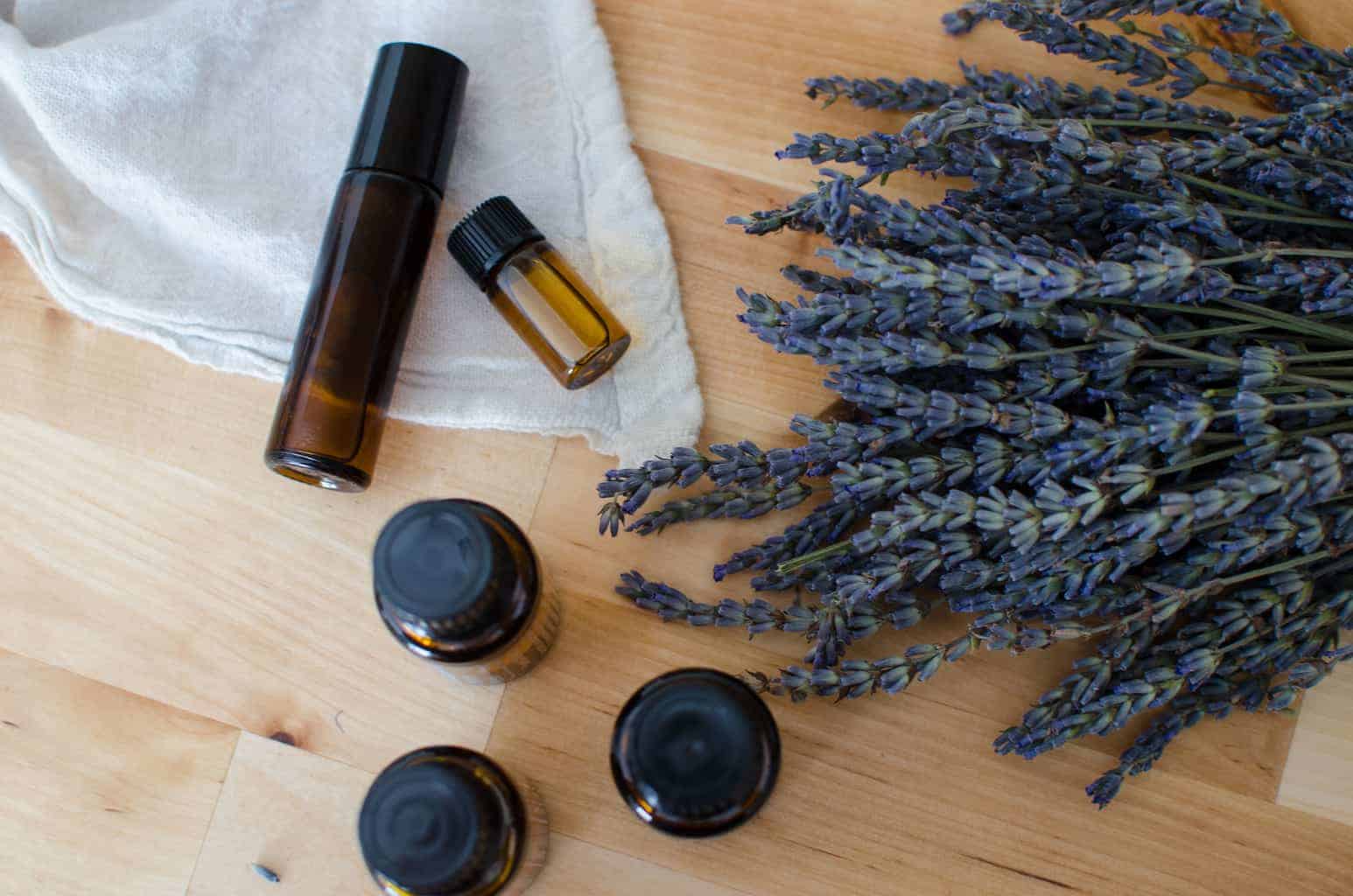
One of the best ways to use herbs for ear infections is with garlic, mullein, calendula, St. John’s Wort, lavender, and other anti-inflammatory and antibacterial herbs. You can create an herbal oil remedy (recipes below) to place inside of the ear. However, if the ear drum is ruptured do not use this oil inside of the ear. Rub it on the outside of the ear and behind the ear.
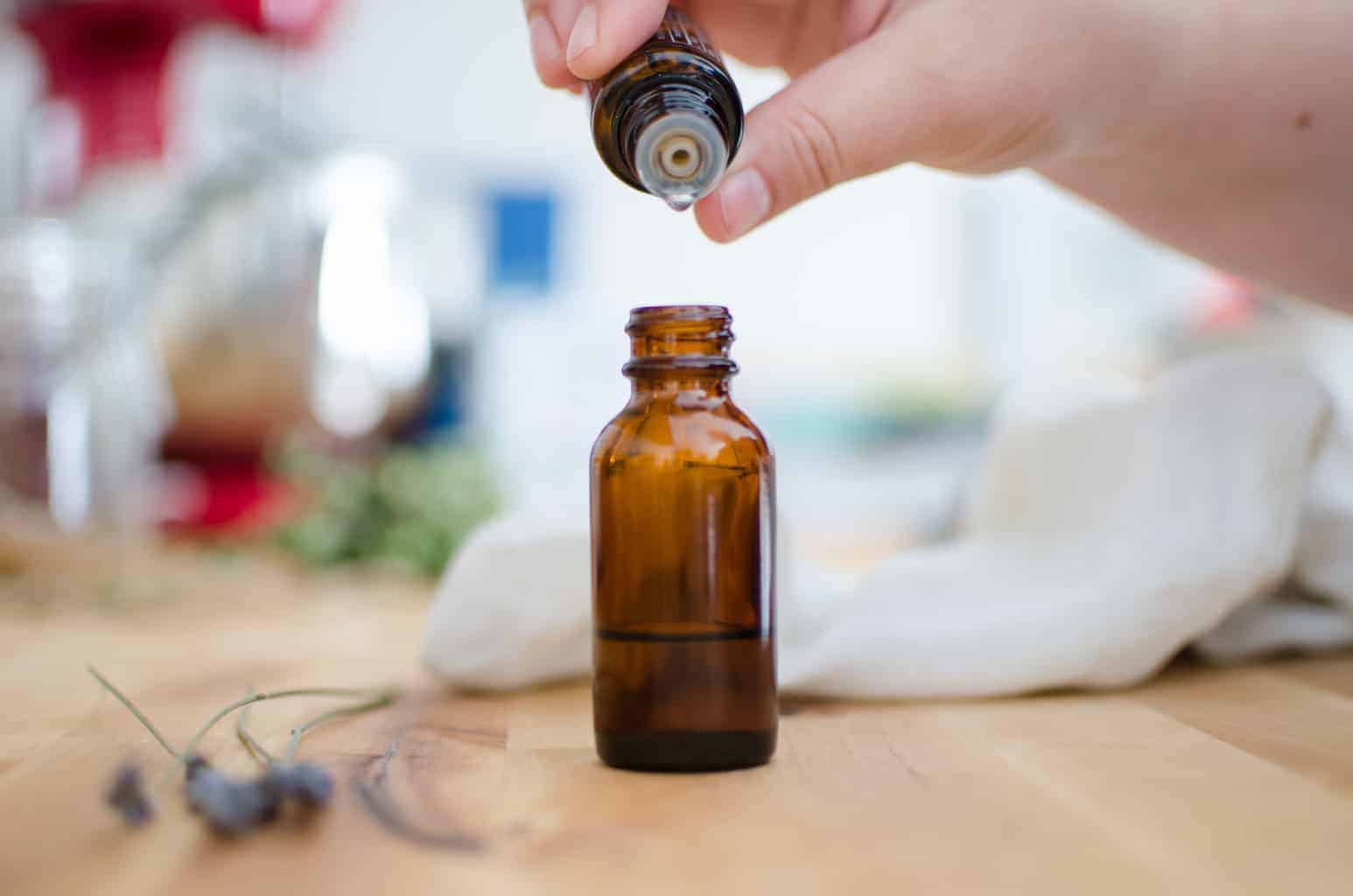
Basil Essential Oilis also a great remedy when placing the diluted oil around the outside of the ear canal and behind the ear. You can also put it in an ear oil recipe. Never place essential oils inside of the ear canal undiluted or without being in a recipe (like the one below).
You can certainly give pain reliever, like tylenol or advil, and offset the liver toxicity by offering milk thistle (dose according to weight). But you’ll find that the herbal oil itself will help relieve a lot of that pain.
Use one of these simple recipes for earaches and infections. You can make it in advance and store it in a cool, dark place for 6-8 months, or you can make it on demand when needed.
Again, do NOT place these remedies inside of the ear if there is a ruptured ear drum.

Infant and Pediatric Herbal Ear Infection Oil
Dose: 3-5 drops per application (in or around ear) every 2-3 hours until symptoms resolve
Age: 2 months and older
Ingredients:
7 grams chamomile flowers, dried
7 grams mullein flowers, dried
7 grams garlic, dried
1 cup avocado oil or olive oil
Method:
- Pre-heat oven to 250 degrees. Once it reaches 250 degrees, turn it off and keep the door closed.
- Place herbs in a mason jar and cover with avocado oil. Immediately place in oven once oven has been turned off.
- Leave the jar of herbs and oil in the oven for 2-3 hours, infusing the oil with the medicinal herbs.
- Remove the jar from the oven and strain the oil into a sterile 4 oz dropper bottle. Make sure you squeeze all of the oil out of the herbs!
Child and Adult Herbal Ear Infection Oil
Dose: 3-5 drops per application (in or around ear) every 2-4 hours until symptoms resolve
Age: 9 months and older
This oil is great for older children and is more efficient because of the addition of basil essential oil.
Ingredients:
7 grams chamomile flowers, dried
7 grams mullein flowers, dried
9 grams garlic, dried
4 grams calendula flowers, dried
1 1/3 cup avocado oil or olive oil
48 drops sweet basil essential oil (*optional)
2 tsp raw or manuka honey (*optional)
Method:
- Pre-heat oven to 250 degrees. Once it reaches 250 degrees, turn it off and keep the door closed.
- Place herbs in a mason jar and cover with avocado oil. Do not add basil essential oil. Immediately place in oven once oven has been turned off.
- Leave the jar of herbs and oil in the oven for 2-3 hours, infusing the oil with the medicinal herbs.
- Remove the jar from the oven and strain the oil into two sterile 4 oz dropper bottles. Make sure you squeeze all of the oil out of the herbs!
- Add basil essential oil to the strained oil liquid and mix well. if using honey, add while mixture is still warm. Stir until completely mixed.
- Shake well before using.
*Additions: Raw honey and manuka honey are great additions to this remedy. You can
Resources:
Healthy People 2020. Washington, DC: U.S. Department of Health and Human Services, Office of Disease Prevention and Health Promotion.
Kristinsson, K., Magnusdottir, A., Petersen, H., & Hermansson, A., (2005). Effective treatment of experimental acute otitis media by application of volatile fluids into ear canal. The Journal of Infectious Disease. 191:1876-1880.
Lieberthal, A. S., Carroll, A. E., Chonmaitree, T., Ganiats, T. G., Hoberman, A., Jackson, M. A., … & Schwartz, R. H. (2013). The diagnosis and management of acute otitis media. Pediatrics, 131(3), e964-e999.
Rosenfeld, R. M., Vertrees, J. E., Carr, J., Cipolle, R. J., Uden, D. L., Giebink, G. S., & Canafax, D. M. (1994). Clinical efficacy of antimicrobial drugs for acute otitis media: metaanalysis of 5400 children from thirty-three randomized trials. The Journal of Pediatrics, 124(3), 355-367.
Soni, A. (2008).Ear Infections (Otitis Media) in Children (0-17): Use and Expenditures, 2006. Statistical Brief #228. Agency for Healthcare Research and Quality, Rockville, MD.
Dr’s Urged to Stop Using Antibiotics for Ear Infections — https://www.npr.org/sections/health-shots/2013/02/25/172588359/pediatricians-urged-to-treat-ear-infections-more-cautiously
Antibiotics are often ineffective for ear infections — https://www.ncbi.nlm.nih.gov/pubmedhealth/PMH0072563/




Does avocado oil have to be used? I have organic extra virgin olive oil on hand, but wasn’t sure if there was a specific reason for the avocado.
you can use olive oil! 🙂
This is brilliant! I was hoping to find a manuka garlic recipe for ear infection! The other ingredients are just icing on the cake! Thanks!
This is super helpful, Thanks!! One question tho, as my mullein hasn’t flowered yet (it’s in its first year). Could one use mullein leaves in place of the flowers for this?
the flowers are specifically used for ear aches
Thank you for the remedy recipes! Is the oven temperature in Celsius or Fahrenheit?
What a great recipe!! Thank you! I’m curious if you have a remedy for sinusitis and sinus infections for adults and kids.