




• Home
  • Membership
  • Shop
  • Cart
  • Our Farm
  • Gut Health
  • Herbal Practice
  • Buy Trusted Supplements
  • Nav Social Icons

  • Skip to primary navigation
  • Skip to main content
  • Skip to primary sidebar
  • Skip to footer
  • Home
  • Blog
  • About Me
  • Our Farm
  • Gut Health
  • HH Membership
  • My Books
  • Youtube
  • Podcast
  • Homesteading
  • Chickens
  • Herbs
  • Family
  • Farmhouse
  • Homemaking
  • Recipes
  • Sourdough
  • Contact Me
  • Herbal Practice
  • Buy Trusted Supplements
  • Mobile Menu Widgets

    Search

    Connect

Amy K Fewell | Homesteading for the Kingdom

Amy K Fewell | Homesteading for the Kingdom

  • Start Here
    • About Me
    • My Books
    • Podcast
    • Youtube
    • Gut Health
  • Blog
    • herbs
    • Bees
    • chickens
    • rabbits
    • Farmhouse
    • gardening
    • devotional
    • homemaking
    • sourdough
    • recipes
  • Courses & Books
    • HH Membership
    • My Books
  • herbs
  • Podcast
  • Contact Me

3 Common Chick Illnesses and How to Naturally Treat Them

February 21, 2019 · In: chickens, Featured, herbs, homesteading

Common Chick Illnesses
Preventing and treating common chick illnesses can be tricky. But with herbs and natural remedies, it’s absolutely attainable.
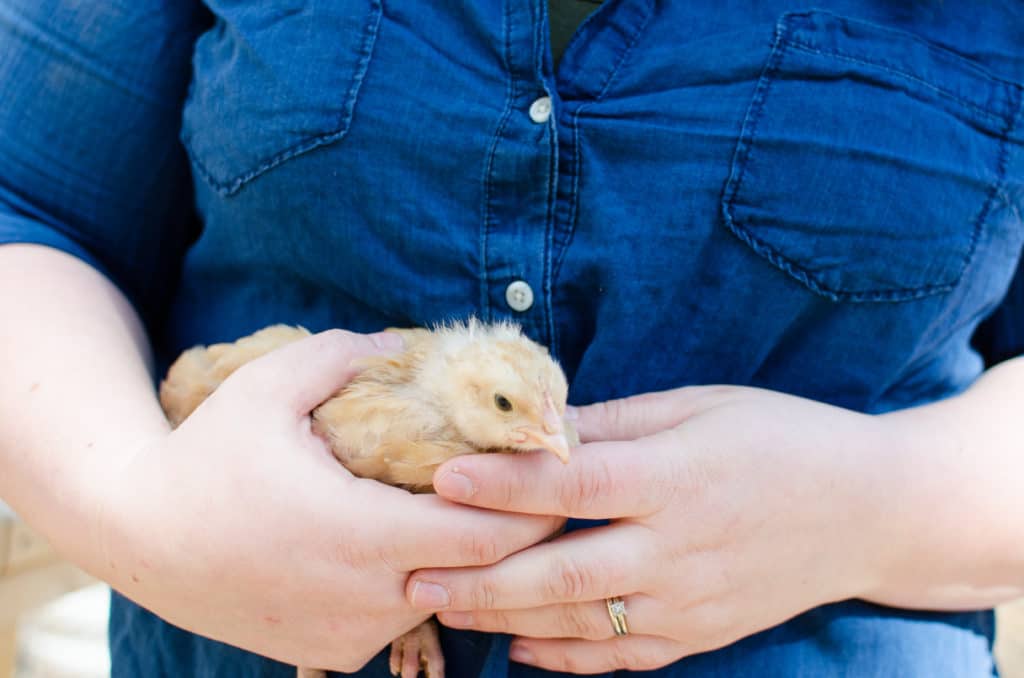
As with any animal or human, we sometimes worry most about how to naturally treat an illnesses. Especially when it comes to chick illnesses. What if they get sick? Is it possible to treat an illness or bacterial infection with natural remedies? While the answer isn’t as black-and-white as you may think, there are quite a few ways to help prevent illness and disease in your little flock. Should they contract an illness or ailment, I have some natural remedies for you as well.

Let’s go over three common chick illnesses and how you can treat and prevent them.

Coccidiosis

One of the most common illnesses in chicks, this bacteria is vicious once it infects them, and it spreads like wildfire. Chicks and chickens can contract coccidiosis (or, cocci) through everyday foraging or in wet foraging areas. Symptoms include bloody feces, loss of appetite, pale wattles and combs, acting chilled or huddling together, diarrhea, dehydration, and lethargy.

Chickens typically become immune to the coccidiosis bacteria once they have gotten it, so try to breed for resistance from those chickens in the future if you have a breeding program. It’s also important to understand that chicks, at some point, need to come into contact with cocci in order to build up immunity. Add clumps of dirt to your brooder from day one to help naturally introduce the bacteria to them.

Prevention:

Keeping your chick’s bedding and foraging area clean and dry is important. Cocci typically spreads through excessively wet bedding or living conditions, where the bacteria can live and grow. I give my chicks a natural “electrolyte” mixture of garlic, raw honey, and thyme in their waterer, as a cocci preventative almost daily, until their immune systems are strong enough to combat it on their own. Apple cider vinegar in their waterer helps as well.

Treatment:

Wormwood, garlic, chicory, and black walnut hulls all have antiparasitic and antibacterial properties. Create a tincture out of these to keep on hand when you need it.
Pasty Butt

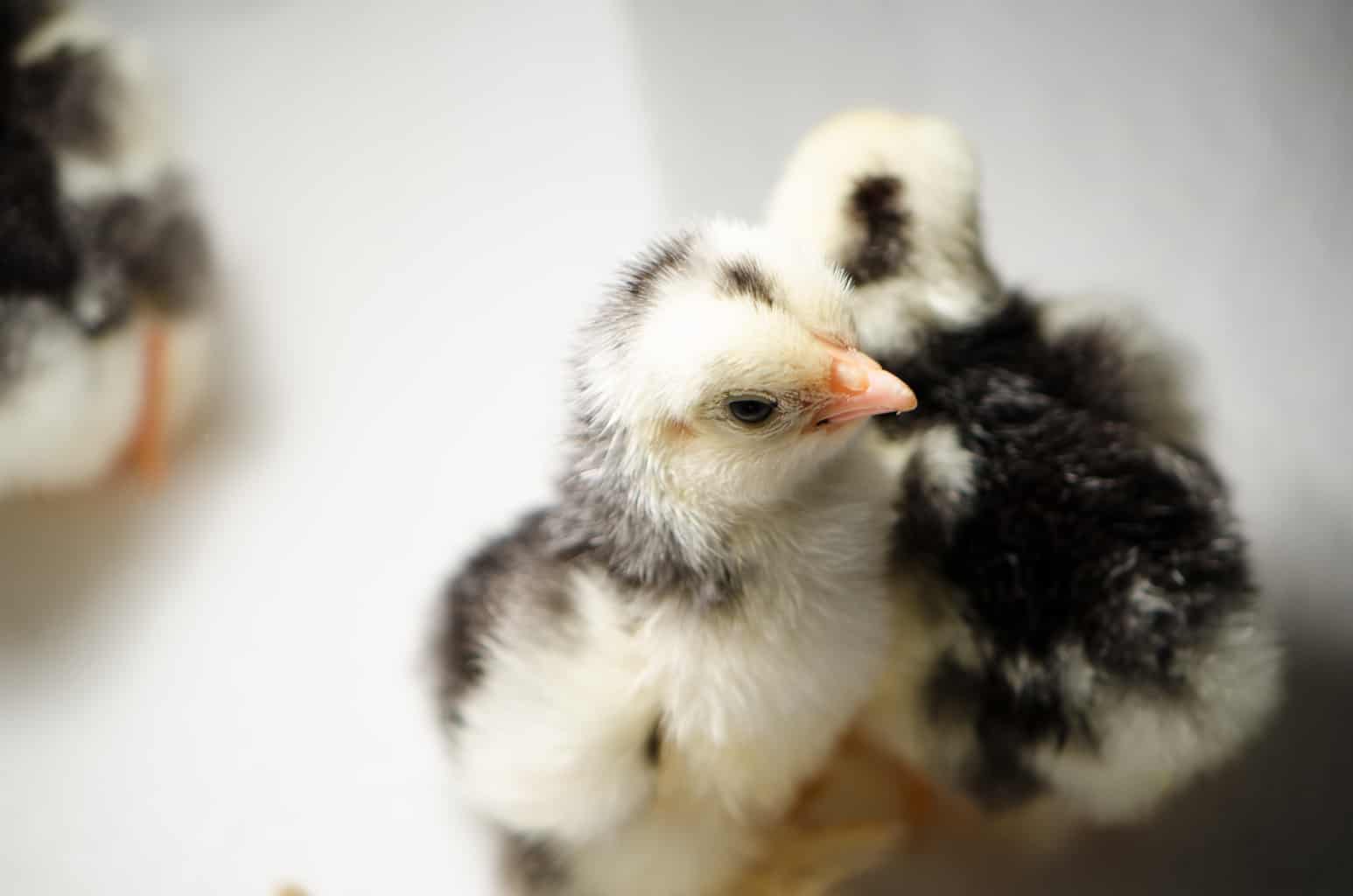
This is the most common chick illness that almost every single chicken keeper will have to deal with at some time or another. Pasting occurs when chicks become stressed, either from not having the proper diet or heating conditions, or from having too much sugar or additives in their waterer. Symptoms are very specific and noticeable, including feces stuck to the feathers and vent of the chick. It will start as a runny dropping, but then harden into a large glob. If left untreated, it can cause death.

Prevention:

Create a stress-free brooder by making sure your chicks are always warm enough and getting enough nutrition. Offer apple cider vinegar and astragalus to their waterer to help them adapt to stress. Use my herbal salve recipe to put around their vents to prevent pasting from occurring.

Treatment:

The treatment for pasty butt is very simple. Wet the area where the feces is stuck and gently pull off all of the fecal matter once it begins to naturally loosen from the vent. Put a bit of herbal salve or antibacterial ointment on the vent to help soothe and prevent more sticking from occurring. Add apple cider vinegar and astragalus to their waterer to help them adapt to stress if you’d like, though this is not required.
Wry Neck

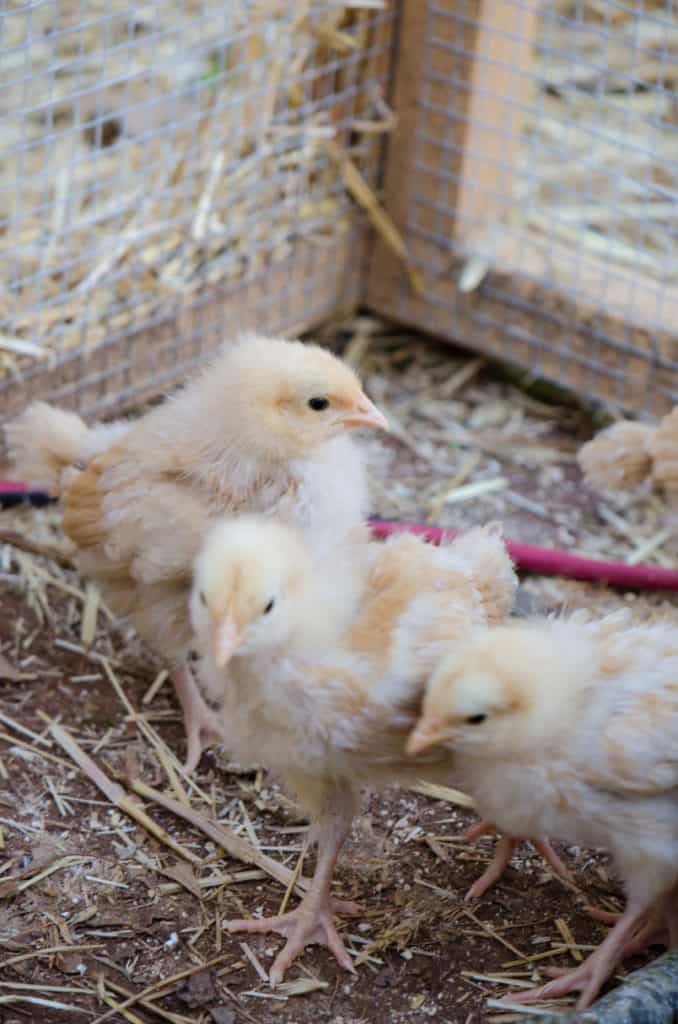
There is no rhyme or reason as to how or why chickens get wry neck (or crooked neck), but there are ways to help treat the issue. Some believe that wry neck happens when there is a vitamin deficiency. Others suspect bacterial issues or even just plain genetics. There’s really no way to prevent it in chicks since we’re not sure what the exact cause is, but we can help treat it.

Treatment:

Add additional minerals and vitamins to your chick’s waterer, along with a homemade electrolyte mixture of 1 clove garlic, 1 tsp raw honey, and a handful of fresh thyme to their waterer. Do this until symptoms subside (this can take up to 1 week).
Want More Information About Chick Illnesses?

If you’d like to learn about more common chick illnesses and how to prevent and treat them, check out my new book, The Homesteader’s Natural Chicken Keeping Handbook for more recipes, information, and herbal goodness!

Other Blog Posts You Might Like:

  • Setting Up Your Outdoor Chick Brooder
  • A Guide to Buying Baby Chicks
  • Homemade Electrolyte Recipe for Chicks

By: Amy K. Fewell · In: chickens, Featured, herbs, homesteading · Tagged: chickens, herbs, The Homesteader's Natural Chicken Keeping Handbook

you’ll also love

The Medicinal, Nutritional, and Famine Benefits of Lambs Quarters (Chenopodium album)
15 Chicken Processing Day Mistakes That Waste Time and Meat
The Two-Breed System for Year-Round Meat Chicken Breeding

Reader Interactions

Comments

  1. Nancy says

    February 21, 2019 at 5:28 pm

    How timely for me. I have a lavender Orpington about a year old that just developed wry neck. I have been feeding her spinach and sunflower seeds since I read that it can be a vitamin deficiency. I am going to follow your instructions also.
    Something I never see addressed. A lot of my chickens have poopy butts. Is there a remedy. Last year I had another lavender Orpington that got fly strike. How disgusting plus she died. I have 50 chickens so I can not clean their butts every day. Help!!!
    I am ordering your book. Sounds wonderful.

  2. Sandy says

    November 6, 2020 at 8:43 am

    When you reference chicory as a remedy, do you mean roasted chicory root, raw dried root, or leaf?
    And when you diagnose wry neck, is that where your hen’s neck has a kink in it and their head is turned to the side? This is what one of our hens experienced. I though she had suffered an injury. The herbs used indicate a need for some sort of internal antiseptic. She resisted being examined, but kept laying and I regret that I did not realize it could be treated nutritionally. Thanks for the explanation

    • amyfewell says

      November 9, 2020 at 2:28 am

      I would use chicory root, dried or fresh. And yes, that’s normally wry neck!

  3. Mary Angery says

    July 14, 2022 at 10:26 am

    How much can I start with

Trackbacks

  1. How to Beat Coccidiosis | Keep a Healthy Flock | A Farm Girl in the Making says:
    January 9, 2020 at 8:19 pm

    […] A natural remedy will consists of herbs such as Wormwood, garlic, chicory, and black walnut hulls. These items have antiparasitic and antibacterial properties. Learn more about how to treat common chicken illnesses here.  […]

Next Post >

How to Make Sourdough Biscuits

Primary Sidebar

meet amy

meet amy
hello!

I'm Amy. I love organic food but I love cookies too I love Jesus and His grace. I believe broken people make the biggest impact in the world when they share their stories. I believe in stories, and I'm sharing mine.

Read More

Connect

Search

Ads & Sponsors

200x400

Advertise

Follow Along

@amy.fewell

@highlowfarm sent us some of their incredible home @highlowfarm sent us some of their incredible homestead products, and I had to take advantage of this delicious maple cream they sent! It screamed “ice coffee”, to me. 

The amount of time and work that goes into anything “maple” always astounds me.

There are so many farms and homesteads that are taking a heavy hit from the lack of production and drought this year. Consider supporting them even before conference! But be sure to check them out at the @homesteadersofamerica event too. 

Check the stories the rest of this week for some of the other goodies they sent! And go to their page @highlowfarm to grab some of their products!
What if your batch of broilers dies? What if you c What if your batch of broilers dies? What if you can’t order chicks through the mail? Or what if you just need a better option to grow meat throughout the year?

Cornish Cross and other fast-growing hybrids can be incredibly efficient when they are raised during the right window. They grow quickly, fill the freezer, and allow a family to produce a large amount of meat in a relatively short time.

But that does not mean they are the right bird for the hottest part of summer.

Heritage and slower-growing birds require more patience, but many of them are better equipped to forage, tolerate changing weather, and move through the hotter months without the same level of management required by a heavy meat hybrid.

The answer is not necessarily choosing one breed over the other.
The answer may be using both, in an efficient system.

Raise the fast-growing birds during the cooler spring and fall months. Raise the slower, more durable birds during summer to help ensure you always have meat in the freezer even if the broilers fail. Stagger your batches so that you are not processing every chicken on the homestead during one exhausting weekend.

This is the difference between buying chickens and building a meat-production system.

One is an annual project.
The other is part of a resilient household food plan.

I laid out the complete two-breed system, including seasonal timelines, breed options, staggered batches, processing schedules, and a backup strategy, in my newest article.

🐓Comment SYSTEM and I’ll send the article directly to your inbox!

Save this post as you begin planning next year’s meat birds.
After an eight month sabbatical from larger public After an eight month sabbatical from larger public assemblies of the church, it seemed fitting that the first time we stepped back into it all…was in a barn. And when we sat in the car and evaluated afterwards (it was amazing btw), I said “I think I’m different than I was before.” Before—when part of a larger body of Christ. And that was a great thing. A really great thing. 

Sometimes Yahweh makes us walk through seasons of separation because He has work to do within us. He wants to build confidence in the truth that you know, and unlearn the things you thought were right.

That doesn’t mean you forsake assembly (we still had Friday night fellowship here). It just means we stepped away from the normal Sunday morning in America to see where God wanted to work within us—without someone influencing us. Where did He want to scrub out dirty spots and elevate refined righteousness. Where did He want to heal and restore. Where did He want to calm and correct. Where did He want to broaden and expand. 

And we both sat there and said we “felt compassion”. Not just in the air, but for other people, within ourselves. No agenda. Just worshipping Jesus at the foot of the cross. That’s it. Just church. In a barn. The simple, unadulterated gospel of Jesus. 

It was a great way to start the week 💛 Happy Sunday, friends.
I’m seeing the whole “glyphosate” caused the Canad I’m seeing the whole “glyphosate” caused the Canadian wildfire thing. And about how they are spraying it everywhere and that’s why the fires have started. And we can’t breathe etc etc. That could be true. But I don’t think most people realize this isn’t new. 

Just last year Shenandoah National Park sprayed insecticides all over the park. Where do you think that overspray went? On people’s properties, in the air, in your garden, and even settling on properties hundreds of miles away since it was airborne. 

None of this is new. It’s been happening for over a decade. Our air is toxic. Period. It’s not because of something new. You’ve been eating and breathing in this stuff most likely your entire life.

Here’s what I hope everyone will do—get serious about it. When you hear it’s going to happen (they often announce it before they do it) get loud to your local authorities. If you’re concerned about it nationally, get loud at your statehouses. 

The world is finally waking up to what many of us have been screaming for 20 years. Yet we were called the crazy ones. 

Brings a whole new meaning to Mark 16:18–they will drink poison, and it will not hurt them. 

This has been our prayer for our family. But we can’t pray this while not fighting the issue.
It’s a sad reality. But it’s the truth. And here’s It’s a sad reality. But it’s the truth. And here’s why.

Our current American generations are not homestead or agricultural minded. The regenerative agrarian movement is still very young here. And the farmers and land owners who are much older and ready to sell their property are almost always doing it so that they can have a retirement and healthcare fund. There’s no money in the way old timers did farming. That’s kind of the long game conventional ag played them into.

I watched my grandfather sell every cow he had (even though he didn’t want to) so that he could put money into their bank account so that they would never have to go into a nursing home. 

I’ve talked to people who have held onto land thinking their children would steward it, only to realize they don’t even want to live in the same state is them. They want an inheritance for their kids. Can you blame them? 

There are certainly people buying land from farmers for far less than a data center would, and then being conniving and selling it the following month to a data center. This happens over and over again. 

But there are also people who just want to sell their land and be left alone. They think the state is going to “hell in a hand basket” anyhow, so what’s it matter to them. 

Here’s the catch—whether they sell it to a data center or not, it is clear they want high dollar for their property. And they will sell it to the next developer of 350 new homes on .2 acres that comes along. Or the next millionaire that wants to save it. 

Which one will come first? Time will tell. I’ve seen both. Don’t lose hope.

Pray that people would be obedient to the Holy Spirit. He is quickening many to buy large plots of land right now, but it only happens if they say “yes”. Pray that the Lord would extend more and more wealth to His people so that we can steward it well into expanding in more land ownership.

Continue changing the culture. Don’t give up hope. Raise your kids close to Jesus and agriculture. Teach them honor and stewardship. Teach your community and friends. The next generation won’t fail this task—they will understand the assignment. But until then, raise

Footer

Learn More

Chickens
Homemaking
Herbs
Recipes
Devotionals

Info

About
Contact
Privacy Policy
Shop

stay in the know

Copyright © 2026 · Theme by 17th Avenue