• Home
  • Membership
  • Shop
  • Cart
  • Our Farm
  • Gut Health
  • Herbal Practice
  • Buy Trusted Supplements
  • Nav Social Icons

  • Skip to primary navigation
  • Skip to main content
  • Skip to primary sidebar
  • Skip to footer
  • Home
  • Blog
  • About Me
  • Our Farm
  • Gut Health
  • HH Membership
  • My Books
  • Youtube
  • Podcast
  • Homesteading
  • Chickens
  • Herbs
  • Family
  • Farmhouse
  • Homemaking
  • Recipes
  • Sourdough
  • Contact Me
  • Herbal Practice
  • Buy Trusted Supplements
  • Mobile Menu Widgets

    Search

    Connect

Amy K Fewell | Homesteading for the Kingdom

Amy K Fewell | Homesteading for the Kingdom

  • Start Here
    • About Me
    • My Books
    • Podcast
    • Youtube
    • Gut Health
  • Blog
    • herbs
    • Bees
    • chickens
    • rabbits
    • Farmhouse
    • gardening
    • devotional
    • homemaking
    • sourdough
    • recipes
  • Courses & Books
    • HH Membership
    • My Books
  • herbs
  • Podcast
  • Contact Me

6 Herbs for Your Chickens | Oregano, Stinging Nettle, & More

April 29, 2019 · In: chickens, herbs, homesteading

Herbs for Chickens
Herbs for Chickens
Herbs for Chickens
Herbs for Chickens
Herbs for Chickens
Herbs for Chickens
Herbs for Chickens
Herbs for Chickens
herbs for your chickens

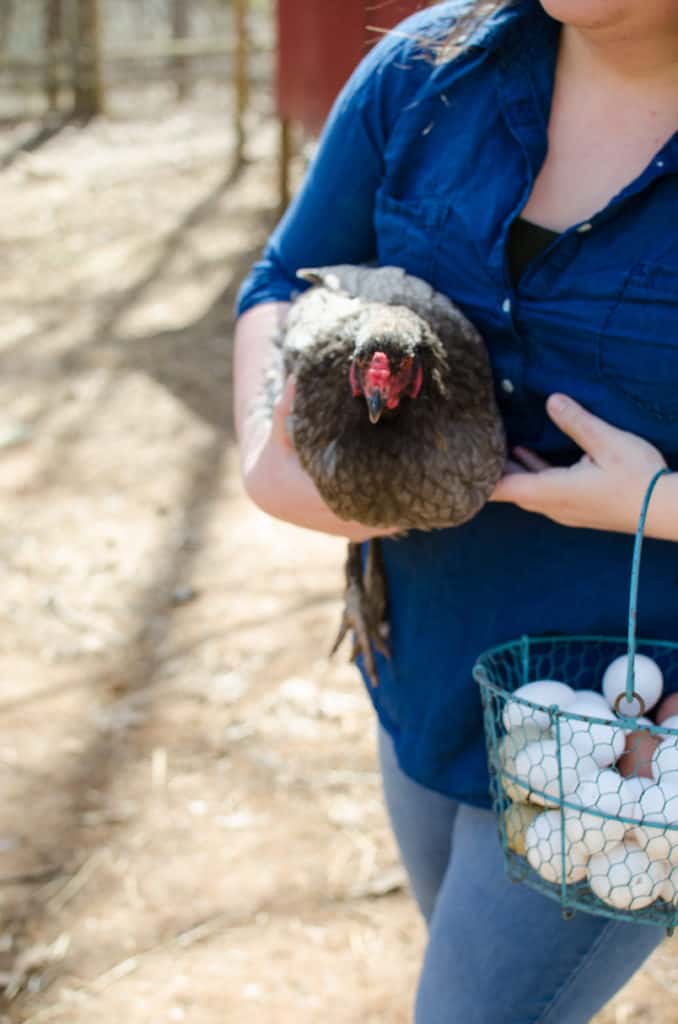
Chicken keeping is common in almost every region throughout the world. But herbs for chickens may not be quite as common yet, though oregano for chickens seems to be very popular. Herbs are one of the easiest things you can give to your chickens to create a healthy and balanced diet and environment. Though it might seem intimidating at first, herbs for chickens don’t have to be complicated or intimidating.

Just an ounce of prevention is worth a pound of cure, so let’s go over some of the most common herbs we use in our heritage chicken keeping practices. It’s time to learn heritage chicken keeping skills in our modern world!
chicken herbs

The Chicken Herb List

There are at least forty or more herbs you can keep in your chicken remedies cabinet, but we’ll only go over a few of the most common ones. If you’d like a more comprehensive list of herbs for your chickens, along with learning how to use them, and how to prepare herbal remedies, check out my book The Homesteader’s Natural Chicken Keeping Handbook.

Now, onto the chicken herb list!

Naturally, it’s best to grow your own herbs for your chickens, but if you can’t or don’t want to, I’ve linked all of these herbs in each individual section.

Astragalus (Astragalus membranaceus)

This herb is one of my favorite herbs for my chickens. Most commonly known for its immune stimulating properties, astragalus is one of the most beneficial herbs you can offer to your chickens on a regular basis as a preventative herb. In fact, a study done in 2013 proved that astragalus helped prevent avian influenza and shortened the duration of the flu as well. While the study primarily focused on the injection of astragalus, as an herbalist, I know that astragalus as a dietary supplement stimulates the immune system greatly, thus very likely preventing the inhabitation of the influenza virus.

Besides avian influenza, astragalus helps boost the overall immune system of the chicken, generating good health and wellness. It is also anti-inflammatory, helps chickens adapt to stress, and is antibacterial and antiviral.

Give to your chickens a couple of times each week to boost their immune systems, either dried or in a decoction. I prefer to offer it in a decoction, and my chickens prefer it that way as well.

You can purchase the astragalus that I use by clicking here.

Calendula (Calendula officinalis)

Many chicken keepers thing that any marigold is a calendula plant, but that’s just not true. Make sure that you’re adding Calendula officinalis to your feed when using calendula. This herb is a natural anti-inflammatory and helps the digestive tract. But more importantly, it is packed full of Omega-3s, vitamins E, K, and B-complex vitamins. This means that your egg yolks will come out  being a deep rich orange color, full of necessary nutrients and Omega-3s for your own body!

You can offer this free choice or in feed daily to your chickens.

You can purchase the Calendula that I recommend by clicking here.

Echinacea (Echinacea purpurea or Echinacea angustifolia)

One of the most common herbs to the new herbalist, echinacea is another immune-boosting herb for your chickens, both the root, leaves, and flower heads. I tend to just toss them the leaves and flower heads and allow them free choice echinacea. This herb is also great for the respiratory system, and can help treat fungal overgrowth. It is also a natural antibiotic and is naturally antibacterial.

Offer to your chickens freely as you wish in season, or dry and offer throughout the year.

You can find the echinacea I recommend by clicking here.
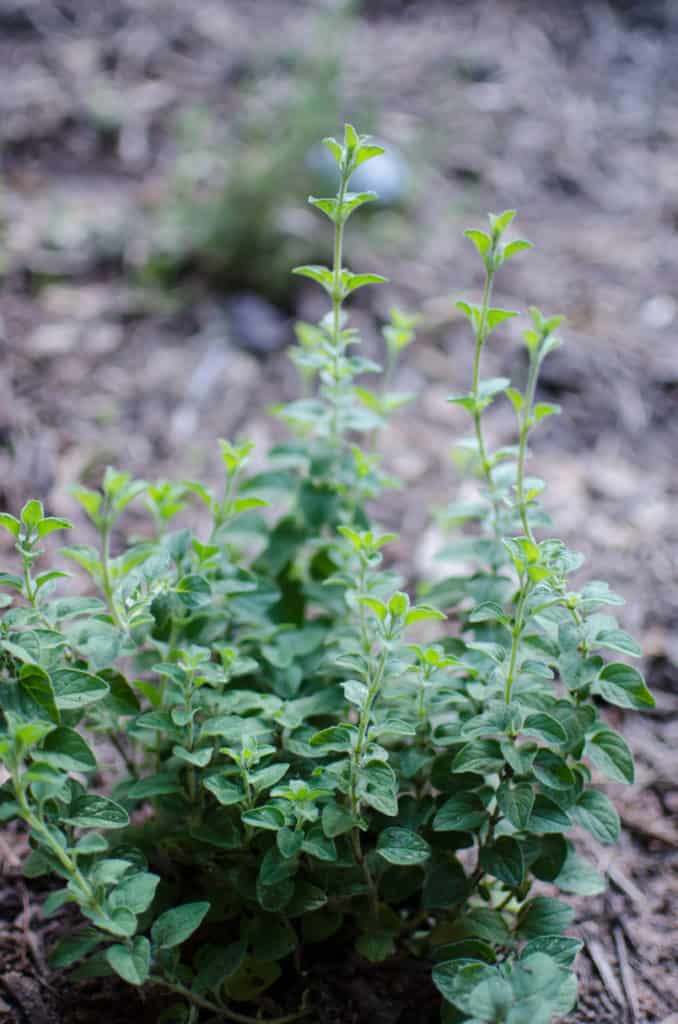
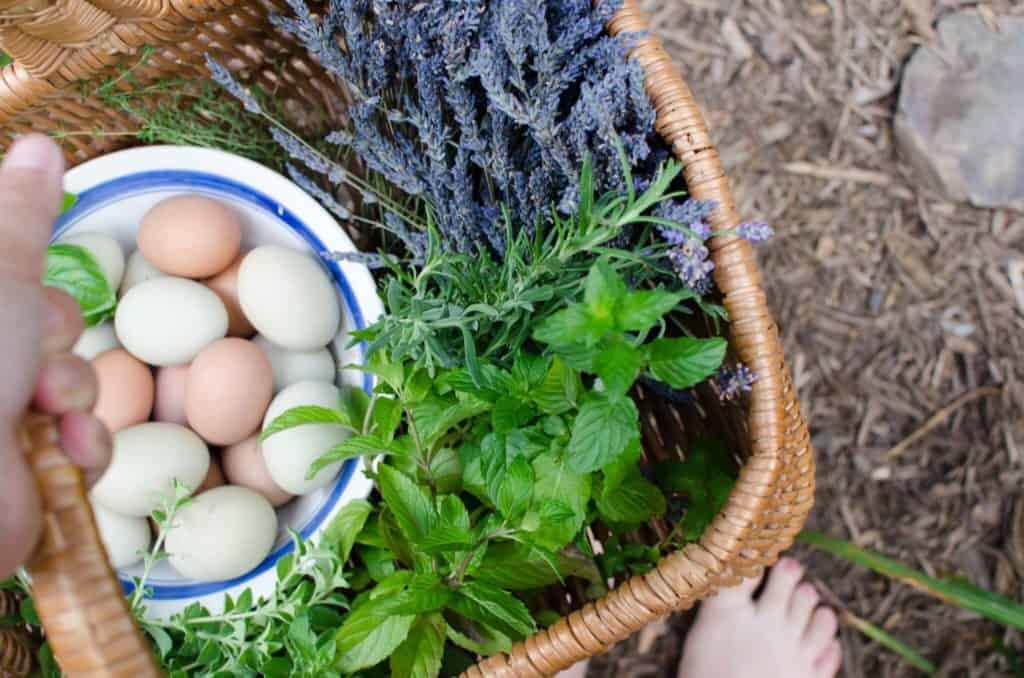
oregano for chickens

Oregano (Origanum vulgare)

Oregano for chickens is growing in popularity, not just with the backyard chicken keeper, but with commercial chicken keepers as well. In fact, large commercial meat and egg producers have switched to offering oregano and thyme in their chicken feed on a regular basis instead of chemicals and antibiotics. Oregano is a natural antibiotic, it is antibacterial, detoxifies the body, aids in respiratory health, and helps the reproductive system.

Mix in with your chicken feed daily, fresh or dried.

Find the oregano for chickens that un8I recommend by clicking here.

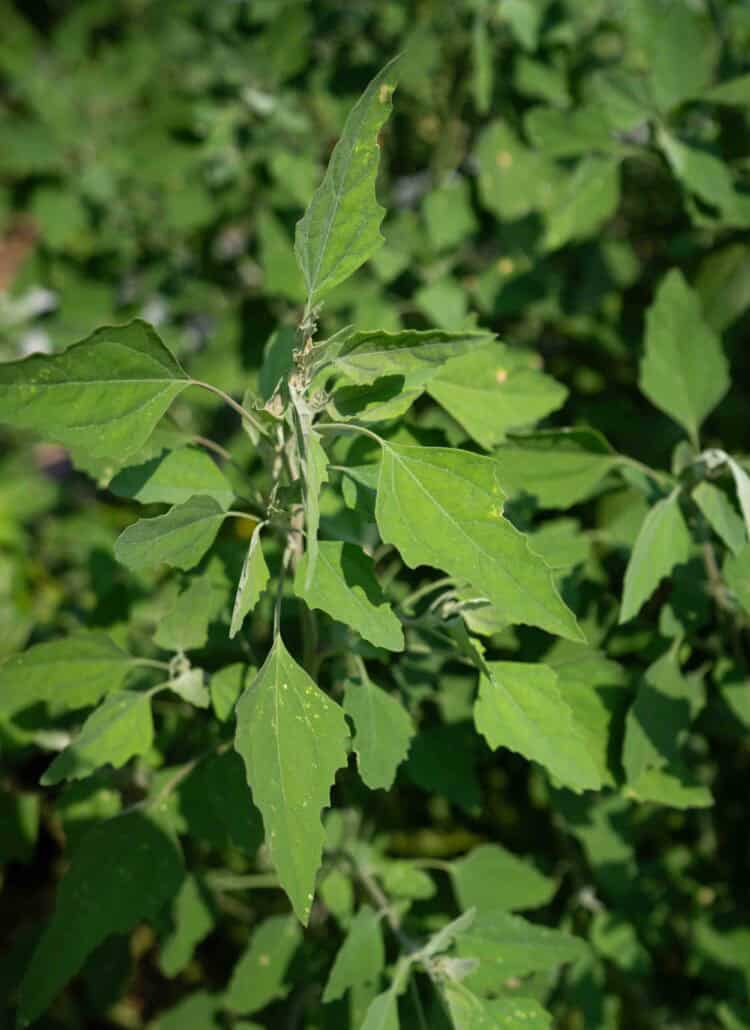
Stinging Nettle (Urtica dioica) cooked or dried

Chickens won’t typically touch this herb in its natural environment, though some flocks will. Stinging nettle does exactly as it says it does—stings. The little hairs on the outside of the leaves leave a numbing sensation for many humans and animals. However, stinging nettle is an incredible source of vitamins, nutrients, and minerals for your chickens. Try giving it to your chickens fresh first to see if they will eat it. If not, you may have to cook it down, like spinach, or dry it out first.

Stinging nettle is a natural detoxifier, antiparasitic, and aids in respiratory health. It is also a natural antibacterial. Throughout history, many chicken keepers would offer stinging nettles to their chickens, and would swear that it would keep them laying straight through the entire year. Nettle is also naturally high in iron and calcium.

When studied in nature, wild birds will eat on stinging nettle as a way to help prevent internal parasites. Chickens will absolutely do the same thing. Nettles are a great way to prevent internal parasites, and possibly treat an infestation when given in medicinal doses. Give freely throughout year—fresh, dried, or cooked—or a couple of offerings each week.

Find the stinging nettle that I recommend by clicking here.

Thyme (Thymus vulgaris)

Thyme is my favorite herb of all time. We use it with every single animal on our homestead. But especially our chickens. Thyme is a natural antiparasitic, antibacterial, aids the respiratory system, relieves infection, and is packed full of omega-3s that support brain and heart health. Thyme is also rich in vitamins A, C, and B6, as well as fiber, iron, riboflavin, manganese, and calcium. Offer daily in their feed, dried or fresh, or freely on pasture or around the chicken run.

Find the thyme that I recommend by clicking here.
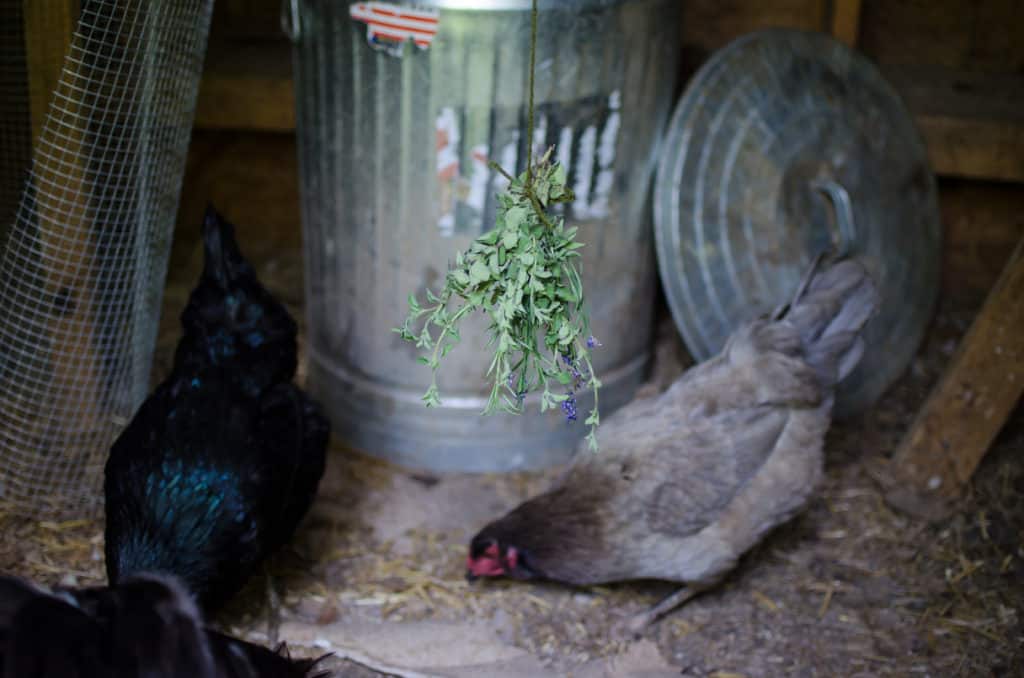
chicken coop herbs

Learning More About Herbs

Herbalism on the homestead and with your chickens is never ending. I always recommend furthering your education, creating new and amazing herbal preparations, and just having fun with it! Your chickens will certainly enjoy it as well.

When in doubt, start small and add on from there. Your flock doesn’t need “all the herbs”. Certain herbs are good for certain things, and not all herbs are created equal. This is why I challenge backyard chicken keepers and homesteaders to dive into common and uncommon herbs alike, because each herb has a unique ability to prevent and heal.

To learn more about how to use herbs, create herbal preparations, and keep your flock healthy, consider purchasing my book! You can learn all about these heritage chicken keeping skills, along with raising chickens naturally, involving your family, and even farmhouse recipes!

My Books

PIN IT FOR LATER:

By: Amy K. Fewell · In: chickens, herbs, homesteading · Tagged: chickens, herbalism, herbs

you’ll also love

15 Chicken Processing Day Mistakes That Waste Time and Meat
The Two-Breed System for Year-Round Meat Chicken Breeding
Herbal Remedies for HighBlood Pressure and Pre-Eclampsia During Pregnancy (and Postpartum)

Reader Interactions

Comments

  1. Cheryl Bishop says

    January 5, 2021 at 8:04 am

    Hi ,I was wondering can you add the herbs seed to the fodder ? Will the medical benefits be the same ? Thank you and GOD BLESS FROM CHRISTMAS VALLEY OREGON

    • amyfewell says

      January 9, 2021 at 1:32 am

      Thats actually a great idea!!

  2. Brianna says

    March 21, 2021 at 5:35 pm

    Can I grow my own fresh grown oregano and offer to them? I already keep it around to cook with.

    • amyfewell says

      March 22, 2021 at 12:39 am

      you sure can!

  3. Amber says

    September 7, 2021 at 8:36 pm

    Where is astragalus seed offered in bulk amounts?

  4. CATHY R KAMPSTRA says

    December 14, 2021 at 1:04 am

    Hi Amy
    Maybe I missed it. Do you have a specific amount of these herbs I should feed the chickens. This is my first time raising chickens.

Next Post >

How to Start Herb Seeds For Your Garden

Primary Sidebar

meet amy

meet amy
hello!

I'm Amy. I love organic food but I love cookies too I love Jesus and His grace. I believe broken people make the biggest impact in the world when they share their stories. I believe in stories, and I'm sharing mine.

Read More

Connect

Search

Ads & Sponsors

200x400

Advertise

Follow Along

@amy.fewell

This one is for the leaders in marketplace and min This one is for the leaders in marketplace and ministry…

Something I wish someone had told me earlier in leadership—

You can love people deeply and still not be available to everyone constantly. Those two things are not in conflict. Learning the difference might be the thing that saves your ministry, your business, and your sanity all at once.

The further you go in leadership, the more people will want from you. And because you genuinely care, you will feel the pull to say yes. Every time. To everyone. They are good things, but they aren’t always your assignment.

And it will slowly hollow you out if you don’t realize this. 

There is a version of being helpful that is actually a form of neglecting your own assignment. When you are so deep in everyone else’s lane that your own lane goes untended—that is not generosity. That is a boundary problem dressed up as a virtue.

You need leadership friends. But a leadership friendship is not a leadership merger. You can sharpen each other without steering each other. You cannot want it more than they want it. You cannot build it for them. If you try, you will burn out doing someone else’s work while your own sits waiting.

And there are people who will—consciously or not—try to make you their permanent wing man. Until the line between your assignment and theirs disappears. You are allowed to put that down.

Protecting your time is not selfishness. It is stewardship.

Not everyone who wants your time deserves your time. And not everyone who needs a leader needs you to be theirs.

Protect the assignment. Guard the gate. Lead well from your own house first.

Overflow from your cup into your home. Create circles just like Jesus did—the Father, the three, the 12, the rest. 🤍
There are days when I don’t feel like any of it is There are days when I don’t feel like any of it is working. Days when the animals get out and the kitchen is a wreck and a child is crying and an email goes unanswered and dinner is burned and I sit down at the end of it all and think—what am I even doing? Is any of this adding up to anything?

I see you, girl. We are wives who are also visionaries. Mothers who are also builders. Homemakers who are also entrepreneurs. We hold the baby on the hip, the business in the mind, the home in the hands, the marriage in the heart. And we do it mostly without enough sleep.

But the enemy knows that if he can get you to quit, he wins on every front at once.

So he whispers that you’re failing as a mother because you’re building something. That you’re neglecting your business because you’re tending your home. That you’re too much and not enough, simultaneously, always. He is strategic and he is a liar, and I need you to hear that today with everything in you.

Proverbs 31 was a portrait of a woman who kept going. She rose while it was still dark. She worked with willing hands. She considered a field and bought it. She opened her arms to the poor and her mouth with wisdom. But she was not perfect, she was faithful. And she knew when to rest.

That is your inheritance. That is your calling. 

God did not give you a vision for your home, your family, and your work so that you would abandon it the moment it got heavy. He gave it to you because He knew you could carry it—not in your own strength, but in His. The weight you feel right now is not a sign that you’re failing. It is a sign that you are doing something that matters.

Don’t you dare quit.

Not on your marriage when it gets hard. Not on your children when you feel invisible. Not on your home when it feels like chaos instead of sanctuary. Not on the business and mission God put in your bones. 

Every faithful, unglamorous, unremarkable day you show up is a seed going into the ground. And seeds that go into the ground do not stay there forever.

Your harvest is coming.

Keep your hands to the plow, friend. Heaven is watching, and it is not unimpressed.
If you have a sourdough starter sitting on your co If you have a sourdough starter sitting on your counter, chances are you also have one thing piling up faster than you'd like—sourdough discard.

For many homesteaders, throwing discard away feels wasteful. After all, we work hard to cultivate our starters and steward what we have. That's exactly why this Easy Sourdough Pizza Crust Recipe has become a staple in our kitchen.

And here's the best part—it doesn't require an all-day fermentation process.

This homemade sourdough pizza crust comes together quickly, uses simple pantry ingredients, and transforms ordinary pizza night into something that tastes like it came from a wood-fired bakery.

The crust is crispy on the outside, soft and chewy on the inside, and carries that subtle sourdough flavor that makes every bite better than store-bought dough. Whether you're feeding a large family, hosting friends, or simply looking for another practical way to use your sourdough starter, this recipe delivers every single time.

One of the things I love most about homestead cooking is learning how to stretch ingredients further. Sourdough isn't just for bread. It's for pancakes, biscuits, crackers, pizza crust, and countless other recipes that help reduce waste while creating nourishing food from scratch.

In a world that constantly pushes convenience, there's something deeply satisfying about gathering around a homemade meal made with ingredients you've cared for yourself. Pizza night becomes more than dinner—it becomes a tradition.

If you've been searching for:
✔️ An easy sourdough pizza crust recipe
✔️ A practical sourdough discard recipe
✔️ Homemade pizza dough without commercial yeast
✔️ Simple homestead recipes for busy families
✔️ Ways to use extra sourdough starter

Then you'll want to save this recipe for later.

Trust me—once you make pizza this way, it's hard to go back.

🍕 Comment PIZZA and I'll send the recipe directly to your inbox!

Have you ever made pizza crust with sourdough starter? Tell me your favorite toppings below!
Leadership has never been about a title. Not in th Leadership has never been about a title. Not in the home, church, or community.

Titles may tell people where you sit, but they do not reveal whether you are willing to stand.

Real leadership is found in the quiet places—in the daily decisions to remain steadfast when no one is applauding, to keep showing up when others walk away, and to carry responsibility even when it feels heavy. Jesus and Paul both show that as a leader, you will eventually feel the humanness of your colleagues when your friends leave you. The key—don’t get upset—wait. A few of them will eventually come back around after they rest.

The greatest leaders I have known were not the loudest voices in the room. They were the people who endured. The people who stayed. The people who quietly bore burdens, served others, kept their word, and remained faithful through seasons that would have caused many to quit. Learn to rest, not quit.

In a culture obsessed with platforms, positions, and recognition, we’ve forgotten that leadership is first proven by endurance.

Can you be counted on when things get difficult?

Can you remain faithful when there is no reward?

Can you continue building when the results aren’t immediate?

Can you keep loving, serving, and sacrificing when no one seems to notice?

Can you set aside your pride and push through the demons that show up to mock and delay you?

That is leadership.

Leadership is not about being first. It isn’t about knowing more than everyone else. It’s not about your experiences or your opinion.

It is about being faithful—to the home, to the mission, to the King.

Not about being seen, but about remaining steadfast.

Because long after titles fade, positions change, and names are forgotten, steadfastness leaves a legacy that generations can build upon.

The Kingdom of God has always been advanced by ordinary people who simply refused to quit.
One of the greatest losses of the modern age isn’t One of the greatest losses of the modern age isn’t that we’ve forgotten how to grow food.

It’s that we’ve forgotten how to pass wisdom from one generation to the next.

For thousands of years, children learned by watching. They stood beside their fathers in the field and their mothers in the kitchen. They listened to stories around the table instead of scrolling through strangers’ opinions. They inherited not just possessions, but perspective. They gleaned wisdom, because you cannot buy wisdom.

Today, we outsource almost everything.

We outsource our food, health, and education.
We outsource our elderly.
We outsource discipleship. 
We even outsource our sense of purpose.

Then we wonder why so many people feel disconnected from the land, from one another, and from God’s design for community.

The answer isn’t merely to move to the country or buy a few chickens. It’s to become the kind of person worth learning from.

Live in such a way that your grandchildren will know how to pray because they heard you pray. They’ll know how to steward because they watched you steward. They’ll know how to preserve food, mend a fence, comfort a neighbor, and open their Bible because those things were ordinary in your home.

The most valuable inheritance you can leave isn’t acreage or a savings account.

It’s a life that quietly proved faithfulness is still possible in a world that rewards convenience.

Footer

Learn More

Chickens
Homemaking
Herbs
Recipes
Devotionals

Info

About
Contact
Privacy Policy
Shop

stay in the know

Copyright © 2026 · Theme by 17th Avenue