
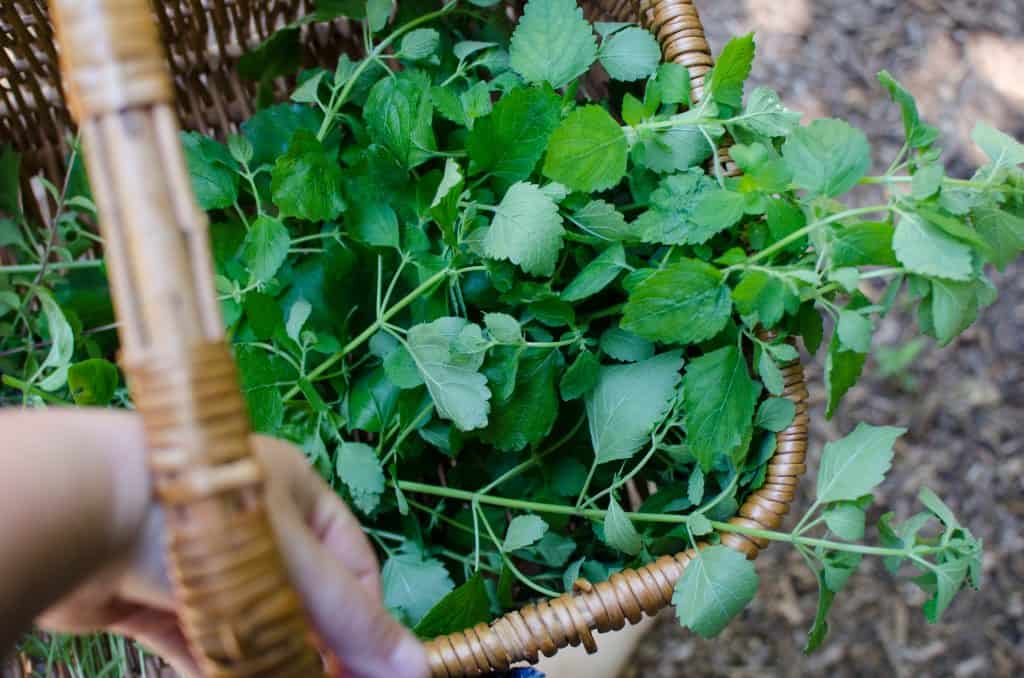
When you think about herb gardening, you probably imagine a large spot of healthy soil in a space with abundant sunshine. Unfortunately, many gardeners don’t have that. But did you know you can grow herbs in shade? There are plenty of herbs that like shade or partial sunlight. Shade herbs are more plentiful than you may realize, so let’s go over some of these shade loving herbs so that you can grow a shade garden!
Herbs are my love language. It’s why I wrote an herb book, put together a virus course, and more. So when I started growing herbs, only to realize most of my gardening spots on beginning property was all shaded, I was bummed, to say the least. I learned a few things though, and mainly, I learned to master that shade and grow some herbs!
Before we get started on the herbs that grow in shade, let’s talk a bit about the best way to grow them. It’s mostly the same as growing in a regular garden setting, but there are a few things that are different.
Tips for Growing Shade Herbs
1. Pinch back leaves often
Herbs that grow in the shade will grow taller as they reach for the sun. Harvest often and pinch back the leaves to promote a more compact “bushy” growth, instead of encouraging legginess.
2. Watch out for pests
Insects that might not typically bother herbs are more likely to be attracted to them when they aren’t in the sunlight for most of the day. Pay attention for pest eggs on the leaves of these herbs.
3. Fertilize less than normal
If you fertilize your shade herbs too much, they will become even taller and more leggy.
14 Herbs that Grow in the Shade
Many of these herbs are not only wonderful for cooking, but they also have amazing medicinal properties! Your shade herb garden can easily double as a medicinal herb garden if you choose the right herbs.
1. Chervil (French Parsley)
Chervil is an easy-to-grow herb that thrives in partial to full shade. It will actually bolt rather quickly if it has too much sun.
Tips for growing Chervil: Add mulch around the base of your chervil to retain moisture. This plant tastes a little bit like licorice when eaten fresh. If you try to dry this herb, it will lose its flavor, so try not to plant more than you can use in a fresh state.
How to use Chervil: Use Chervil to add flavor to egg dishes–like omelettes and scrambled eggs–or use it just like parsley in soups, salads, and with chicken and fish dishes.
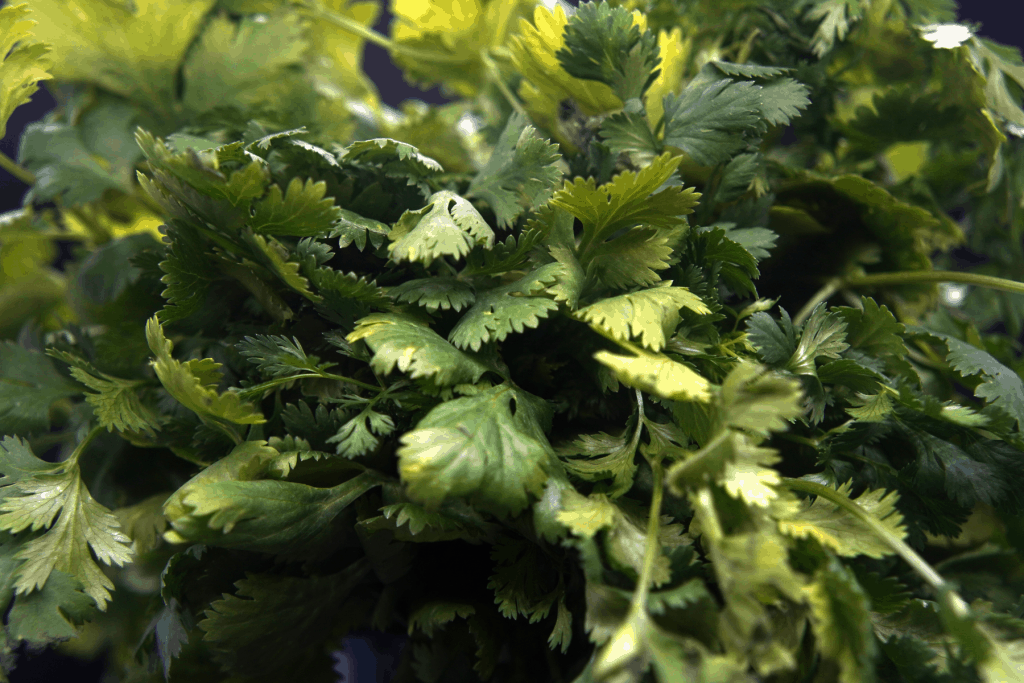
2. Cilantro/Coriander
Coriandrum sativum is the botanical name of this plant. Cilantro and coriander often get confused. This is because they are different parts of the same plant. Cilantro is the leafy part of the plant, and coriander is the seeds that are produced after the herb goes to flower. Either way, his plant grows well in light shade.
Medicinal Actions: Coriander is carminative and aromatic. It acts as a stomachic, spasmolytic, and carminative due to its essential oil content. It is reported to have strong lipolytic activity.
Tips for growing Cilantro/Coriander: Heat causes cilantro to bolt quickly. Plant in the shade to enjoy the cilantro, and then when it does bolt, you can enjoy coriander as well. The best of both worlds!
How to use cilantro: Cilantro is most often used in Mexican and Asian dishes, like stir fry, pico de gallo, and salsa.
How to use coriander seeds: Roast and grind coriander seeds to make soups, stews, and curries. Use whole coriander seeds in meat rubs and in pickling recipes. You can even toast coriander seeds and eat them as a snack on their own.
3. Lemon Balm (Melissa officinalis)
Lemon balm is another easy-to-grow-herb that will grow in partial shade. It not only smells amazing, it’s also an incredible herb for teas, and has some wonderful medicinal benefits.
Medicinal Actions: aids in digestion, antioxidant, calms nervous system, aids in depression, antiviral, antibacterial, anti-fungal, enhances memory, stimulates the thyroid, promotes fertility, carminative
Tip for growing Lemon Balm: Cut down the plant before it goes to seed, or plant this herb in a container, as it will self-sow very generously. If you want tons of lemon balm, ignore this tip.
How to use lemon balm: Use Lemon Balm to make tea with the fresh or dried leaves (drying them will add a little more flavor). Make a fresh salad with lemon balm leaves tossed in. It’s also a great addition to fish dishes. Lemon Balm is known to reduce anxiety, improve appetite, promote sleep, calm nerves, and provide relief from indigestion.

4. Chives
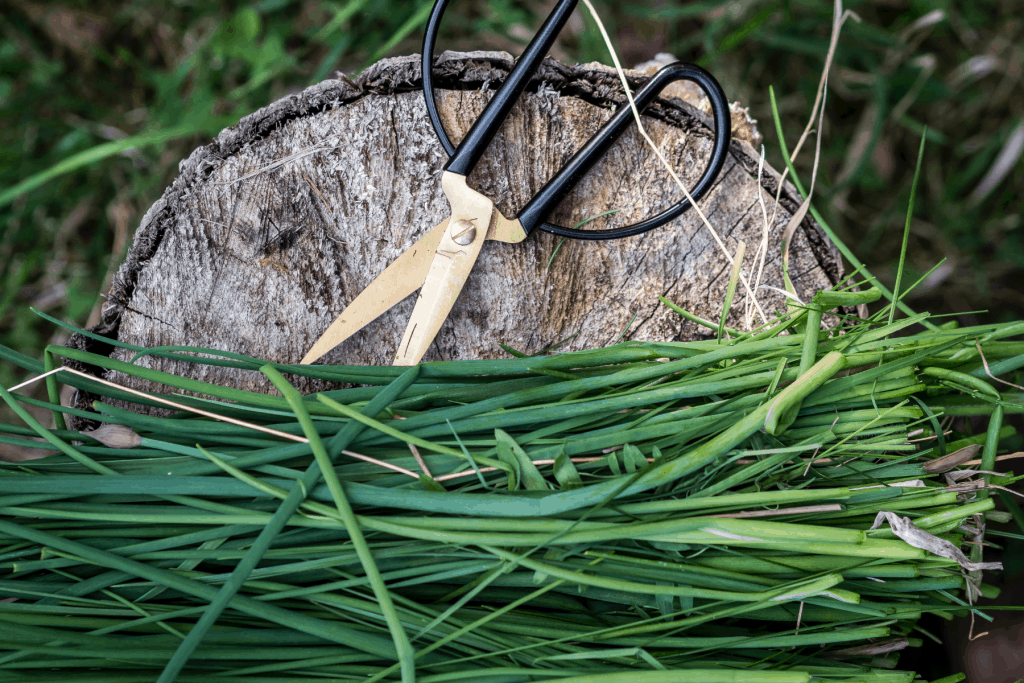
Chives are a hardy herb that grow well in partial shade. Most often they are known for their subtle onion taste. They grow quickly and are a great springtime herb.
Tips for growing Chives: Start your chives from seed indoors 8-12 weeks before you want to plant. If you don’t want your chives to self-seed throughout your garden, harvest before the seeds drop, or plant in a container.
How to use Chives: Toss the purple chive flowers onto salads for a pop of color. Use chopped fresh chives mixed in sour cream and cream cheese. Chives are also a great addition to potato and egg dishes.
5. Goldenrod
Goldenrod and ragweed are often confused, but they are far from the same. Ragweed wreaks havoc on allergies, but goldenrod typically doesn’t cause allergic reactions at all.
Most species of goldenrod prefer full sun, but the woodland species (Bluestem Goldenrod, Sweet Goldenrod, and ZigZag Goldenrod) will grow well in partial shade. You can learn all about goldenrod here.
Medicinal Actions: anti-inflammatory, anticatarrhal, antimicrobial, astringent, carminative, diuretic, diaphoretic, and a vulenary
Tip for growing Goldenrod: Goldenrod grows wild in many areas, so you may be able to find a harvest without growing on your own.
How to use Goldenrod: Goldenrod, though not used often in the culinary world, actually has multiple medicinal uses. It acts as an anti-inflammatory, anticatarrhal, antimicrobial, astringent, carminative, diuretic, diaphoretic, and a vulenary. Use goldenrod to make tinctures, infused oils, and teas.
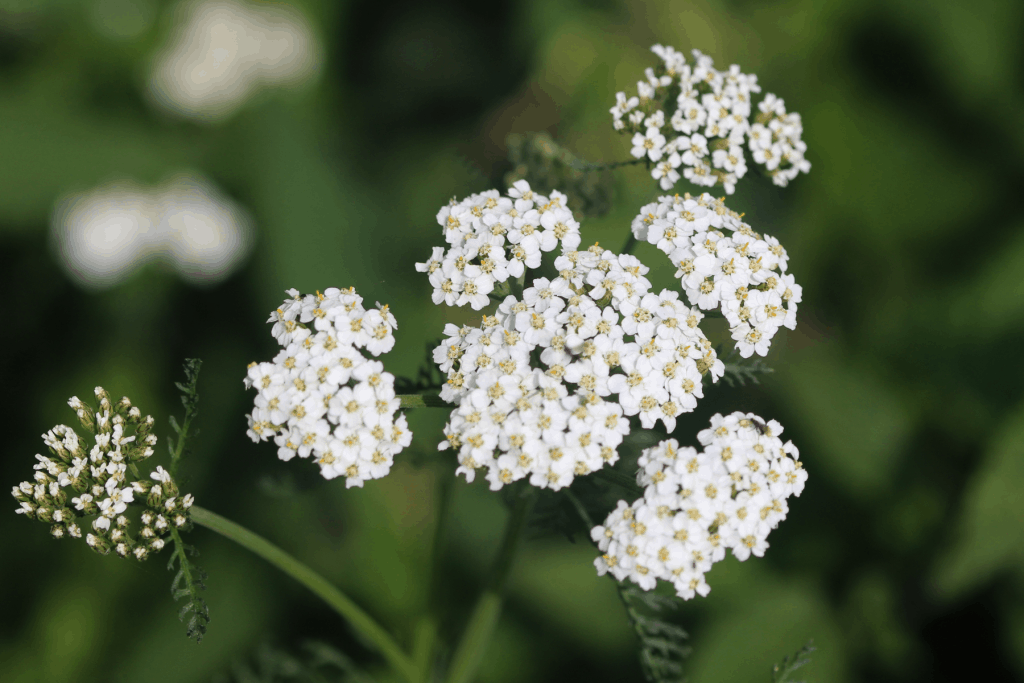
6. Yarrow (Achillea millefolium)
Yarrow loves full sun and needs to be started in full sun, but it can be grown in partial shade after transplanting. The stems might become a little leggy, which could cause the flowers to flop over a bit, but it will grow and be productive in your partial shade garden.
Medicinal Actions: tonic, anti-inflammatory, anti-spasmodic, diaphoretic, diuretic, emmenagogic agent, hepatoprotective, antirheumatic, anti-catarrhal.
Tip for growing Yarrow: Make sure that yarrow is planted in well-drained soil. It likes to grow in fields, along roadsides, and along sandy waterbeds.
How to use Yarrow: Yarrow can be used in cheese making to help curdle cheese and add a pop of flavor. Use the leaves and flowers in salads, stews, and soups. Don’t add too much, or it will overpower the dish.
Yarrow has many medicinal uses as well. It can be used as wound treatment, digestive support, an anti-inflammatory, and so much more!
7. Dill
Dill doesn’t love full shade, but it will tolerate light shade. When dill is grown in the shade, it won’t produce as many flowers as it would in the sun, but dill isn’t typically used for its flower, anyway.
Dill grown as a shade herb also won’t grow as tall as it would in full sun.
Tip for growing Dill: If you want dill to grow in the same area next year, let a few plants go to seed and they will replant themselves.
How to use Dill: Use dill seeds to flavor pickles. Use the leaves of the dill plant to add flavor to homemade tartar sauce. Use the dill flowers to garnish salads.
8. Parsley
Parsley is an herb that really likes the shade. It actually needs shade in hot climates, or it will not grow well.
Tip for growing Parsley: Trim back the leaves often to keep the parsley from growing too leggy and/or sprawling.
How to use Parsley: Parsley can be used fresh as a garnish on almost any dish. You can dry your own parsley and use it in a number of recipes to add flavor. It can also be used to make pesto.
9. Bay Laurel
The bay laurel plant can grow in full sun or in partial shade. Just like parsley, bay will not grow as tall in the shade as it will in the sun, but it will still produce plenty of leaves for harvesting.
Tip for growing Bay: Move bay indoors when the outdoor evening temperature drops below 50 degrees F.
How to use Bay: Dry bay leaves and use them in various dishes. Be sure to remove the leaf before serving your dish because they are very tough after being dried.
10. Mint
While mint grows well in full sun, most varieties grow just fine in partial shade as well. There are a lot of mints in the mint family—find that kind that you enjoy the most! Peppermint and spearmint are the most popular.
Medicinal actions: carminative, spasmolytic, choleretic, antiseptic, anti inflammatory.
Tip for growing Mint: Mint will quickly take over your garden if you don’t stop it from going to seed, or grow it in its own container.
How to use Mint: Use mint to flavor teas and cocktails. It’s also an incredible anti-inflammatory herb as a hot tea with chamomile flowers.
11. Tarragon
Tarragon is a great perennial herb to grow in the shade!
Tip for growing Tarragon: Harvest Tarragon grown in the shade regularly so it stays compact instead of leggy.
How to use Tarragon: Use Tarragon to flavor fish and poultry dishes. It can also be used to infuse oils. You can dry tarragon before using it, but it retains the most flavor when used fresh.
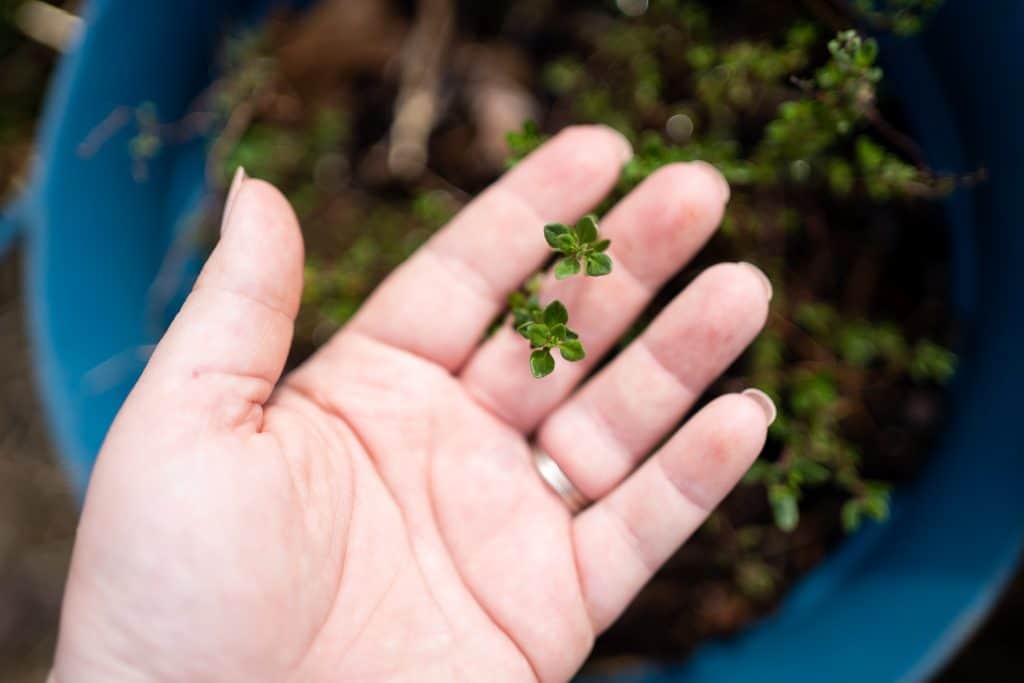
12. Thyme (Thymus vulgaris)
Thyme won’t grow as prolifically in the shade as it will in full sun, but it will tolerate partial shade.
Medicinal Actions: carminative, antibiotic, anthelmintic, astringent, expectorant, antimicrobial, anti inflammatory, and antitussive
Tip for growing Thyme: Make sure that the soil that your thyme is planted in doesn’t hold too much water because it prefers a well-drained soil.
How to use Thyme: Use thyme fresh or dried with beans, tomatoes, and meat dishes.
Thyme also has multiple medicinal uses. It can relieve respiratory conditions, parasite loads, fungal infections, and the list goes on!
13. Rosemary (Salvia rosmarinus)
Rosemary is an herb that grows best in full sun, but will tolerate light shade.
Medicinal Actions: tonic, stimulant, carminative
Tip for growing Rosemary: Don’t overwater rosemary as it prefers a well-drained soil.
How to use Rosemary: Use Rosemary in poultry, game, and fish dishes as well as soups & stews.
14. Garlic Chives
Garlic chives are similar to the chives mentioned earlier in this list, but they taste like garlic whereas regular chives have an onion flavor. Garlic chives grow the best in partial shade.
Tip for growing Garlic Chives: Cut garlic chives often to encourage the production of new leaves.
How to use Garlic Chives: Use Garlic Chives to season pork, poultry, and fish. Use them as a garnish for various dishes or use them chopped up in soups and salads.
Now that you know a little more about these herbs that grow in the shade, you can get started on your own shade garden! You are ready to plant, water, harvest, and preserve your own herbs! Take some time to familiarize yourself with these herbs and all of their incredible benefits. I’m sure you’ll fall in love with every single one of them.
Other Posts You May Enjoy:
- Medicinal Uses of Yarrow
- Yellow Rocket Cress | Wild Medicinal and Herbal
- 6 Medicinal Herbs to Forage in Spring
- Home Remedies for Seasonal Allergies
- Medicinal Uses of Goldenrod & Goldenrod Tincture
- Medicinal Uses of Mullein | Grow, Harvest, Use
- How to Start Herb Seeds for Your Garden
- White Clover & Mint Tea


Thank you so much! I saw some mullein in my neighbor’s yard and studied it and she was going to kill it so she let me dig it up and I have planted it to start an herb garden. I found you on YouTube and came to your website.