
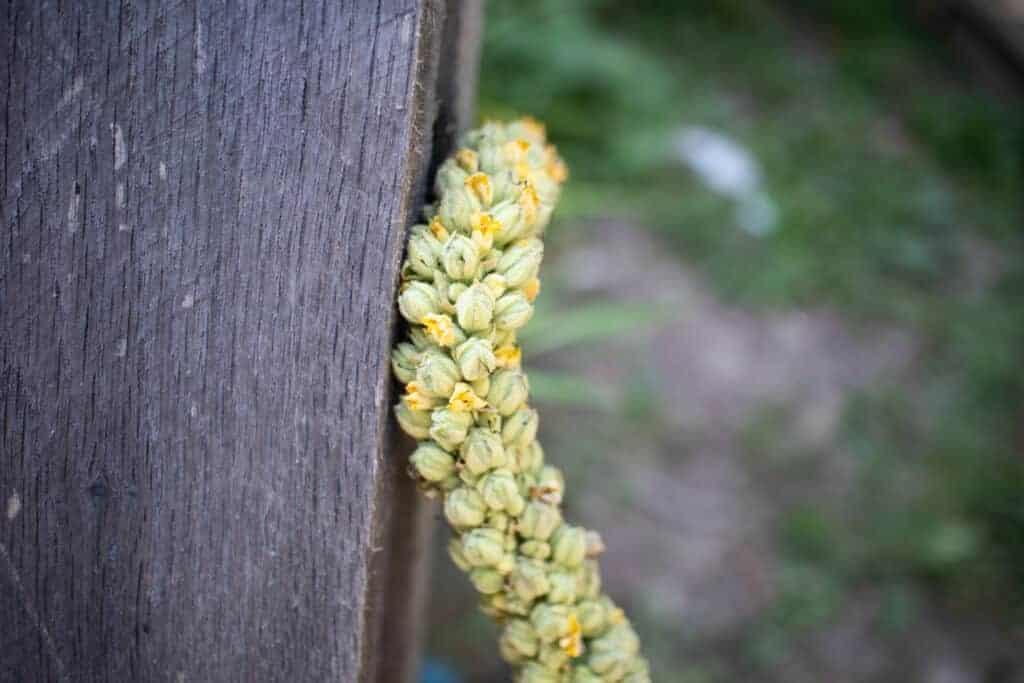
Mullein is one of the most commonly noticeable wild foraged herbs. The medicinal uses of mullein (Verbascum thapsus) are vast when it comes to respiratory and lung health. It even has antiviral and antibacterial properties. There are over 200 species of mullein, but common mullein is most often used for smoking mullein, mullein tea, and mullein tinctures.
Common Names: common mullein, Candlewick Plant, Torches, Our Lady’s Flannel, Shepherd’s Staff, lady foxglove, Beggar’s Stalk (there are many more throughout history).
Parts Used: leaf, flower, root
In this article, we’ll go over the medicinal uses of mullein, how to smoke mullein (with an herbal smoking mullein recipe), how to use mullein for ear aches, and more. We will also talk about the history of the plant and how it’s proving great promise through research in the fight against Tuberculosis and other mycobacterial infections.
KEY TAKEAWAYS
- Mullein is a biennial herb with antiviral, antibacterial, and anti-inflammatory properties that has been used across cultures for centuries to treat respiratory ailments including tuberculosis, pneumonia, asthma, and bronchitis.
- A late 19th-century pharmaceutical trial in Dublin demonstrated that 6 out of 7 tuberculosis cases were successfully treated using mullein through smoking or tea consumption.
- Mullein grows naturally in sandy or rocky soil with full sun exposure and can be harvested sustainably by cutting leaves while leaving the root intact for regrowth.
- Smoking mullein as an herbal blend provides relief for respiratory ailments and is considered safe for short-term use during illness, though long-term daily smoking is not recommended.
- Mullein functions as both an expectorant and demulcent, helping to release mucus from the respiratory tract while simultaneously moisturizing and soothing inflamed mucus membranes.
The History of Mullein
Mullein has been cultivated in large scales for centuries. It is one of the easiest wild herbs to grow, as it grows in soil that isn’t well fertilized. In Ireland, mullein was cultivated extensively, and it was even sold in the capital’s best chemist shops (and still is). It’s still largely used today, especially with growing concerns of antibiotic resistant bacterias.
In the late 19th-century, a pharmaceutical trial showed that the herb was beneficial in cases of tuberculosis. Dr. Quinlan of St. Vincent’s hospital in Dublin, Ireland noted that it was a trusted popular remedy in Ireland for tuberculosis. The study stated that 6 out of 7 cases were successful in the treatment of tuberculosis by smoking mullein or drinking mullein tea.
Mullein has been used by cultures across the world for centuries, including native Americans, Europeans, Israelis, and Asians. It can be found even throughout desert regions like Northern Africa, Egypt, Ethiopia, and India.
In the Middle Ages, mullein was used for skin and lung health in both cattle and humans. It is an herb that truly stretches across all generations and cultures.
The medicinal uses of mullein are far and wide, with extensive uses for tuberculosis and respiratory ailments affecting the lungs. Cultures have also turned to smoking mullein for cough and asthma. Using the flower stalks as torches, and as a medicinal ear ache cure when made into an infused oil, were also not uncommon.
How to Grow Mullein
Growing mullein is fairly easy. Simply plant the mullein seeds in the late fall in sandy or rocky soil. Cover them with a thin layer of mulch or soil without sowing them into the ground too far. The seeds will germinate when it’s time for them to grow in the spring. Mullein likes to be in full sun, so make sure you’re planting accordingly.
If you didn’t sow mullein seeds in the fall, you can start mullein seeds indoors to transplant after the last frost of the season.
How to Harvest & Wild Forage for Mullein
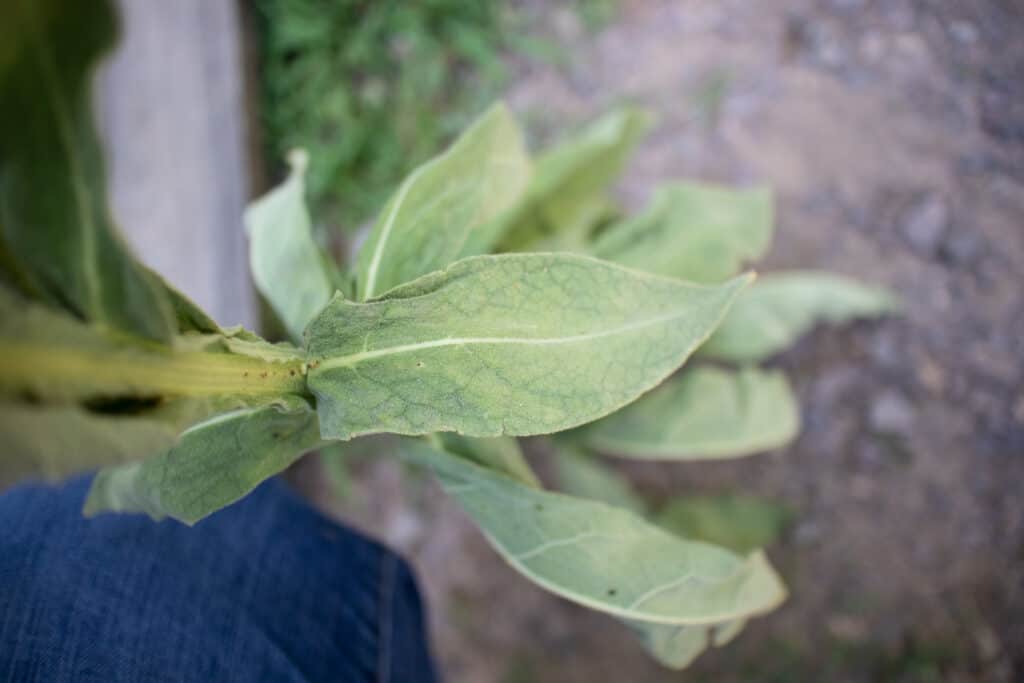
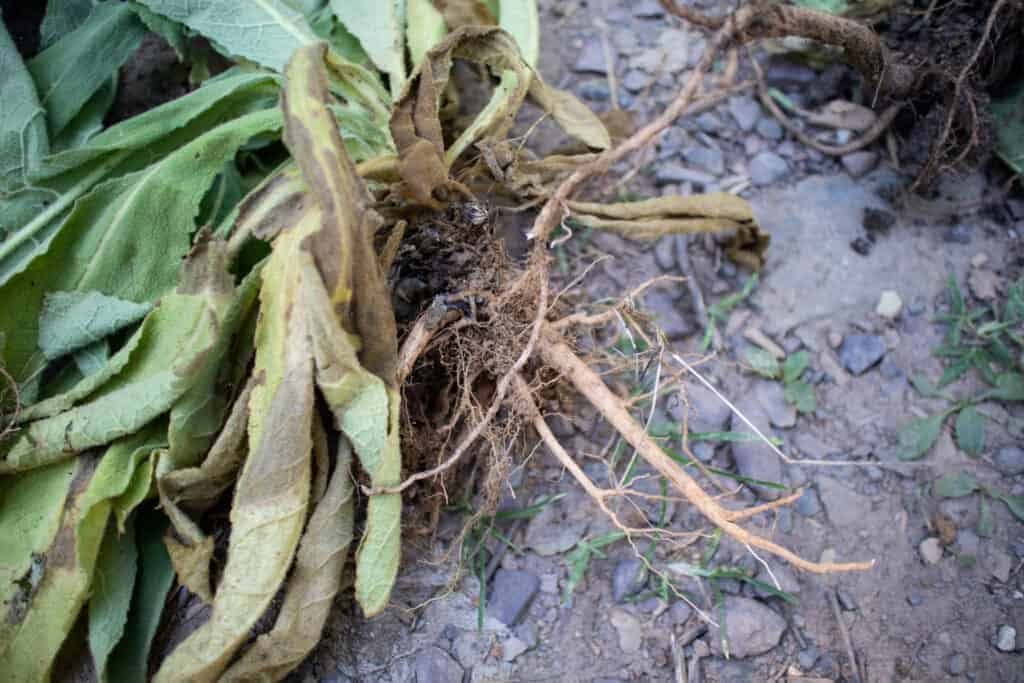
If you prefer to wild forage for mullein, you’ll find it growing in most pastures, along roadsides, in prairies, and in gullies where there is full sun. The most sustainable way to forage for and harvest mullein is to find the fuzzy leaves in the spring time and harvest them before the flower stalk starts to shoot up when the weather gets very warm.
While you can still harvest the leaves from the stalk once it matures, it’s best to use tender, young leaves. However, I still harvest all of the leaves, even off of mature plants.
To sustainably wild forage and harvest, you’ll need to cut the leaves and tops of the mullein plant off and leave the root so that it comes back each year. Mullein is a biennial plant, which means it grows small the first year without a large flower stalk. The second year and subsequent years, it will throw up a large flower stalk. It may not flower every single year, but every other year.
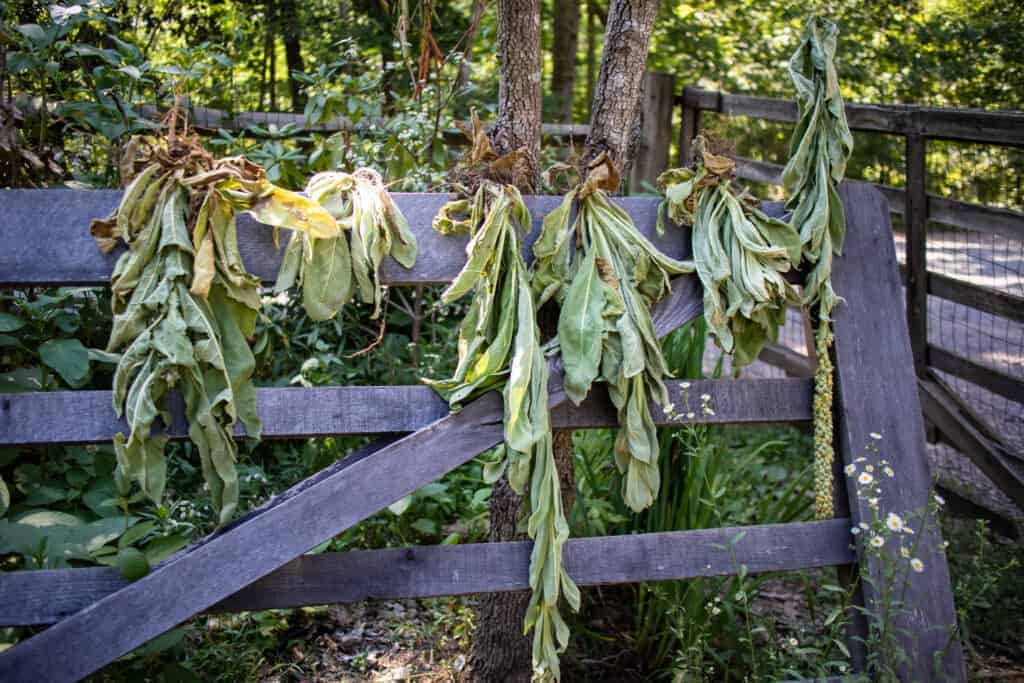
If you choose to use the root of mullein, simply replant seeds as necessary. If harvesting mullein root, I just pull the entire plant out of the ground when its mature and hang to dry, much like you would tobacco plants. This way I’m harvesting every medicinal part of the plant at one time. In fact, Native Americans used to refer to mullein as as a tobacco alternative.
Once harvested, allow the mullein to dry out by hanging the entire plant in a dry place, or near a window. If you’re only harvesting the leaves, you can place them on a drying rack or dehydrate them. Wash the mullein root very well, then allow the root to dry off and cure for about a week.
Store the herb in an airtight container for up to 18-months.
Medicinal Uses of Mullein
More studies are needed to scientifically prove some of the things mullein has been used for in folk medicine for centuries. But medical professionals and herbalists across the globe can’t deny its amazing medicinal properties. While I often prefer to share only scientific evidence based herbalism, there are some herbs that simply haven’t been studied enough to share about.
However, some herbs have been used so extensively, and written about so vastly, that they are worth sharing. Mullein is one of those herbs that I feel comfortable sharing.
Let’s go over the medicinal uses of mullein.
Mullein has the following medicinal uses:
- antibacterial
(works against both gram-positive and gram-negative bacteria) - antiviral
- anti-inflammatory
- anti-influenza
- antioxidant
- anti-carcinogenic
(which can help inhibit the development of cancer) - helps treat pneumonia
- helps treat staph infections
- helps treat e. coli
- expectorant
(helps release the body of mucus in the respiratory tract) - relieves asthma
- treats gout (when used as a poultice)
- antispasmodic (meaning, it suppresses muscle spasms)
- treats respiratory catarrh (gets rid of mucus build up in the lungs)
- emollient
(natural moisturizer, adds moisture externally the same way a demulcent does internally) - demulcent
(relieves inflammation in mucus membranes by creating a film and moisturizing the respiratory tract) - genitourinary tract health (urinary tract issues)
- helps treat herpes simplex virus
- helps treat fowl plague virus
- eases sore throat
- eases migraines
- helps with gastrointestinal issues
- treats otitis media
(inner ear inflammatory disease or ear infection)
Mullein Action by Respiratory Condition
| Condition | Primary Action | Best Form |
| Dry Cough | Demulcent/Moisturizing | Hot tea |
| Wet Cough | Expectorant | Smoking blend |
| Asthma | Antispasmodic | Tincture or smoke |
| Pneumonia | Antibacterial | Strong tea or tincture |
| Bronchitis | Anti-inflammatory | Tea + tincture combo |
Mullein’s Forgotten Connection to Mycobacterial Illnesses
When most people think about mullein (Verbascum thapsus), they think of a simple respiratory herb—a plant used for coughs, congestion, bronchial irritation, and seasonal respiratory support. But one of the most fascinating aspects of mullein’s history is its long-standing association with more serious lung ailments, including tuberculosis.
For centuries, herbalists turned to mullein for chronic respiratory conditions that modern medicine would later identify as mycobacterial diseases. While modern research is still exploring exactly how mullein interacts with these organisms, scientists have identified several compounds within the plant that may help explain its historical reputation.
The Mycobacterial Connection
Mullein contains a variety of beneficial plant compounds, including saponins, flavonoids, iridoids, and phenylethanoid glycosides such as verbascoside (also called acteoside). Researchers have found that verbascoside possesses antimicrobial, anti-inflammatory, and immunomodulatory properties, making it a particularly interesting constituent for respiratory health.
Mycobacteria are a unique family of bacteria that includes Mycobacterium tuberculosis (the organism responsible for tuberculosis), as well as a growing group of organisms known as non-tuberculous mycobacteria (NTM). These environmental organisms are commonly found in soil, water systems, and even household plumbing. In recent years, NTM infections have become increasingly recognized as a significant public health concern, particularly among individuals with chronic lung disease or compromised immunity.
Historically, mullein was frequently included in traditional herbal formulas for persistent coughs, lung weakness, and wasting illnesses. While researchers have not yet conclusively demonstrated that mullein directly eradicates mycobacterial infections in humans, its traditional use and emerging research suggest that it may provide valuable respiratory support alongside appropriate medical care.
Why This Matters Today
Modern medicine has made tremendous advances in treating bacterial infections, yet mycobacterial diseases remain notoriously difficult to manage. Many NTM infections require lengthy treatment protocols involving multiple antibiotics over many months. These organisms are often protected by complex cell walls and biofilms that make treatment challenging.
This is where herbs such as mullein continue to attract scientific interest. Rather than acting solely as direct antimicrobial agents, many medicinal plants appear to support the body’s inflammatory response, respiratory tissue health, mucus clearance, and immune function. These supportive actions may be particularly valuable for individuals dealing with long-term respiratory challenges.
Mullein as a Supportive Herb
One of mullein’s greatest strengths is its ability to support the respiratory tract on multiple levels:
- The saponins in mullein may help loosen and mobilize mucus.
- Its soothing mucilage can calm irritated respiratory tissues.
- Verbascoside and other phytochemicals demonstrate antimicrobial and anti-inflammatory activity in laboratory studies.
- Traditional herbalists have long valued mullein for helping maintain healthy lung function during recovery from respiratory illness.
While mullein should never be viewed as a replacement for medical treatment in serious infections such as tuberculosis or diagnosed NTM disease, it may serve as a supportive ally within a comprehensive respiratory wellness protocol under the guidance of a qualified healthcare professional.
Traditional Herbal Combinations
Historically, mullein was rarely used alone. Herbalists often paired it with other respiratory herbs such as:
- Thyme (Thymus vulgaris)
- Elecampane (Inula helenium)
- Plantain (Plantago spp.)
- Horehound (Marrubium vulgare)
These herbs were commonly combined into teas, tinctures, syrups, and oxymels intended to support lung health, mucus clearance, and respiratory resilience.
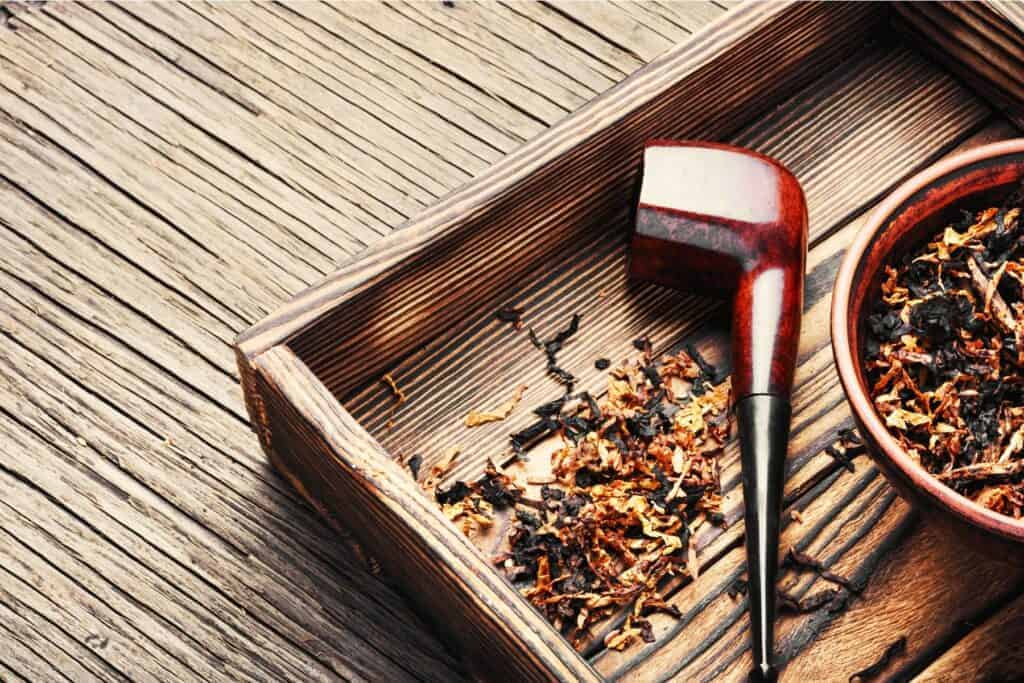
How to Smoke Mullein
As you can see from the lengthy list of medicinal uses for mullein above, mullein is most well known for its antibacterial properties. Many of the issues listed above are due to bacteria. Mullein is the herb you should keep on hand at all times, especially for bacterial issues that could arise.
Other than bacteria, mullein is most well known for its ability to heal the respiratory system. Through every single culture and demographic, this has always been what is is most used for.
What many people don’t realize is that smoking mullein for respiratory ailments is extremely easy and safe. While herbalists don’t recommend smoking mullein every day, you can absolutely smoke it as needed during a respiratory ailment such as influenza, bronchitis, pneumonia, coronaviruses, asthma attacks, and more.
Herbal Mullein Smoking Blend for Respiratory Ailments
Use mullein leaf as your base, then add in other herbs to your liking. Remember that long term smoking of any plant is not healthy for your lungs and respiratory system. However, smoking herbal blends infrequently, or in times of respiratory ailments, is completely safe.
Here’s what you’ll need:
2 tbs mullein leaf, dried
2 tsp peppermint leaf, dried
2 tsp thyme leave, dried
1 tsp water
Method:
- In a small bowl, try to shred your herbs together. You can use a pestle and mortar or simply do it by hand. Make sure you get them fine enough to fit into a pipe or paper roll.
- Spritz your herbal blend with just a bit of water. This will help the blend be more palatable. You want the herbs to be moist, but not at all soaking. They should feel naturally smooth. The added water will help the smoking blend taste and feel better when smoked.
- Add as much of the mixture as you can to your smoking pipe, or roll them into non-bleached organic rolling paper. Smoke as needed, though try not to exceed every 2 hours.
- Do not exceed smoking the herbal mix for more than 2 weeks. If symptoms persist, seek medical attention.
Herbal Smoking Blend Ratios for Different Conditions
| Condition | Mullein Base | Add These Herbs |
| General Cough | 70% | 20% peppermint, 10% thyme |
| Asthma Attack | 60% | 30% lobelia, 10% coltsfoot |
| Congestion | 50% | 30% eucalyptus, 20% peppermint |
| Anxiety + Cough | 60% | 25% chamomile, 15% lavender |
Dosing for Mullein
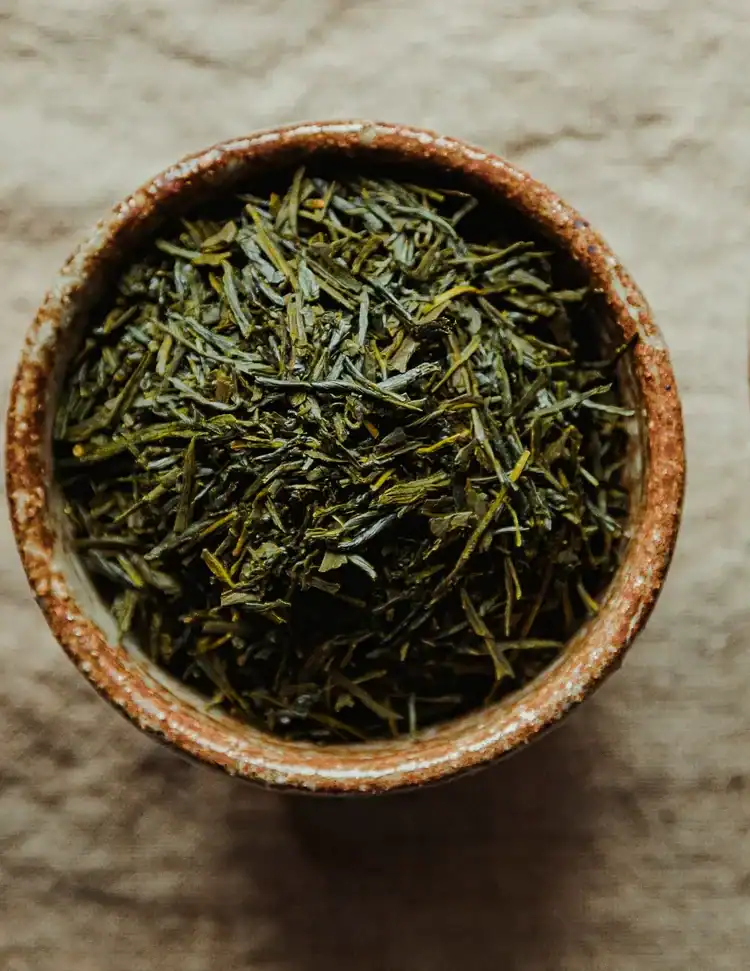
Use 3-4 grams of cut herb for teas and other internal uses.
In a tincture — 1:5 (g/ml): 7.5-10 ml, twice daily
Contraindication Notes about the Medicinal Uses for Mullein
There are no known adverse side effects of mullein.
As with any plant, contact dermatitis could happen if you are allergic to the plant.
It has been reported that mullein could interact with anti-diabetic drugs, so please consult your physician before taking.
Frequently Asked Questions
Can mullein interact with prescription medications besides diabetes drugs?
Mullein has very few known drug interactions, but its mucilage content can potentially slow the absorption of oral medications if taken simultaneously. To be safe, take mullein at least two hours apart from prescription medications. If you’re on lithium or diuretics, consult your healthcare provider before using mullein regularly, as it may affect fluid balance and kidney function.
Is there a difference in potency between wild-foraged and cultivated mullein?
Wild mullein growing in stressful conditions (poor soil, full sun, limited water) typically produces higher concentrations of beneficial compounds as a survival mechanism. Cultivated mullein in rich garden soil tends to grow larger but may be slightly less medicinally potent. However, the difference is minimal—both forms are therapeutically effective, and proper harvest timing matters more than growing conditions.
Can you use fresh mullein leaves instead of dried ones?
Fresh mullein leaves can be used but require adjustment in quantities—use approximately three times the amount of fresh leaves compared to dried since fresh plant material contains 60-80% water. Fresh leaves work particularly well for poultices and topical applications but are harder to strain thoroughly for internal use. For smoking blends, only dried mullein should be used, as fresh leaves won’t burn properly and can be harsh.
How long does mullein oil for ear infections stay potent?
Properly made mullein flower oil infused in olive oil and stored in amber glass bottles away from heat and light remains potent for 12-18 months. Adding vitamin E oil (5% of total volume) as a natural preservative can extend shelf life to 24 months. Always smell the oil before use—if it smells rancid or “off,” discard it. For maximum potency, make small batches annually during flower season rather than storing large quantities.
Why do some people experience no benefits from mullein tea?
Several factors can affect mullein’s effectiveness: water temperature (boiling water can destroy some beneficial compounds—use water at 180-190°F instead), insufficient steeping time (steep minimum 10-15 minutes for therapeutic strength), inadequate dosage (therapeutic dose requires 2-3 tablespoons of dried herb per cup, not the typical 1 teaspoon used for beverage tea), or old, improperly stored herb that has lost potency. Additionally, some respiratory conditions require mullein’s compounds to directly contact lung tissue through smoking or nebulization rather than systemic absorption through tea.
MOST IMPORTANT INSIGHTS TO REMEMBER
#1 Mullein specifically targets mycobacterial infections including tuberculosis and increasingly common antibiotic-resistant strains, making it uniquely valuable as modern bacterial resistance grows.
#2 The tiny hairs covering mullein leaves require double or triple straining to prevent throat irritation in teas and serious complications in ear oil preparations.
#3 Mullein root contains higher concentrations of therapeutic compounds than leaves and should be harvested in early spring of the second year for maximum potency in treating chronic respiratory conditions.
#4 Short-term smoking of mullein for respiratory ailments is safe and effective when limited to 2-week periods with frequency not exceeding every 2 hours during acute illness.
#5 Growing conditions dramatically affect medicinal potency with stressed plants in poor soil producing stronger medicine than those cultivated in rich garden soil.
Other posts you may enjoy:
- Medicinal Uses for Yarrow—The Ultimate Homestead Herb
- Homemade Cough Syrup | Eucalyptus and Thyme
- How to Start Herb Seeds for Your Garden
- Homemade Herbal Marshmallow Hot Chocolate
- Essential Oils and Herbs for Ear Infections
- Flu Fighting Elderberry and Astragalus Syrup
References
- Marčetić M, et al. Multifaceted Biological Properties of Verbascoside/Acteoside. 2025. PMC.
- Riaz M, et al. Common Mullein, Pharmacological and Chemical Aspects. Revista Brasileira de Farmacognosia. 2013.
- Mohammed RA, et al. Acteoside as a Multifunctional Natural Glycoside: Therapeutic Potential and Biological Activities. 2025.
- McCarthy E, et al. What’s in a Name? Can Mullein Weed Beat TB Where Modern Drugs Are Failing? 2011.
- American Thoracic Society Guidelines and NTM Research Literature on Non-Tuberculous Mycobacteria.


Are smoking or making a tea the only ways to consume Mullin? How would you prepare it for use with ear aches? Can it be used topically on rashes?
You can consume it in capsules, in tea, in a tincture etc. Just like with most herbs. For ear aches you’d make an infused oil, which you can learn about making here — https://thefewellhomestead.com/how-to-make-herbal-lotion-bars/
It can be used topically on rashes by making a poultice.
Is there a definitive book you might recommend that, or a few books that I can purchase that shows how to make all these medicines as a prepper? Thank you.
Common Mullein is an invasive species, with serious ecological impacts and definitely should NOT be planted in any case due to how far it can spread, and how it changes ecosystems and their natural progression. I would love if this was mentioned in your article to help educate. It’s medicinal properties are great tho and I hope you continue to use and hand pull this plant when you see it!
properly managed mullein is just fine to cultivate 😉
I love my invasive plants. My jewel weed, horse tail and mullein reward me every year for not messing with them. Invasive plants, otherwise known as weeds, are a sign of the soil healing itself. The best way to get rid of many invasive plants is to feed the soil. Little known fact is that many weeds like poison ivy and morning glory can’t survive when the soil becomes too rich.
Could you direct me to more information on how mullein can help migraines? Route, dose, Eetc. Thank you
Hi, do you only use the dried young leaves for making the tincture? Thanks for all the great articles!
I use dried leaves in general, young or older
I Have hypersensitivity pneumonitis which flares often ans puts me in hospital. Would this help as my illness is caused by inflammation in my lungs to triggers but at yet they haven’t found which ones are triggering flares. I’ve nearly died 9 times in 3 years sow to this issue and now I have 3 to8 years left as its progressing. Can this give me help.
Hello Clare, When I saw your post I just had to respond. Sounds very similar to me but everyone’s situation is different. Back in 2017 I had Acute hypersenitivity pneumonitis and spent 3 weeks in intensive care. And yes nearly killed me. I was told what saved my life, I was in good health to begin with. My lungs went all over the country via telehealth and every expert stated they never saw such bad lungs and “couldn’t believe I was still alive” My trigger was a spraying farmer. I’ve since educated myself on this and it has been proven that these sprays can drift for many miles and still cause damage. I can only imagine what the planes are doing. This farmer is close by and his cocktail of chemicals drifted on our property. I was the main one in our family who was the sickest due to being in the garden daily. I lost many of my 52 herbs and other plants, lost livestock and other family members got sick as well. I’m very cautious and only use and eat organic. On to Mullein. I use it frequently and it is very helpful for me but you will have to determine what works for you. I also combine as a lung tea of mullein, white horehound and lemon balm. I sweeten with honey, very soothing. There are many herbs that are healing and soothing to the lungs and respiratory health. This tea is just one option that I use and find helpful. Some of the other greats that I use Licorice, elecampane and oregano those are options that work for me. Take care, my prayers are with you, Tanya
What a useful response! thank you !
The thing you said in the YouTube video about making a tincture from mullein does not extract the mucilage does that apply to all mucilaginous herbs? What about a glycerin extraction? Also what oil is best for infusing for ear ache oil?
I use olive oil
Loved your video Amy thank you!
I just pulled out what was left of my mullein from the summer from under 8 inches of snow !and it’s actually still plump and soft (bottom three sets of leaves and a rosette)…I currently have viral bronchitis and I’m really struggling and don’t want to do inhalers/steroids….do you think a plant this old should be made into tea ?…or smoked it would probably take too long to dry for use now.?
Would so appreciate any wisdom, thank you from Ontario Canada
Hey there! I think the plant is fine as long as it was still vibrantly green and very much alive. Otherwise, I would toss it.
hi 🙂 I have freshly picked leaves, but how should I clean them before I use them? I plan to dry some out to use and keep some fresh so I can use them for tea 🙂 I’ve never used mullein but as an aspiring herbalist I’m excited to finally be making progress!
I just brush mine off and use them in a little tea steeper
can I make a tea out of the fresh leaves? I would be comfortable drying them for tea but if i can crush them and steep them while they are just up now I will if that is okay.
you can!
I have had to use Mullein leaf for many years. I have moderate to severe asthma. Mullein leaf helps me better than my medicine, and nearly as well as my rescue inhaler. Since my kitty mistook my fingernail for one of her treats I have had no problem with infection. Thank you Mullein.
I have 9ft. Mullein that is now (July 28) past its peak and looking raggedy. I want it to return next year. Somewhere I read that I should cut the stem off but leave the rosette at the bottom. Is that correct? Do I use the yellow flowers in the tea also? (They are mostly gone now, but I will be prepared for next year. )
Mullein is a bienniel, so don’t be surprised if it doesn’t flower the following year. It will be ok whether you cut it down or not. I would cut the stem off though, and leave the rosette, as you mentioned.
Hi – where can I find out about processing the root? And the flowers? I have a ton of mullein growing at my house and would like to prepare it for this winter. Thank you, Susan
Hey Amy!
Thanks so much for all the information. Our property is filled with Mullen and this will be my first harvest. (Better late then never)
My question is how much leaves do you put in a tea to start, obviously a small amount to start but then how many leaves for a normal tea? And I can dehydrate the root as well to put in the tea too? Lastly how long do I dehydrate in a dehydrator?
I’ve joined your mailing list and would love to join your class in January! Looking forward to it!
Nicole
found information useful. First time harvester of mullen.
Hey Amy, I just saw your video on mullein usage on YouTube. Is the tea or smoking it better? I haven’t found any around in north florida area. I found a buyer on Amazon. I have upper respiratory issues i think from this junk. Ive been having a hard time clearing out my lungs. Will this really work for my ailments to clear out the mucus and inflammation? Im kind of new to this. Any help would be appreciated. Thank you😊🙏🏻
Hi. Will this help with covid pneumonia? And can I drink mullein tea to help? Also, I am on antibiotics for the pneumonia. Is there any reason not to use this while on antibiotics? Thank you.
A while ago I kept goats, one of which had horns. She was the best milker, so I bred her to a non-horned Billy, but within a week or so of their birth it was evident that her twins were also going to have horns. So I took them to a veterinarian and had the horn buds removed. Little goats are bouncy, however, and the little girl kept knocking the scabs off and bleeding a lot.
I used a mullen poultice, both for its antibiotic qualities AND because it stopped the bleeding and helped her head heal faster.
Where can I buy seeds at?
I just ordered some from Etsy.
I just picked a pod from a few plants that live in a bulky gravel behind a bridge on my street. I’ve had mullein ever since. It’s literally everywhere in rural areas. Might be worth the drive in gas vs cost of seeds. Just watch for plants that might be sprayed with a plant killer. Happy foraging!
I’ve been using mullein leaves as tea for several months. I had COVID in December 2020 and still struggling with my lungs. Mullein is helping tremendously, but I need a lot to keep my lungs clear [at least 10 tsp of crushed leaves/day]. While I was reading on it I noticed it’s also good for the bladder. I have chronic/debilitating Interstitial Cystitis and I am on a mixed herbs tincture for years, but I didn’t know about Mullein for the bladder. Which part of the plant do you suggest for the bladder? Any suggestions would be welcome. TY
Thank you for your very informative video. A friend of mine has an allergy to cedar trees that usually flares up nov to feb. Could this be taken orally to aid that. Also you stated it helps fight gram pos and neg. Is this for oral use? Could it be used for ear infection?
Please post any info you have on using the flowers. I just harvested and dried those. Thank you!
I wanted to print this article about Mullein but I don’t see a print key. I only see fb YouTube and pin
I have an 11 yr old Granddaughter that was recently diagnosed with asthma, can she drink mullein tea? My husband also has lung issues an he is drinking the tea an it helps with his congestion and breathing.